Phoenix homeowners love indoor-outdoor living, but bugs, dust, and sun? Not so much. If you’re weighing Sliding Screen Doors against hinged screen doors, you’re in the right place. This guide is for anyone with a patio, a busy household, or a pup who thinks the backyard is his territory. We’ll keep it simple and honest—what works, what lasts, and what fits your space—so you can choose a screen door that just feels right.
The quick takeaway: which is better?
Short answer: it depends on your doorway and how you live. Got a sliding glass patio door? A **sliding screen door** almost always fits better and keeps your traffic flow smooth. Have a standard single door out to a side yard or front porch? A **hinged screen door** usually wins for access, durability, and that satisfying swing. But there’s more nuance—Phoenix weather, pets, kids, dust storms, and sun all play a part.
You know what? It’s less “better vs worse” and more “which one fits your home’s rhythm.” Let me explain.
How each door works—without the jargon overload
Sliding screen doors
These ride on upper and lower tracks and glide on small rollers. When they’re built well—think aluminum frames, stainless or nylon rollers, and tight corners—they’re smooth and quiet. They’re great for big patio openings because they don’t swing into furniture or walkways. The catch: the track needs to stay clean. Phoenix dust loves tracks like kids love popsicles.
Hinged screen doors
These swing on hinges (in or out—usually out) and latch to a jamb. Simple, sturdy, and easy to adjust. You can add a closer so it shuts gently. If you’ve got a single exterior door, a **hinged screen door** feels natural and it gives a little more security, too. There’s no track to collect grit, but the hinges and sweeps do need the occasional checkup.
Here’s the thing: sliding feels lighter, hinged feels firmer. Neither is wrong. They just move differently.
What matters most in Phoenix: sun, dust, and monsoon winds
Our climate plays referee. UV, grit, and gusty storms will test any door. So materials and mesh matter big time.
- Sun and heat: Consider **solar screen mesh** to cut glare and reduce heat coming through the door. It can’t replace AC, but it helps comfort on the patio and near the doorway.
- Dust and pollen: Sliding tracks need quick sweeps with a brush or vacuum. Hinges and latches like a little silicone spray now and then.
- Monsoon gusts: A quality closer on a hinged door prevents slamming. A well-fitted sliding screen won’t rattle and pop off the track when the wind kicks up.
- Pets and kids: Choose **pet-resistant mesh** if you’ve got scratchers or door-darters. Thicker mesh makes a difference, and we can build it into either style.
One small contradiction you’ll notice: sliding doors seem lighter, yet in strong winds a well-tuned hinged door can actually feel more controlled. That closer earns its keep in July.
Space, traffic flow, and furniture placement
Think about how you move through the space. If your patio has a tight walkway or a grill right by the door, a swing door may bump into things. Sliding screens stay out of the path—nice and tidy.
Inside, a hinged door needs clearance. No problem for most entries, but not ideal if you’ve got a table right behind the door. For big glass sliders, a **sliding screen door** is a no-brainer—no swing, no collision, just smooth glide while you carry trays of burgers to the grill.
We also consider thresholds. If you want an easy roll-through with a stroller or mobility device, sliding tracks with a low profile are comfortable. Hinged can also work with a low saddle and smooth sweep, but it depends on your doorway.
Durability, maintenance, and the “will this stick?” question
We hear this all the time: “Do sliding screens stick?” Cheap ones do. Good ones don’t. Quality rollers, a straight frame, and a tuned track make the difference. We use sturdy aluminum frames, square the corners, and set the rollers so they ride right from day one.
Hinged screens wear differently. Hinges can loosen after years of use, but that’s an easy fix. The closer may need a tweak as temperatures swing—heat changes the pace and pressure. It’s normal.
- Sliding upkeep: Brush tracks now and then, check the rollers yearly, and wash the mesh with mild soap. Five-minute chores.
- Hinged upkeep: Tighten hinge screws, adjust the closer for season, and clean the sweep so it seals well. Also quick.
Honestly, both last in Phoenix when built right. The weak link is usually parts you don’t see—rollers, corners, or bargain mesh. That’s why we steer folks toward sturdy components from the start.
Security, safety, and peace of mind
Regular screen doors aren’t security doors, but they can be safer and tougher than you think. A good latch, rigid frame, and upgraded mesh deter casual tampering and keep the door square in the wind.
- Locks: Sliding screens can have metal mortise locks or simple finger pulls; we recommend a solid latch you can feel click. Hinged screens often use lever latches or handle sets with keyed options.
- Closers: For hinged doors, a closer keeps the screen from slamming and protects small fingers. It also keeps the door from flying open in a gust.
- Pets: Dog doors can be added to hinged screens more cleanly than to sliding, though we do both. Pet-resistant mesh is worth it if you’ve got jumpers.
- Bug seal: Proper sweeps and seals matter. We fit them snug so mosquitoes and desert gnats stay out while air flows in.
If you want real security, ask about a **security screen door** with stainless mesh or steel bars. Different category—stronger frame, different budget—but still breezy and good-looking.
Cost clarity: upfront and long-term
Prices vary with size, finish, and mesh type. Sliding is usually more budget-friendly for patio sliders. Hinged, especially with decorative frames or heavy-duty mesh, can be higher. Long-term, both are affordable to maintain—rollers and closers are simple to service.
| Feature | Sliding Screen Door | Hinged Screen Door |
|---|---|---|
| Typical Use | Patio sliders and large glass doors | Single entry, side yard, front door |
| Maintenance | Track and roller care | Hinge and closer adjustment |
| Wind Behavior | Stable if tuned; track must be clean | Smooth with a closer; less rattling |
Want numbers? We can provide clear pricing on **Phoenix screen door installation** after a quick measure—no guesswork, no surprises.
Style and curb appeal: the fun part
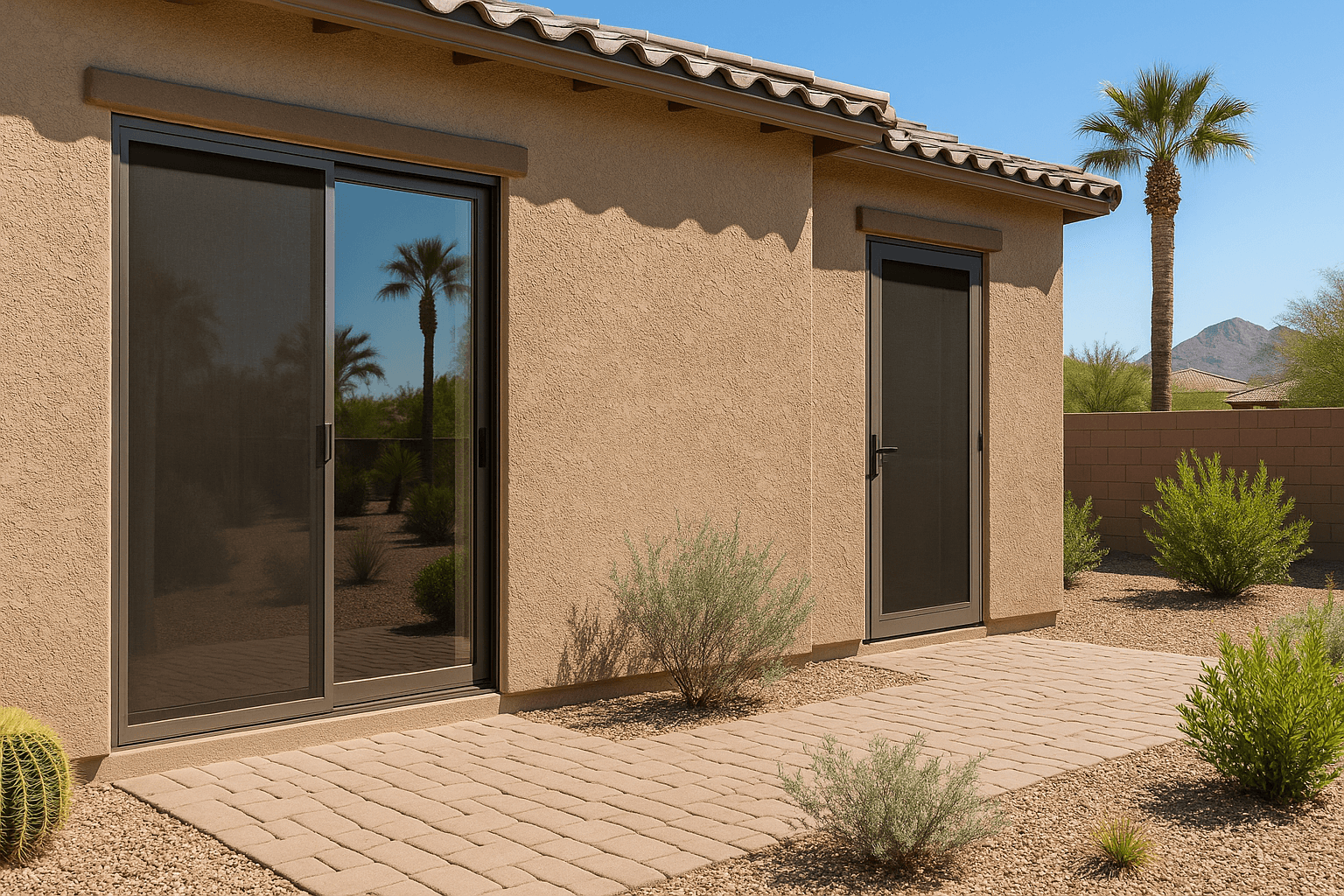
Screen doors can look sharp. Thin modern frames on sliders disappear into the patio view. Hinged screens can go sleek or classic—think clean black powder-coat, desert bronze, or a decorative pattern that fits your home’s style. Hardware matters, too. A solid handle feels good every single day.
HOA in Phoenix? We’ll help with colors and profiles that meet guidelines while still giving you airflow and shade. And yes, black frames are trending—they frame the view and hide dust better than you’d expect.
When sliding shines vs when hinged makes sense
- Choose sliding if: You have a large patio slider; you want zero swing; you carry trays or gear through the doorway; you need a low threshold.
- Choose hinged if: You have a standard single door; you want a firmer latch feel; you’d like a closer; you’re adding a pet door; you like a statement look at the entry.
There’s overlap—and we’ve installed hinged units on tricky patios and sliding screens on narrow doors—but these rules of thumb hold for most homes.
Real Phoenix questions we hear all the time
Will my screen slam in the wind? A closer on a hinged door stops that. For sliding, snug rollers and a clean track help, and we set the latch strike so it grabs without rattling.
Does pet mesh look heavy? Not really. It’s a bit thicker, but from a few feet back it fades into the view. The tradeoff is worth it if your dog treats screens like a trampoline.
Can screens help with heat? With **solar screen mesh**, yes—less glare, more comfort by the door. Add shade outside and you’ll feel the difference during late afternoon sun.
What if my current slider keeps jumping the track? That’s usually a frame or roller issue. We can rebuild or replace with a sturdier **patio screen door** that stays put.
What we recommend as Arizona Screen Company
We measure, build, and install **custom screen doors** across the Valley. That means square frames, roller systems that match your door brand, and meshes that suit how you live—standard, solar, or pet-resistant. We tune the fit, test the latch, and make sure the door opens with a fingertip. You’ll feel the difference right away.
We work around monsoon season, HOA color rules, and those famous haboobs that leave dust on everything. Our crews show up ready to work, explain what they’re doing, and clean up when they’re done. It’s simple, but it matters.
Not sure what you need? We’ll bring samples, explain the pros and cons without pushy talk, and give you a clear quote. If a small repair solves it, we’ll say so. If a new build makes more sense, we’ll show you why.
Ready to choose the right screen door?
If your home has a slider, a well-built **sliding screen door** keeps your patio traffic smooth and your view open. If you have a single entry, a sturdy **hinged screen door** gives you airflow, a confident latch, and a clean look. Either way, we’ll help you pick a style that lasts in our desert climate.
Call Arizona Screen Company at 480-771-2543 or Request a Free Quote. We’ll measure, build it right, and install it so it feels great from day one.