
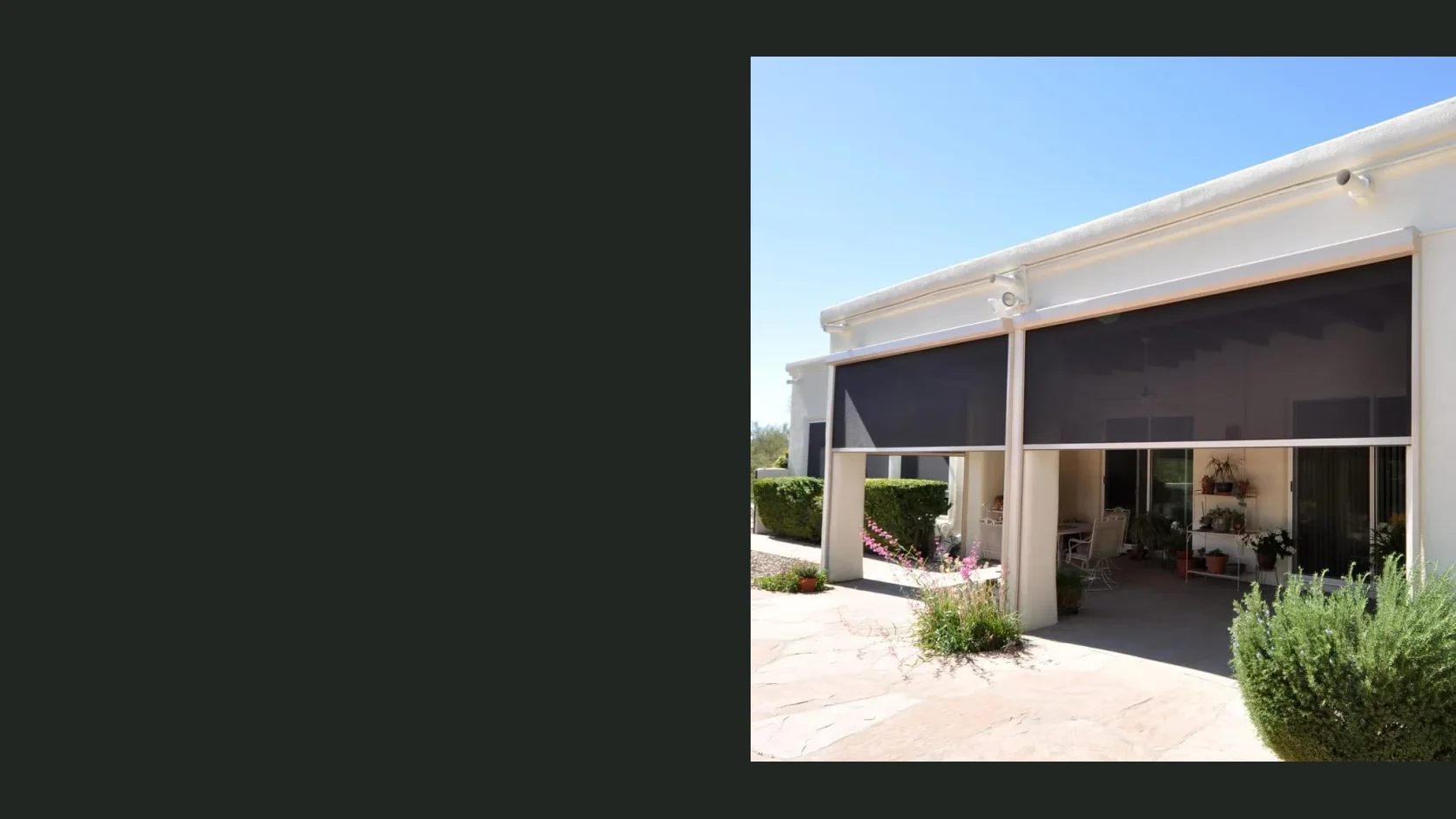
Retractable Patio Shades
Retractable Patio Shades in Phoenix
Lower the shade when the sun gets harsh. Open the view when you want it back. Plan a roll-down shade around the way you use your patio.
Fit, materials, and the way you use the space
Outdoor shade with room to change your mind.
A retractable patio shade adds an adjustable layer of screening to a covered outdoor opening. It can help with afternoon glare and direct sunlight without permanently closing the patio. The setting, opening, fabric, and mounting all need to be considered together.
Begin with the problem you want to solve. A low afternoon sun angle, a bright breakfast area, and a wide open patio may need different layouts. Think about where you sit, where you walk, and which view you want to keep.
The current range describes manual and motorized roll-down shade options. Arizona Screen Techs can assess the opening and confirm the suitable system, fabric, and current availability during your estimate.
- Covered patio and porch shade
- Manual and motorized options
- Fabric and frame selection
- Site-specific mounting and access
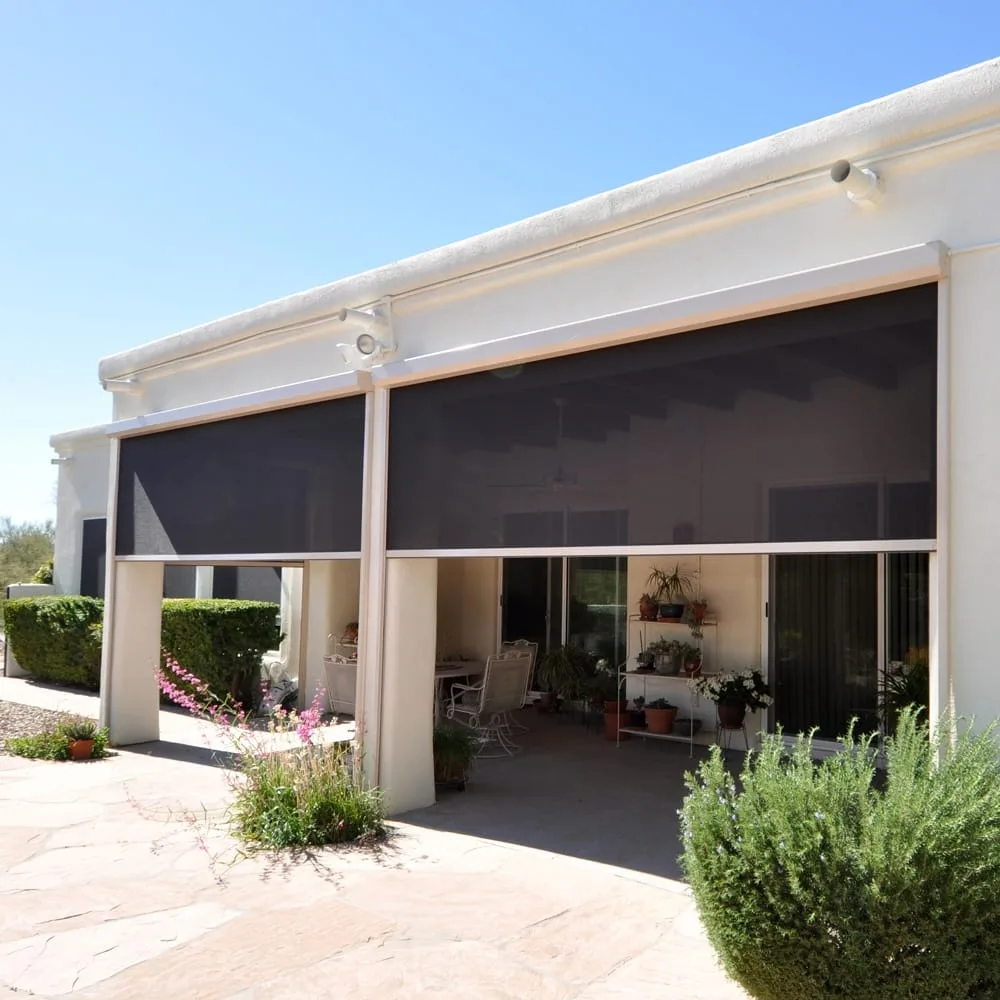
Manual or motorized operation
A manual shade can suit an easy-to-reach opening used occasionally. Check how the control will be accessed, how much effort it requires, and whether furniture or landscaping will get in the way.
Motorized operation may be more convenient for frequently used or harder-to-reach openings. Before choosing it, confirm the power supply, control method, service access, and what happens during a power interruption. Smart-home compatibility must be confirmed for the actual selected motor and control system.
Fabric selection changes the experience
Mesh openness and color affect glare, visibility, airflow, and the appearance of the patio. A fabric that looks attractive on a showroom card can feel different when it covers a wide opening in full daylight.
Compare a physical sample at the site. A tighter weave is not automatically the best answer if you value daylight or the outward view. Daytime screening also does not guarantee nighttime privacy when interior lights are brighter.
Mounting and sizing are part of the design
The installer needs to assess the beam, header, or wall where the shade will attach. Clearance for the shade assembly, control placement, and any nearby doors matters as much as the opening dimensions.
The published standard exterior range lists openings up to 14 feet wide and 12 feet tall. That is a product-range reference, not an assurance that one system fits every opening of that size. Confirm the model, actual dimensions, and mounting for your project before ordering.
Plan for wind and weather
Retractable fabric shades are not storm barriers. The published standard exterior shade is described for mildly breezy conditions. Follow the operating limits and retraction instructions supplied for the selected system.
Do not leave a shade down in conditions outside its guidance because a neighbor’s shade appears to handle them. Opening size, guides, installation, and fabric can change the behavior. Ask how the system should be secured and stored when it is not in use.
Patio, porch, window, and door applications
Covered patios and porches are common starting points, but the current range also describes exterior shading for windows and doors. Confirm whether the shade will interfere with a door swing, traffic path, ventilation, or access to the window.
For a business or multi-use outdoor space, describe how the opening is used throughout the day. The best layout is one that provides useful shade while preserving safe movement and sensible control access.
Compare what matters
Useful choices.
No one-size-fits-all answer.
Bring the decision back to your opening, the way it is used, and the exact product proposed in the estimate.
| Planning point | Manual operation | Motorized operation |
|---|---|---|
| Control access | Confirm reach and effort | Confirm control location and power |
| Best starting question | How often will you move it? | Is convenience or difficult access the priority? |
| Maintenance | Check operating parts and fabric | Check motor, controls, and fabric |
| Compatibility | Model-specific hardware | Model-specific controls; do not assume automation |
| Wind use | Follow exact system guidance | Follow exact system guidance |
Before the final specification
What changes
the estimate?
There is no universal installed price for every opening. A useful estimate defines the materials, dimensions, hardware, access, and installation boundary for your project.
- Opening width and drop
- Mounting surface and clearance
- Fabric choice
- Manual or motorized controls
- Power and service-access requirements
Final measurements and product availability are checked before work is arranged. Share approximate dimensions if you know them; exact ordering sizes are not required to start the conversation.
Screen & shade product details
A closer look at the work
Before you decide
Clear answers
for your project.
Can the shade stay down during a storm?
Do not treat a fabric shade as a storm-protection system. Follow the exact product’s operating guidance and retract it when conditions require.
Can a motorized shade connect to my smart home?
Compatibility depends on the selected motor, controller, and integration. Confirm the actual system before buying equipment or planning an automation.
Can shades be fitted beside a sliding door?
The opening and traffic path need assessment. The shade assembly and controls should not interfere with door operation or access.
What information helps with an estimate?
Describe the opening, mounting surface, sun exposure, approximate dimensions, and whether you prefer manual or motorized operation. Final sizing is checked on site.
Start with a conversation
Let's find the right fit.
Tell us what you have in mind. We will help you choose the right screen or shade for your home or business.