

Assessment before the answer
Window & Door Screen Repair in Phoenix
A tear is easy to see. The frame, fit, and operating parts tell you whether the sensible answer is a repair, rescreening, or replacement.
Repair with a clear scope
Start with the whole opening.
Torn mesh is only one kind of screen problem. A panel can also have bent sides, separating corners, loose attachments, worn spline, or a fit that leaves gaps. A door adds operating hardware to the assessment.
If the frame is straight, sound, and correctly fitted, new mesh may be enough. If the frame cannot sit securely or its corners are damaged, repairing only the fabric can leave the original problem unresolved.
When requesting an estimate, describe the opening and the symptom. Tell us whether it is a window panel, sliding screen door, hinged door, or the separate heavy glass patio door. That distinction helps the team discuss the right next step.
- Torn or loose mesh
- Bent frames and damaged corners
- Gaps and missing attachments
- Sliding-door rollers and tracks
- Hinges, latches, and alignment
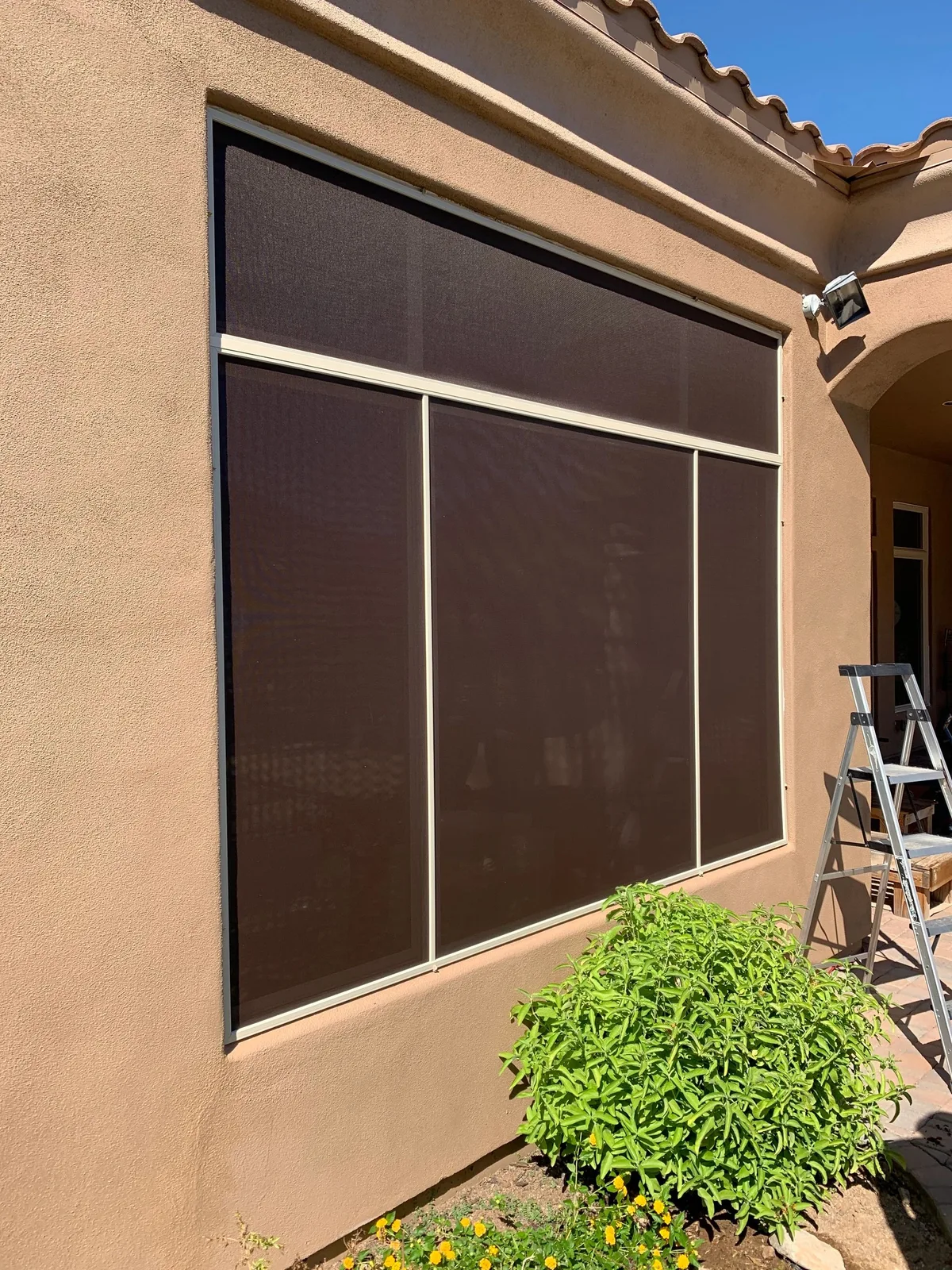
Rescreening a sound panel
Rescreening replaces the mesh in a usable frame. The frame should be checked for straightness, sound corners, proper fit, and secure attachments before the fabric is chosen.
Select the mesh around the opening’s use. Ordinary insect screening, heavier-duty material, and solar fabric solve different problems. A tougher fabric is not a cure for a frame that does not fit.
When the frame needs attention
Bent sections, broken corners, or an unsuitable size can make replacement more sensible than repeatedly stretching new mesh into the same panel.
Discuss whether the estimate covers frame repair, a new complete panel, attachment work, or only mesh replacement. Different scopes should not be compared as if they were the same job.
Sliding and hinged door problems
A screen door that sticks may have worn rollers, a track problem, an adjustment issue, or a frame that sits out of square. A hinged door may have alignment, hinge, latch, or mounting concerns.
The mesh and the operating issue should be assessed separately. Replacing the fabric alone does not automatically make a damaged door slide or close properly.
Repair-kit projects and professional work
A small mesh patch or rescreening project may suit a sound, accessible panel. A patch is not the same as a new sheet of mesh, and a new sheet is not the same as a new fitted frame.
High openings, uncertain attachments, heavy glass doors, and damaged hardware call for a wider assessment. Do not remove a heavy glass door as an ordinary screen-repair task.
How to compare an estimate
Ask which panels, mesh, frame work, attachments, hardware, access, and installation labor are included. The lowest total is not a useful comparison if important parts of the work are left out.
No universal repair price is quoted here. The number of openings, material, condition, and access affect the scope. Final dimensions and current product availability are confirmed before work is arranged.
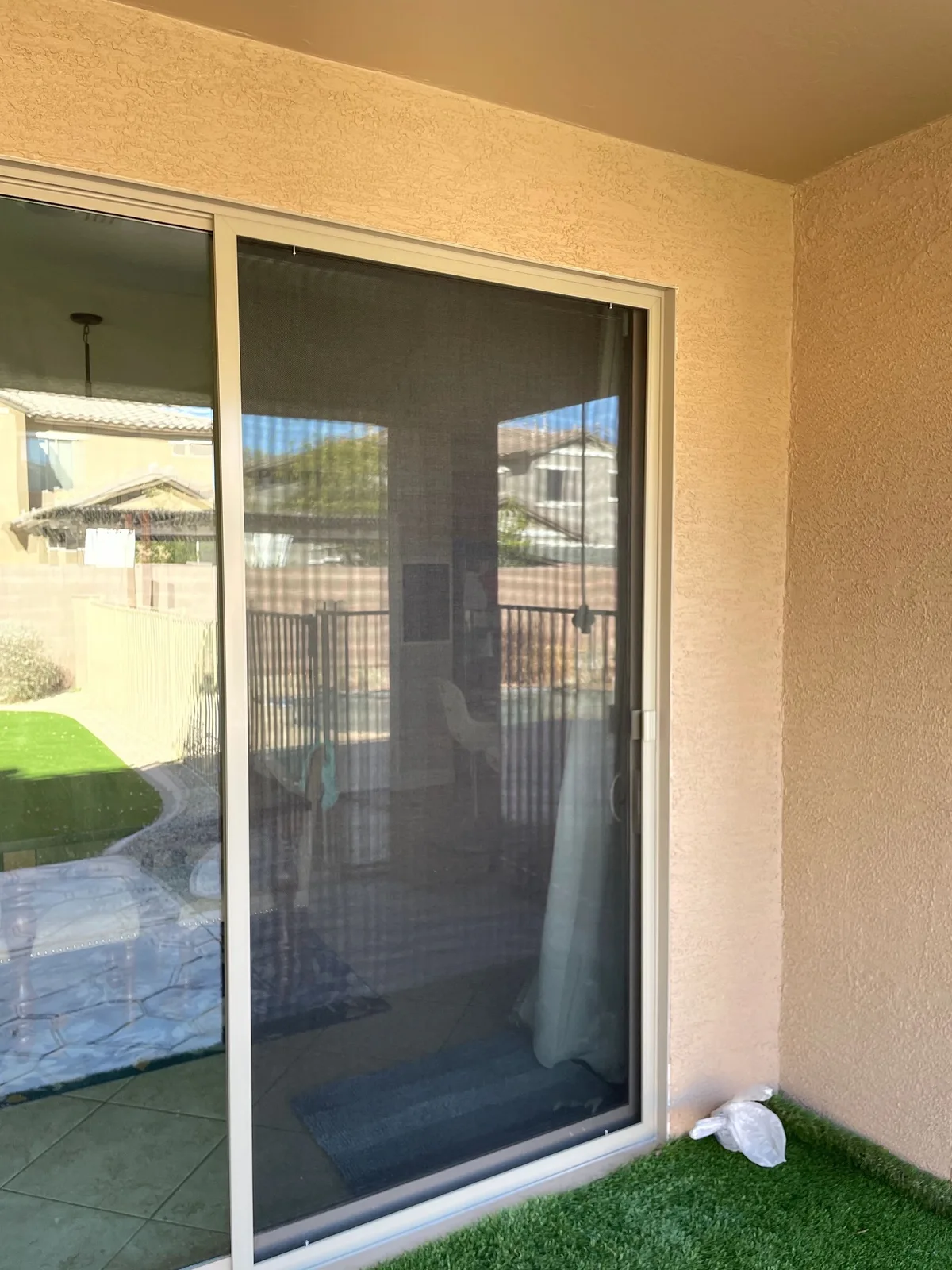
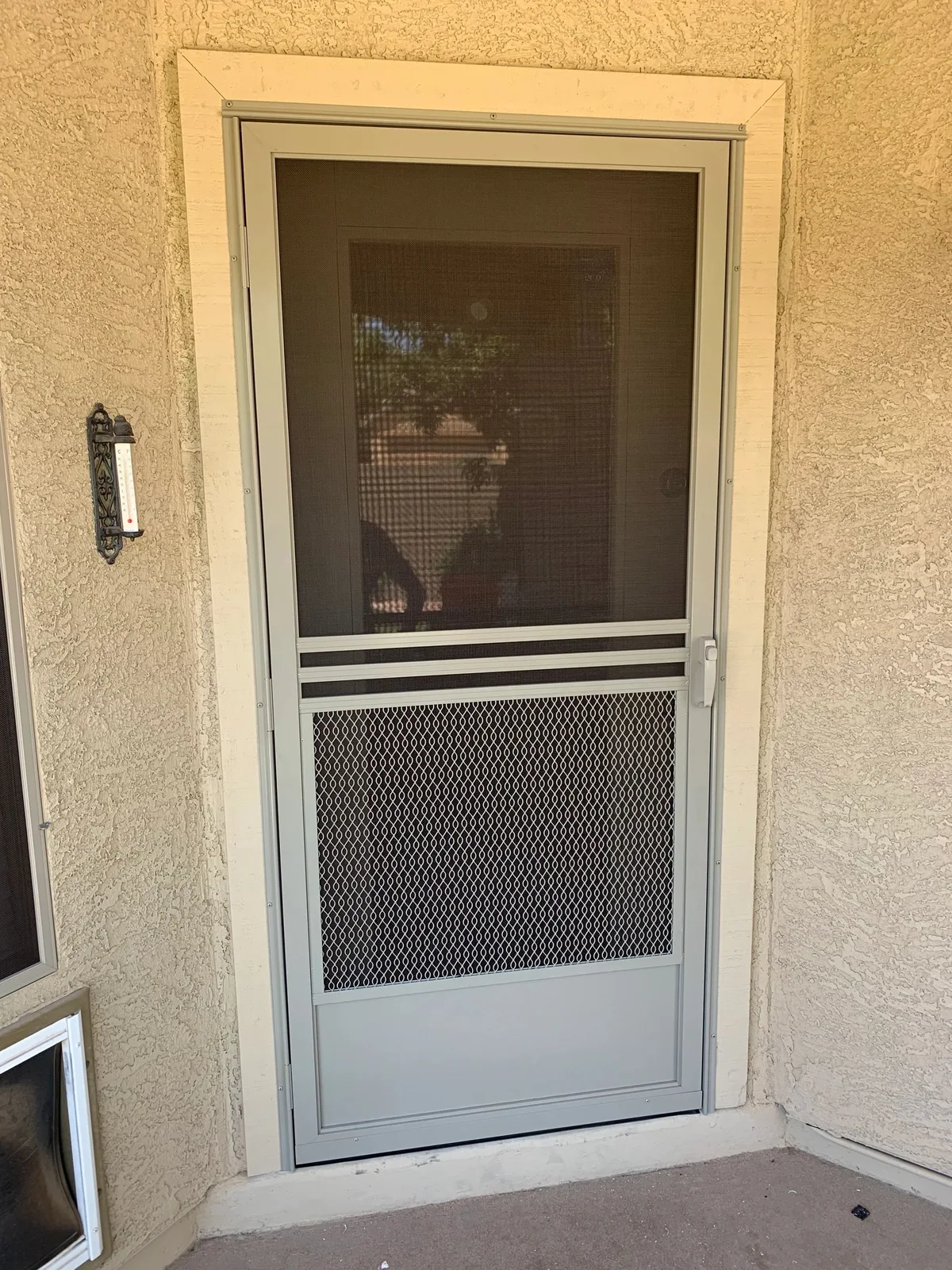
Arizona Screen Techs project photos
A closer look at the work
Before arranging the work
Repair questions,
answered.
Can I keep the old frame?
Possibly, if it is straight, sound, secure, and correctly sized. The installer should check it before recommending new mesh.
Will new mesh fix a sticking door?
Not necessarily. Rollers, track, hinges, frame alignment, and mounting may need separate attention.
Do you repair phone or laptop screens?
No. These services concern residential and commercial window and door screening, not electronic displays.
Should I patch or rescreen?
A patch addresses a local tear; rescreening replaces the mesh. The size and position of damage, appearance, frame condition, and daily use affect the decision.
Can you look at the glass patio door too?
Yes, describe it clearly. Glass patio-door operation repair has a separate assessment and is not the same scope as replacing screen mesh.
Start with a conversation
Tell us which opening needs help.
Tell us what you have in mind. We will help you choose the right screen or shade for your home or business.