
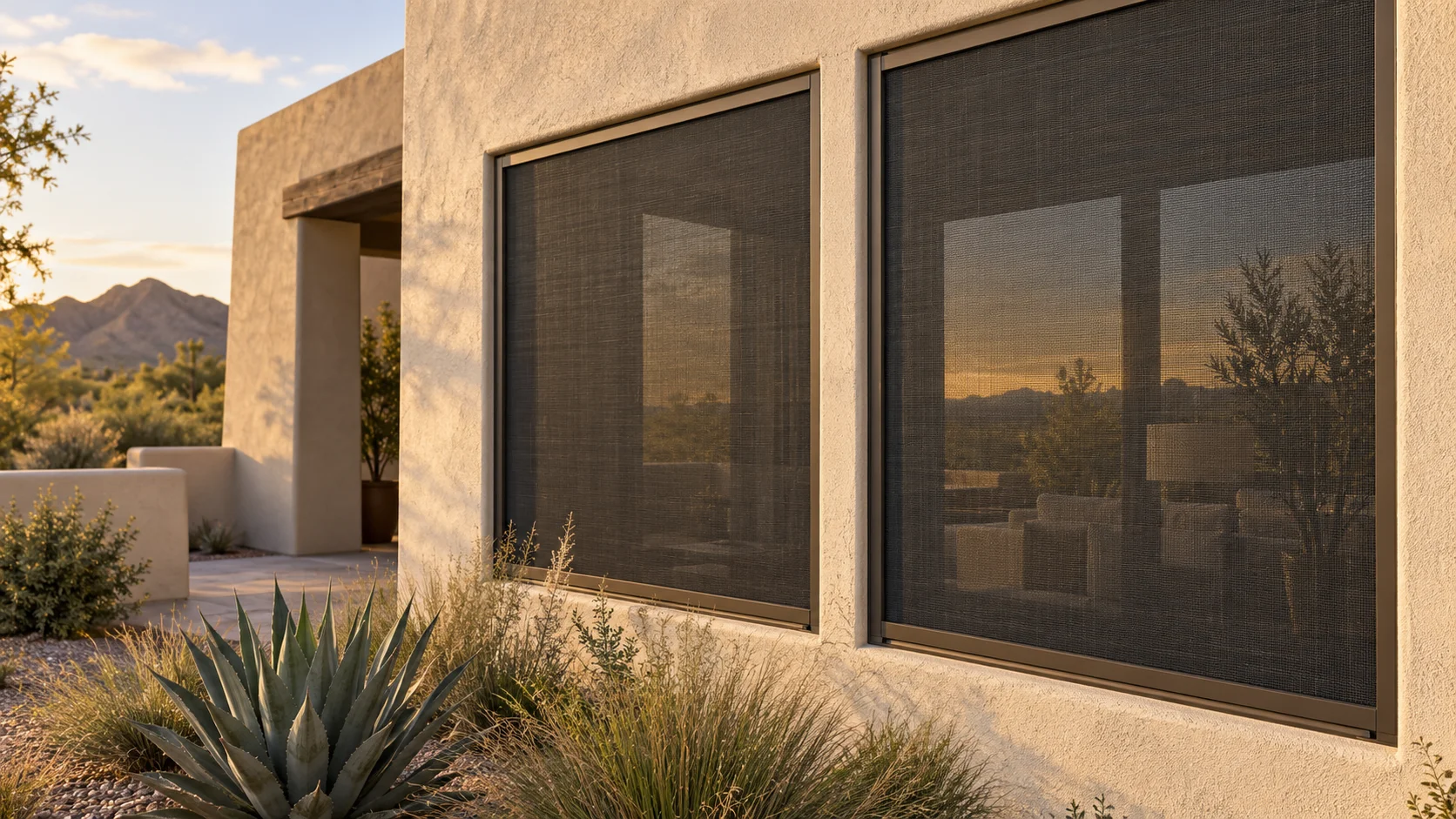
Insect Screens
Window & Door Insect Screens in Phoenix
Open the window or door with well-fitted screening. Choose a material that suits the opening, your household, and the amount of everyday use.
Fit, materials, and the way you use the space
Good screening starts with a sound frame.
Insect screens use mesh to help keep insects outside while allowing air through an open window or door. They work best when the frame fits closely, the corners are secure, and the mesh has no tears or loose edges.
A heavier fabric is not a substitute for fixing a gap around the frame. Start by checking the complete opening. A bent panel, missing attachment, or worn door component may need attention before new mesh solves the problem.
The operator’s published range includes ordinary bug screening, Phifer TuffScreen, PetScreen, and SunTex 80/90 options for appropriate applications. Tell the team whether the priority is insect control, durability, shade, or a combination.
- Window and door rescreening
- TuffScreen and PetScreen discussions
- Frame and attachment assessment
- Material choices for shade and durability
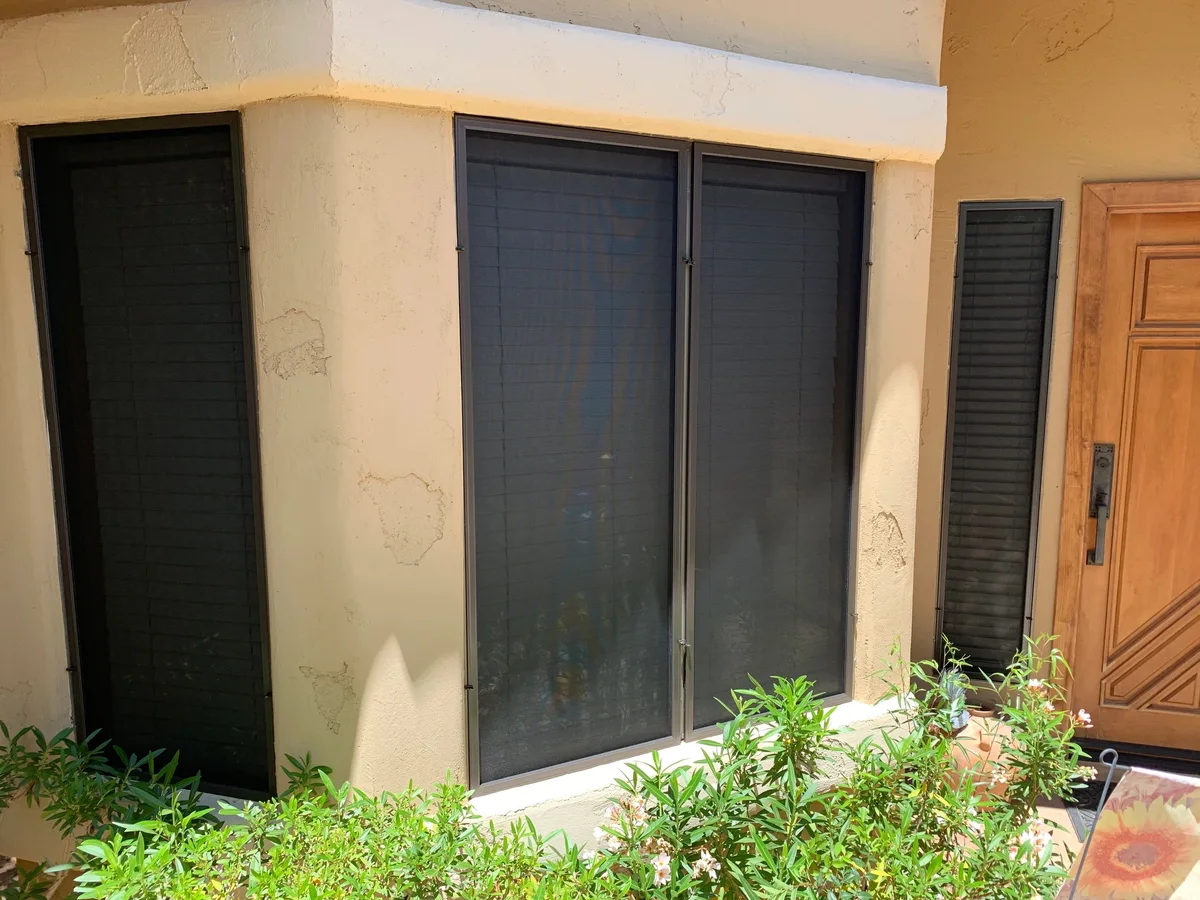
Everyday mesh versus a heavier-duty option
Standard insect screening is a practical starting point for many lightly used windows. Busier doorways, frequent contact, and pets may call for a different material.
TuffScreen and PetScreen are options to discuss when durability matters. Do not treat the names as promises that a pet cannot damage or push through the screen. The frame, mesh, attachment, and household use all affect the result.
Shade and insect control are not identical goals
Solar-screen fabrics have a denser weave intended to manage sunlight. Ordinary insect mesh is primarily selected around screening and airflow. A more open view, stronger shading, and heavier-duty fabric involve different tradeoffs.
If a room needs both sun control and screening, compare the actual materials at the opening. Do not assume every screen is designed to provide the same solar performance.
When rescreening is sensible
If the existing frame is straight, sound, and fits properly, replacing the mesh may be the sensible option. Bent corners, damaged attachments, or an incorrectly sized panel can make a new frame the better investment.
For a sliding or hinged door, check the operating hardware as well. New mesh will not automatically correct a sticking door, worn rollers, or a hinge problem.
Pets, children, and open windows
An insect screen is not a child-fall barrier, a pet restraint, or a security system. CPSC specifically advises never relying on window screens to keep children from falling.
Keep the screening decision separate from the window-safety decision. If a household needs fall protection or another safety feature, seek a product intended for that purpose and appropriate guidance for the window and emergency access.
Care and inspection
Clean using methods suitable for the selected mesh and frame. Support the panel rather than pushing hard into it. Avoid sharp tools, excessive pressure, and chemicals that could damage the material.
Look for loose spline, pulled corners, gaps, and holes during cleaning. Ask how a removable panel should be refitted so it seats correctly rather than sitting loose in the opening.
Compare what matters
Useful choices.
No one-size-fits-all answer.
Bring the decision back to your opening, the way it is used, and the exact product proposed in the estimate.
| Priority | What to compare | What not to assume |
|---|---|---|
| Insects and airflow | Frame fit, gaps, and mesh condition | A tougher fabric fixes a bad fit |
| Pets or frequent contact | Durability options and frame strength | Pet-resistant means pet-proof |
| Sun and glare | Solar fabric density and daylight | Every insect mesh provides solar shading |
| Window safety | Purpose-made safety measures | An insect screen prevents falls |
| Door operation | Mesh, rollers, hinges, and track | Rescreening fixes damaged hardware |
Before the final specification
What changes
the estimate?
There is no universal installed price for every opening. A useful estimate defines the materials, dimensions, hardware, access, and installation boundary for your project.
- Mesh type
- Number and size of panels
- Frame condition
- Attachments and operating hardware
- Access to the openings
Final measurements and product availability are checked before work is arranged. Share approximate dimensions if you know them; exact ordering sizes are not required to start the conversation.
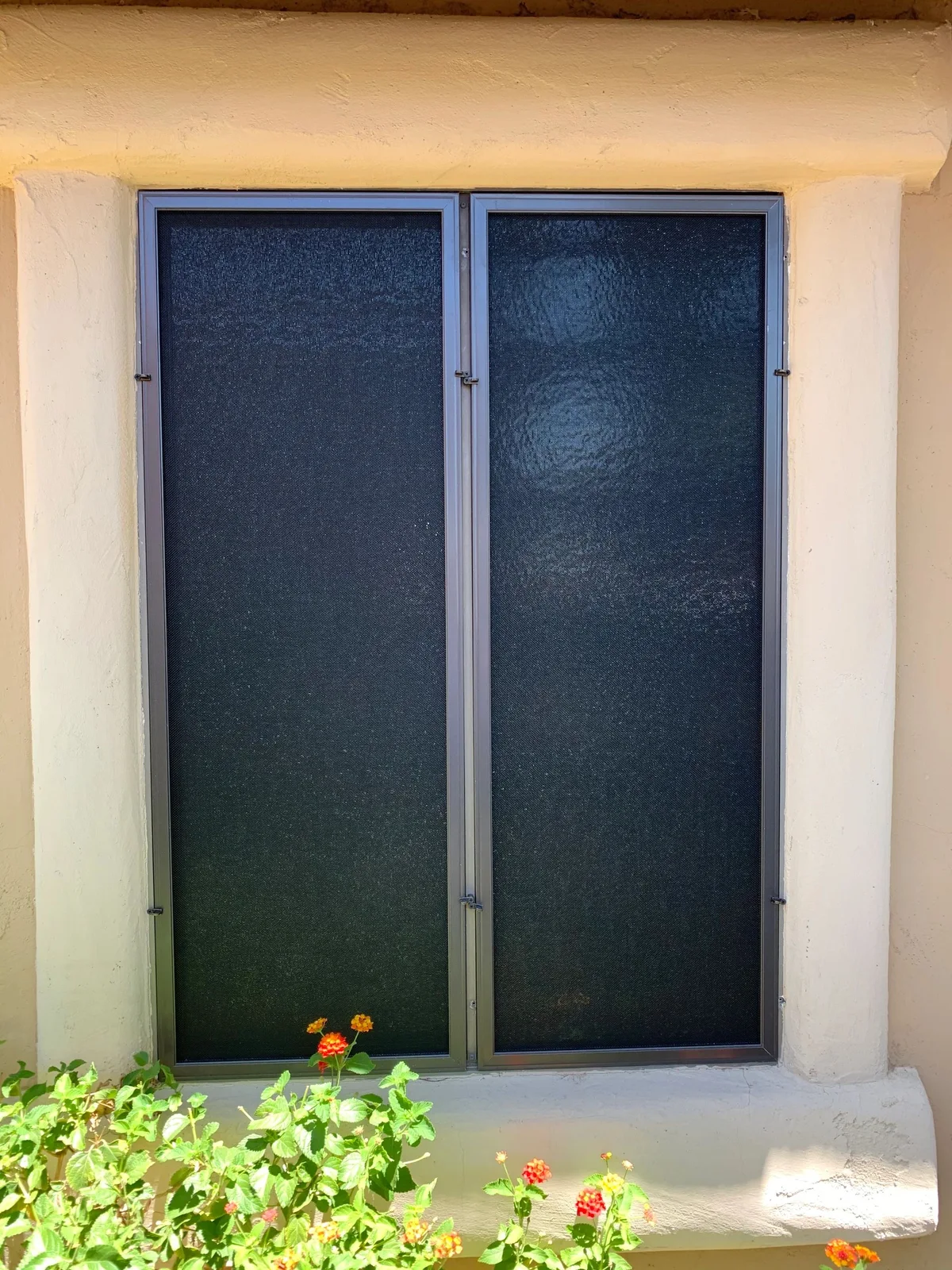
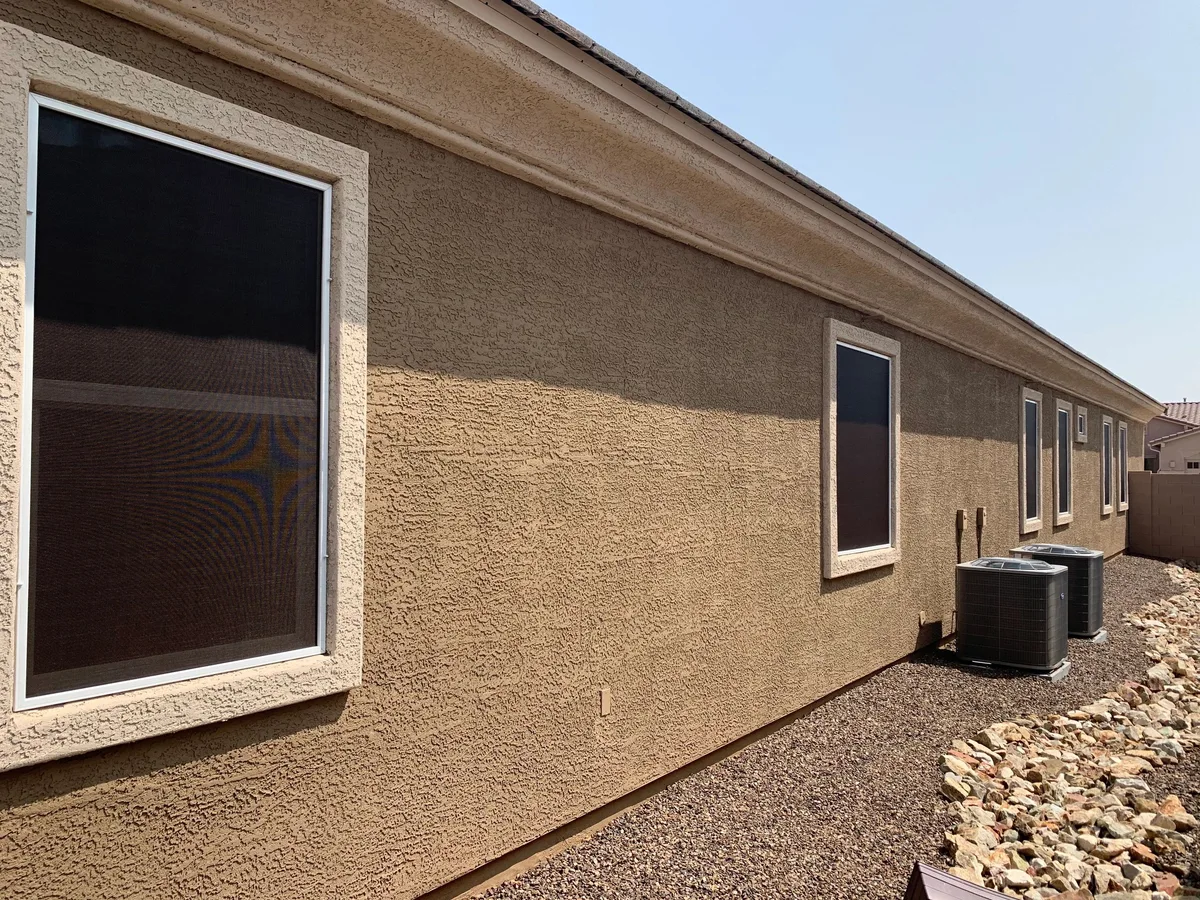
Arizona Screen Techs project photos
A closer look at the work
Before you decide
Clear answers
for your project.
Is pet-resistant mesh pet-proof?
No. It can be a more durable option, but it should not be treated as damage-proof screening or as a restraint for an animal.
Can you reuse my existing frame?
That depends on fit, straightness, corners, and attachments. The installer checks the frame before recommending rescreening or replacement.
Can insect screens stop a child from falling?
No. Ordinary window screens are not designed as fall protection. CPSC recommends separate window guards or stops where appropriate.
Can I use solar mesh instead?
Possibly, depending on the opening and goals. Compare the shading, visibility, airflow, and frame requirements before choosing.
Start with a conversation
Let's find the right fit.
Tell us what you have in mind. We will help you choose the right screen or shade for your home or business.