

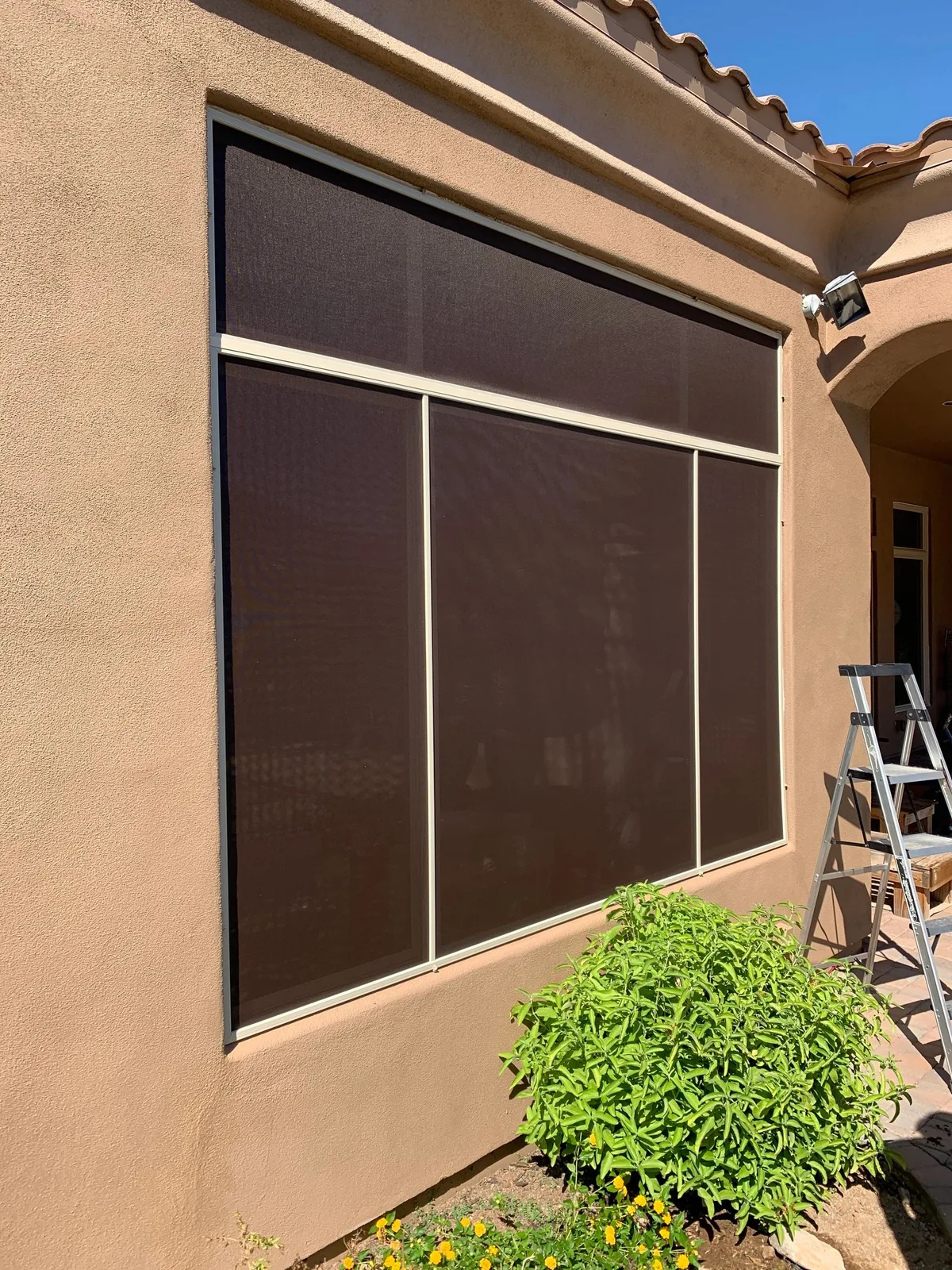
Identify what you are cleaning
Check whether it is a removable window panel, a sliding or hinged screen door, a retractable screen, or an exterior shade. Their removal and operating procedures can differ.
Use the selected product’s instructions. If you are unsure how a panel attaches or comes out, ask before forcing the frame or pulling a component that is meant to stay in place.
A heavy glass patio door is a separate assembly. Do not remove it casually as part of cleaning lightweight screening.
Support the panel and protect the mesh
When a panel can appropriately be removed, handle the frame so it is supported. Pushing into the center of the fabric can distort or detach it, especially where the edges are already loose.
Avoid sharp tools, harsh solvents, excessive pressure, or aggressive scrubbing. The suitable cleaner and contact depend on the actual material and any surrounding finish.
The existing solar-screen product information describes mild soap and water. Treat that as a starting point and confirm the selected fabric’s guidance, not a universal permission to use every chemical.
- Confirm the removal method first
- Support the frame rather than the mesh
- Use the product-appropriate gentle cleaning method
- Avoid high pressure and sharp contact
- Allow the panel to be refitted correctly
Inspect while the screen is accessible
Look for loose spline, pulled edges, torn areas, separating corners, bent sides, and missing attachments. Dirt may hide a small defect until the panel is handled.
If the frame is straight and secure, damaged mesh may be a rescreening candidate. If it is bent or fits poorly, fabric replacement alone may leave the problem unresolved.
For a door, inspect the operating symptom separately. A cleaned mesh will not automatically fix a damaged roller, track, hinge, latch, or mounting surface.
| Observation | Next question |
|---|---|
| Local tear | Patch or full mesh replacement? |
| Loose edge | Spline, mesh and frame condition? |
| Bent corner | Repairable frame or replacement? |
| Gap around the panel | Size, attachment or surrounding opening? |
| Dragging door | Operating hardware, alignment or track? |
Refitting is part of the job
A clean panel still needs to seat properly. Check the attachment points and corners rather than leaving it loosely placed against the opening.
If it does not fit the way it previously did, do not force it until the cause is understood. A distorted frame or damaged fixing can change how it seats.
Routine cleaning is also an opportunity to confirm how the glass behind the panel can be maintained safely. Elevated openings and restricted access may need a different approach.
When to ask for help
If the removal method is uncertain, attachments are damaged, the frame is unstable, or the opening is high, request an appropriate assessment rather than escalating the force used.
For retractable systems or motorized shades, follow their maintenance and operating instructions. Material care does not establish the correct procedure for servicing controls or electrical components.
Tell the team what the screen is, where it is located, and what changed. A clear description helps identify cleaning, rescreening, frame work, or another service scope.
Apply it to your opening.
Ask about screen care, rescreening, or frame repair for the product choices, fit, materials, and assessment relevant to this topic.
Installation and service are provided by Arizona Screen Techs. The written project scope confirms the exact product, access, and any applicable warranty.
Questions before you decide.
Can I pressure-wash every screen?
Do not assume that. Excessive pressure can damage mesh, corners, fixings, or finishes. Use the actual product guidance.
What cleaner should I use?
Confirm the selected material’s instructions. Mild soap and water are described in the existing solar-screen information; harsh chemicals are not a universal substitute.
Will cleaning fix a dragging door?
Not automatically. The operating parts and track need their own assessment.
What if I cannot remove the panel safely?
Ask how it attaches or arrange an appropriate assessment. Do not force an unfamiliar or unstable assembly.