Phoenix summers can be brutal—relentless sun, gritty dust, and the kind of heat that makes you eye every patch of shade like it’s a cold drink. If you’re a homeowner here, a good window screen isn’t just a nicety. It’s comfort, energy savings, and bug control rolled into something you don’t think about… until you really need it. This guide was written for Phoenix homeowners who want straightforward advice on choosing window screens that actually make life easier. We’ll keep it friendly, a bit chatty, and 100 percent useful. Sound good? Let’s get you breezy without the bugs.
Why window screens matter more in Phoenix (and yes, it’s the sun)
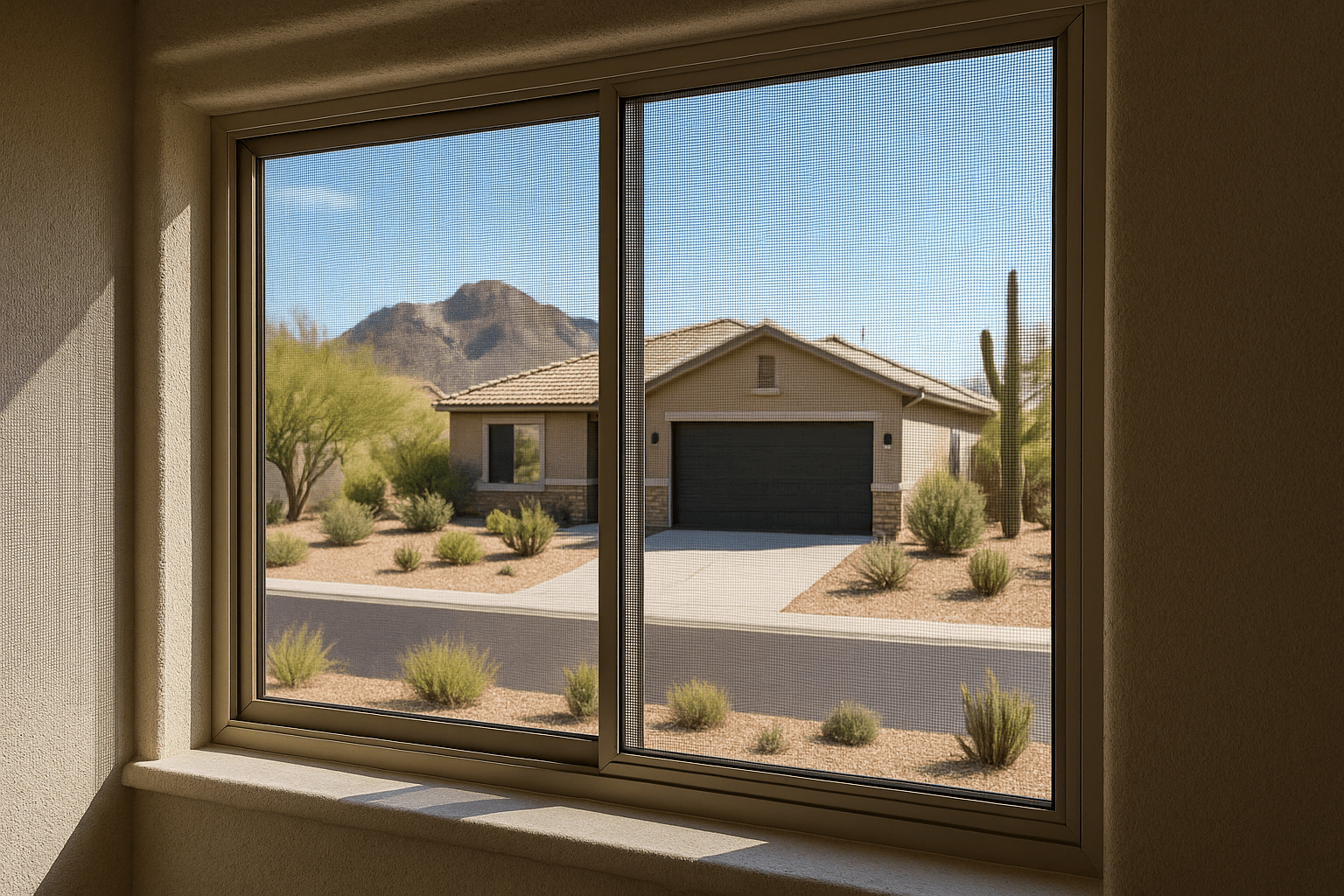
You already know the desert sun hits different. What many homeowners don’t realize is how well-chosen screens cut glare, cool rooms, and protect furnishings. **Solar screens** can knock down heat coming through glass by filtering sunlight at the window, easing the load on your AC. That’s not just theory; it’s very real comfort by late afternoon on a west-facing wall.
Bugs? Sure—mosquitoes, gnats, and the occasional desert critter want inside when monsoon humidity rises. A proper mesh stops them while keeping the airflow you crave on cooler mornings. And during a haboob (yep, those dramatic dust storms), a tight frame and weatherstrip are small heroes, reducing the grit that sneaks past loose screens.
One more local wrinkle: many Phoenix HOAs care about exterior uniformity. The right frame color—think Adobe, Desert Sand, Bronze, or Black—keeps things looking seamless while still letting you run custom window screens that fit your lifestyle.
Screen materials decoded: what works and why
Picking mesh isn’t just about “black or gray.” Materials change how your screens perform, last, and look through the years. Here’s a quick, no-nonsense snapshot that stays handy on your phone when you’re comparing options.
| Material | Best For | Notes |
|---|---|---|
| Fiberglass | Standard windows, budget-friendly installs | Soft feel; doesn’t dent. UV can age it faster in Phoenix; 3–5 year refresh is common. |
| Aluminum | Durability, crisp look | Strong, holds shape well; can crease if hit; great for clean sightlines. |
| Pet-Resistant (vinyl-coated polyester) | Homes with dogs or cats | Tough as nails; slightly darker appearance; excellent for sliders and patio doors. |
| Solar Fabric (e.g., Phifer SunTex 80/90) | Heat reduction, glare control | 80 blocks more heat with more view; 90 blocks even more heat and glare. Great on west/south exposures. |
| Stainless/High-Tensile (security mesh) | Security doors and high-traffic doors | Resists impact and tampering; premium pricing; keeps airflow with serious peace of mind. |
A quick brand note: homeowners here ask for Phifer SunTex 80/90, Phifer PetScreen, and visibility meshes like BetterVue or UltraVue when they want more detail and less haze. You know what? Those are solid requests—reputable, widely used, and they perform well in the desert.
Mesh density and visibility: seeing the view vs stopping the tiny stuff
Mesh density gets talked about in numbers. Think of it as “threads per inch” in each direction:
– 18×16 is the classic everyday mesh—good airflow and bug control.
– 20×20 (No-See-Um) tightens the weave to catch smaller insects. Handy near canals or after monsoon rains when gnats love to hover.
– Solar weaves vary, but they’re engineered more for shade than tiny-bug defense. Still great for most homes.
If you live near open desert or a wash, that 20×20 can be a sanity-saver during buggy weeks. On the flip side, BetterVue and UltraVue push for that “is there even a screen there?” feeling. They’re beautiful for patios with mountain or city views. Slight contradiction coming: the clearer the mesh looks, the more carefully it needs to be handled over time. It’s a fair trade for the view.
Frames, corners, and hardware: small parts, big difference
Arizona heat can warp flimsy frames. So the frame and hardware matter, maybe more than you’d think.
- Frame thickness: Common sizes are 5/16, 3/8, and 7/16 inch. Thicker extrusions resist bowing on large windows.
- Corners: Internal corners should be snug. Mitered corners look clean; square-cut corners are sturdy and easy to service.
- Hardware: Spring plungers, leaf springs, and lift tabs make screens sit tight. Bug pile (that fuzzy strip) seals the edges on sliders and doors. If you’ve ever seen dust stripes along a sill, bug pile probably needed love.
- Colors: Bronze, Adobe, Tan, White, and Black set the tone. Black frames with dark mesh fade visually—great for curb appeal and view-through.
If you’re replacing existing frames, bring one to match thickness and color. We can also measure and match on-site, which saves a headache.
What to put where: room-by-room picks that just work
Not every window needs the same mesh. That’s the trick a lot of folks miss. Here’s the thing—tailor the screen to the direction and the use.
- West or south-facing rooms: Solar screens (SunTex 80 or 90) lower heat gain fast. 80 for more view; 90 for stronger shade and privacy.
- Kitchen and cross-breeze windows: Standard fiberglass or aluminum for airflow and easy cleaning.
- Bedrooms with views: High-visibility mesh like BetterVue keeps scenery crisp.
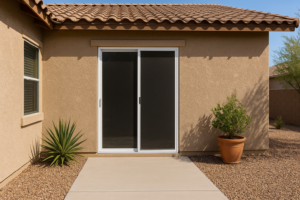
- Patio sliders and pet hangouts: Pet-Resistant screen for claw-proof peace.
- Security-minded doors: Security mesh—airflow plus serious strength.
Quick picks you can repeat to your spouse five minutes before ordering:
- “West side? SunTex 90.”
- “Back slider? Pet screen.”
- “View window? BetterVue.”
Simple, memorable, and it covers most homes well.
Measuring and fitting: fast steps, fewer do-overs
Let me explain—measuring is not scary. Precise, yes. But not hard.
- Know your window type: single-hung, double-hung, slider, casement, or awning. Screens fit differently for each.
- Measure width in three spots (top, middle, bottom) and use the smallest number.
- Measure height in three spots (left, center, right) and again use the smallest.
- Note frame thickness and any hardware style (plunger pins vs leaf springs, etc.). Snap a photo of the track—helps a ton.
- For sliders, measure the screen door differently from the glass panel size. If you’re unsure, we’ll handle it on-site.
Arched or eyebrow windows? We do templates. You don’t need to wrestle with a curve—we’ve got jigs and patience for that.
Cost, warranties, and what moves the needle
Pricing depends on material, size, and hardware. Straight talk helps, so here’s the general lay of the land in the Phoenix area:
– Standard fiberglass screens: budget-friendly and quick to replace.
– Aluminum and Pet-Resistant: a notch up for strength or durability.
– Solar screens (SunTex 80/90): priced higher than standard, often worth it for the heat relief alone.
– Security mesh doors: premium, but you’ll feel why when you use them daily.
Warranties vary by mesh and frame. Solar fabrics like Phifer SunTex often carry solid manufacturer warranties against UV degradation. Ask us about coverage for both material and workmanship—you want both. And remember: if you’re comparing quotes, match apples to apples on mesh type, frame gauge, hardware, and color. That’s how you avoid the “Why was this one cheaper?” puzzle.
Care and maintenance, Phoenix-style
Dust is part of desert life. The good news: caring for screens is easy.
– Rinse with a hose and soft brush a few times a year—especially after monsoon dust events.
– Use mild soap; skip harsh chemicals that break down coatings.
– Check tightness each spring. If a corner wobbles or the fabric sags, it’s time for repair or replacement.
– Fiberglass may need refresh around the 3–5 year mark under heavy sun; aluminum, pet, and solar fabrics run longer in most homes.
A tiny seasonal habit helps: after the first big dust storm, give your screens a quick rinse. Your lungs and your AC filter will thank you.
DIY or call a pro? A friendly reality check
If you’re handy, standard fiberglass re-screens are doable with a spline roller, new spline, and patience. But if you’ve got:
– Warped frames
– Hard-to-fit tracks
– Sliding doors
– Security mesh requests
– Or you want **window screen replacement in Phoenix** done in one visit
…calling Arizona Screen Company saves time and guesswork. We measure, build, and install. We also bring frame samples, mesh swatches, and color chips so you can see the difference in real daylight. Honestly, that side-by-side view makes decisions easy.
A quick digression: solar screens vs. low‑e glass
People ask if **solar screens** fight with low‑e glass. They don’t. They tag-team. Low‑e coatings reflect infrared heat at the glass layer. Solar mesh reduces the sunlight reaching the glass in the first place. Combined, they cut heat gain and glare more than either one alone. If you’ve got a roasting west wall, this duo is a calm, cool relief—without remodeling anything.
Common Phoenix scenarios we fix every week
– You replaced a window and the old screen no longer fits: We match the new track and hardware so it glides and seals right.
– Your dog loves the backyard but hates your screens: Pet-Resistant mesh on the lower panels, clear view mesh up high—problem solved and it still looks sharp.
– HOA wants a consistent look: We color-match frames and recommend mesh tints that blend from the street but keep function inside.
– Your patio slider sticks or rattles: We adjust rollers, add bug pile, and make it whisper-quiet again.
These are everyday fixes for us. For you, they’re big quality-of-life wins.
Ready to feel the breeze without the bugs?
If you’ve read this far, you probably know what you want—or at least what you don’t want. Either way, we can help. Arizona Screen Company is local, fast, and practical. We’ll measure on-site, share mesh and color options, and build **custom window screens** that fit your home and your Phoenix lifestyle.
Have questions or want a same-week appointment? Call us at 480-771-2543. Or prefer a no-pressure estimate first? Request a Free Quote and we’ll follow up with clear pricing, timelines, and next steps.
You bring the windows. We’ll bring the shade, the breeze, and the calm.