
Seasonal use begins with the space
The time the patio is used, direction of sunlight, view, traffic, and nearby doors influence the layout. A shade that addresses one angle may need a different configuration at another opening.
Describe where glare or direct sun is the problem and when. An approximate width and drop help the discussion, while final sizing belongs to the selected system and mounting.
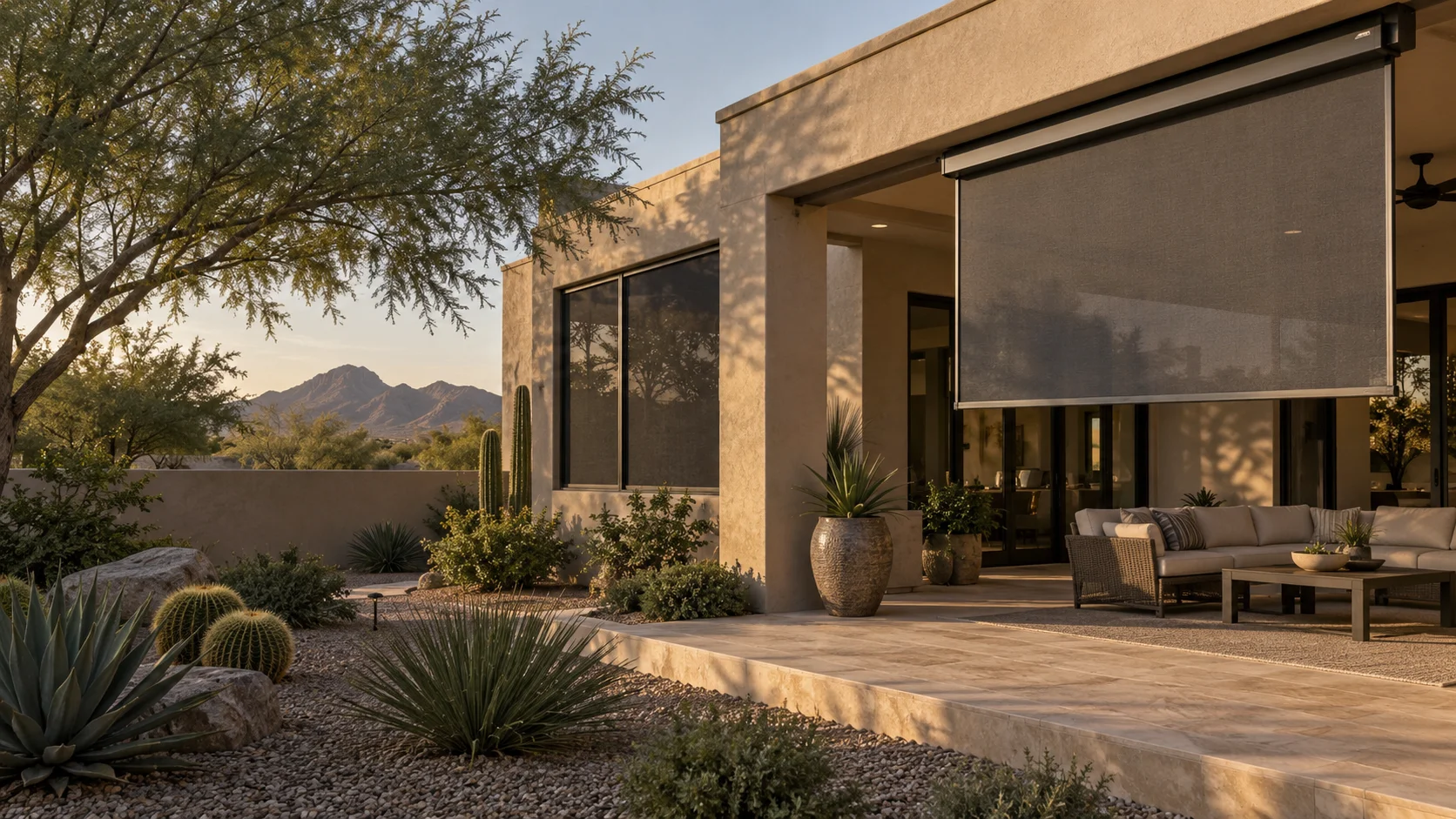
A photograph of a finished patio is useful for appearance, not proof that the same assembly suits another structure.
Fabric and an open view
Fabric openness and color can affect glare, daylight, airflow, and the view. Compare an actual sample rather than choosing the densest or most expensive name by default.
For privacy, consider the lighting on each side. Daytime screening does not guarantee that an illuminated room is hidden after dark.
Confirm the current compatible fabric for the actual shade. General articles naming a motor or material do not establish this operator’s inventory or every system’s compatibility.
Manual and motorized routines
A manual option may suit an accessible control and occasional adjustment. Check reach, effort, furniture, and the way the shade is moved.
Motorization may suit frequent use or difficult reach. Confirm power, included controls, service access, and what happens if a control or supply is unavailable.
Automation and sensors are specific features to verify. Do not assume app control, voice platforms, batteries, solar power, or automatic wind retraction from the word motorized.
| Seasonal question | Check |
|---|---|
| When is shade needed? | Actual sun, room use and patio routine |
| When do you want the view open? | Storage position and control convenience |
| What changes in wind? | Exact system limits and retraction guidance |
| How is it serviced? | Fabric, motor, controls and mounting access |
| What energy effect is expected? | Home, climate and operation, not one guaranteed figure |
Weather limits stay product-specific
Retractable fabric shades are not storm barriers. Follow the written operating guidance for the actual installed system, dimensions, and mounting.
Do not rely on a neighbor’s installation to decide whether yours can stay down. Guides, fabric, opening size, and hardware can change the behavior.
Ask how the shade is secured or retracted when conditions require. Clarify any included sensing function instead of treating it as a default.
Care, coverage, and the estimate
An estimate should define the fabric, assembly, controls, power arrangement if relevant, mounting, access, and installation boundary. Identify separate structural or electrical work where needed.
Confirm maintenance instructions and the actual written coverage. Motor, fabric, control, hardware, and installation terms may differ.
DOE/LBNL’s attachment study explains that climate and operation affect energy outcomes. It does not promise the same heating or cooling result from every shade in every home.
Apply it to your opening.
Compare the complete patio-shade project for the product choices, fit, materials, and assessment relevant to this topic.
Installation and service are provided by Arizona Screen Techs. The written project scope confirms the exact product, access, and any applicable warranty.
Questions before you decide.
Is there one shade that works best in every season?
No universal model is identified. Compare the actual space, fabric, controls, and operating guidance.
Does it act as winter insulation?
Do not infer an insulation rating from adjustable fabric shading.
Will motorization protect it from wind automatically?
Not unless the actual included equipment and instructions establish that feature.
Where should I start an installation discussion?
Use the patio-shade product guide and describe the opening, mounting, sunlight, control preference, and location.