
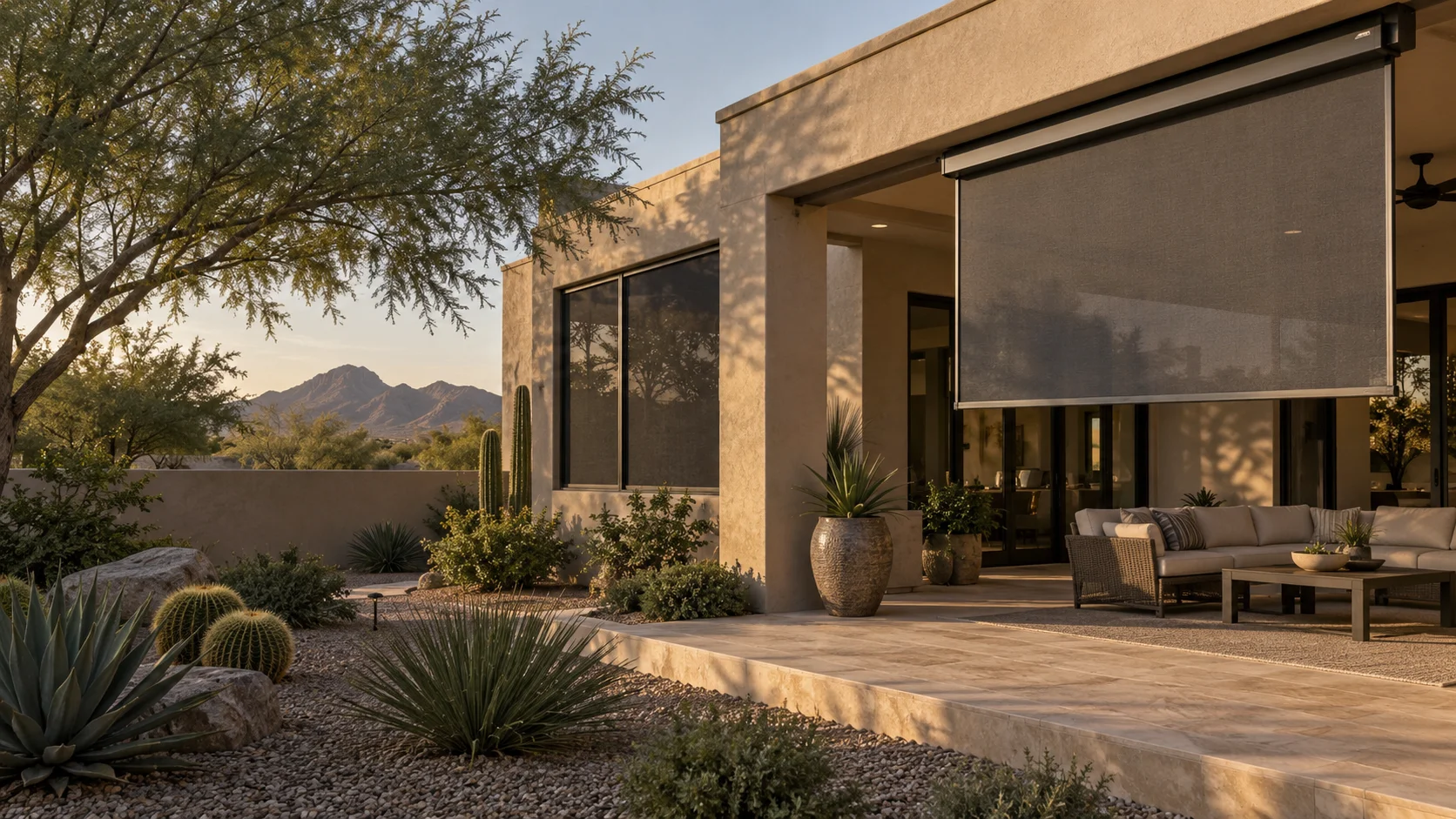
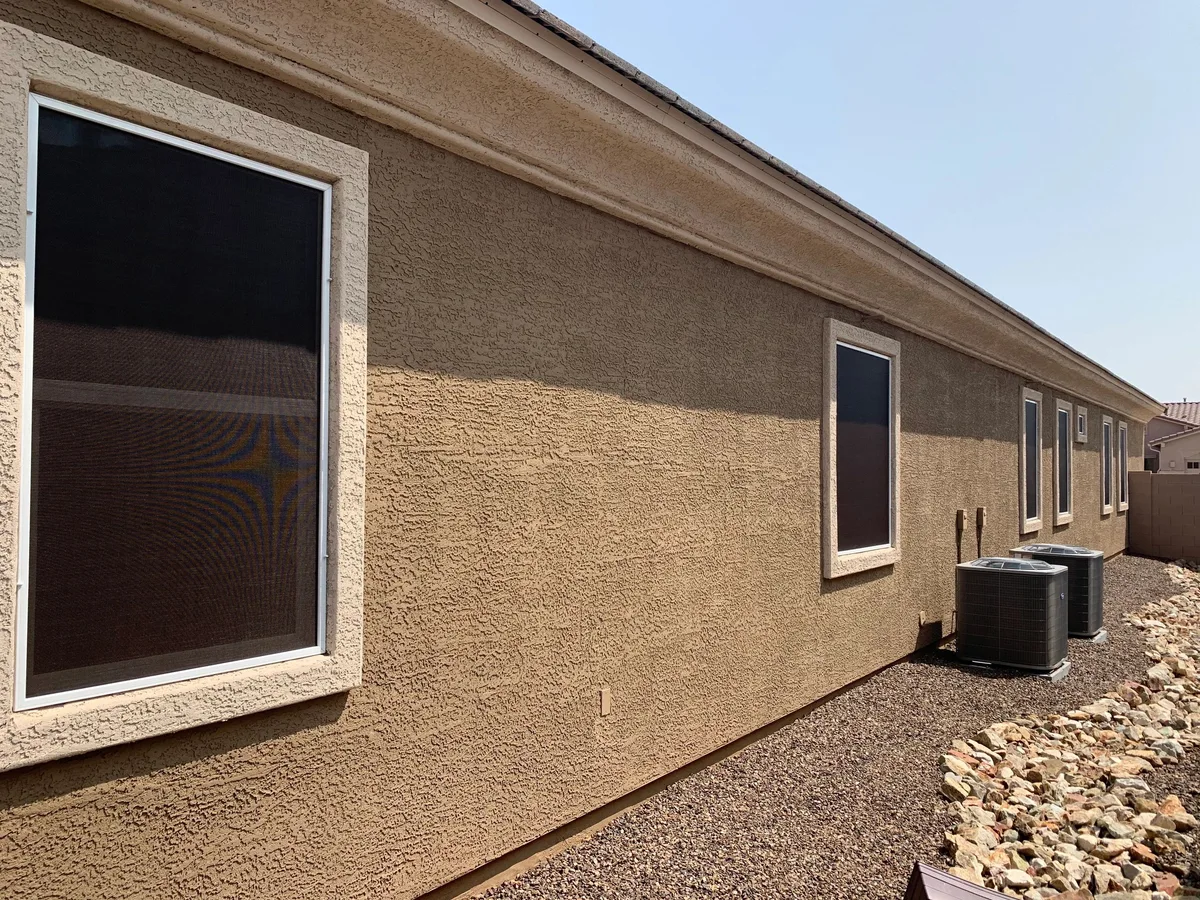
When a little tear in a window screen turns into a bigger headache, it’s tempting to “just fix it real quick.” We get it. You want the bugs out, the breeze in, and your home looking sharp. especially with Phoenix sun lighting up every flaw. But a screen that’s repaired the wrong way can sag, pop out, or fade fast. And once the monsoon winds come barreling through or a curious cat tests the corner, that shortcut shows. This guide walks Phoenix homeowners through the most common screen repair mistakes. and how to avoid them. so your screens stay tidy, sturdy, and good-looking all season long.
Measure wrong, chase ripples later
Screen repair looks simple until the frame doesn’t fit the channel or the mesh puckers along the edge. The easiest mistake? Measuring once, guessing twice. Phoenix homes can have older aluminum tracks, newer vinyl channels, or custom frames. Each one behaves a bit differently in heat. If you’re not careful, even a 1/8-inch error can make the panel rattle or bind.
Quick measuring game plan
- Measure the “daylight opening,” not the old screen. Go from the inside lip to the inside lip of the window track. Take width and height in three spots. Use the smallest numbers.
- Subtract a hair for easy in-and-out. Usually 1/16 to 1/8 inch total is right. Older aluminum tracks may want a touch more clearance, especially if the frame has paint build-up.
- For Sliding Screen Doors, measure top and bottom. Tracks can be out of level. Note both heights and choose the smaller. If the door has adjustable rollers, you still don’t want it jammed.
Honestly, we’ve seen homeowners measure the old bent frame and then wonder why the brand-new one doesn’t “feel square.” Heat expands metal; time warps things. Start from the opening, not the relic.
Phoenix heat meets flimsy mesh. guess who wins?
not all mesh is created equal, especially under a desert sun. Standard fiberglass works fine for many windows, but if you’re after shade or kid-and-pet toughness, you need the right fabric. Buying whatever’s on sale can backfire when the sun bakes it or a dog paw tests the corner.
| Mesh Type | Where it shines in Phoenix | Watch-outs |
|---|---|---|
| Fiberglass insect screen (Charcoal) | Good for most windows; won’t dent; decent visibility | Can stretch if over-tensioned; cheaper versions fade fast |
| Aluminum insect screen (Black/Charcoal) | Holds shape; crisper look; better in high-wind spots | Can dent or crease; reflective in bright light if not dark finish |
| Phifer SunTex 80/90 solar screen | Big energy savings; serious glare cut; awesome privacy | Heavier; needs sturdy frame; darker interior view |
| PetScreen / heavy-duty vinyl-coated polyester | Great for dogs, cats, and kids’ elbows; tough as nails | Lower visibility; heavier, so tension and frame matter |
| UltraVue / high-visibility mesh | Crystal-clear views of Camelback sunsets; more airflow | More delicate; not for pet zones or wind-prone doors |
You know what? Choosing the “right” mesh might be the biggest money-saver long-term. If you want shade and privacy for west-facing windows, *solar screens* like SunTex 80/90 earn their keep during our 110-degree runs. If you’re replacing a patio door screen where your Lab leans, upgrade to *PetScreen* and thank yourself later.
Spline size: small loop, big trouble
That rubber cording that locks the mesh into the frame. called spline. gets ignored until it fails. Use the wrong diameter and you’ll fight wrinkles, loose corners, or a blowout the first time a dust storm hits.
- Match spline to frame channel. Common sizes are .125, .140, and .160 inches. Older aluminum frames often take .125. Heavy solar mesh may need .140 or .160 for bite.
- Choose UV-resistant spline. Cheap spline dries out fast in Phoenix. Look for quality EPDM or UV-rated rubber. A few extra dollars here beats redoing screens next summer.
- Don’t “over-roll” to fake a tight fit. If the spline is undersized, over-rolling only chews mesh and weakens edges. Use the right diameter and a steady hand.
Pro tip from the field: start the corner with short pushes of a roller, not long hard passes. A light pre-seat with a convex wheel, then final pressure with a concave wheel helps avoid nicks.
Over-tensioning the mesh: the sneaky warp maker
We see it all the time. someone pulls the mesh guitar-string tight, and the frame bows like a banana. That tension looks clean for a minute, then the corners gap, and the panel won’t sit flat. The fix is simple but not obvious: let the mesh do the work with even pressure, not brute force.
A steadier way to roll
- Clamp the frame. A couple of Irwin Quick-Grips on a flat workbench keep the frame square while you roll.
- Start at a short side, then the opposite. Alternate sides in an “X” pattern so tension evens out.
- Give it a tap test. After seating the spline, tap the rails. They shouldn’t sound “twangy.” Slight give means less warping, more longevity.
One mild contradiction: you want it tight but not too tight. Yup. The trick is balanced tension, not max tension.
Skipping the frame check: bent today, worse tomorrow
Repairing a screen on a bent frame is like putting new tires on a car with a crooked axle. It’ll roll, just not for long. Before you rescreen, square it up.
- Look for dog-eared corners and twists. Use a carpenter’s square. If it’s out, replace the plastic corners or aluminum keys. Prime-Line and CRL corners are easy swaps.
- Mind the crossbars. Heavy mesh like SunTex needs a mid-bar or stronger extrusions. Otherwise the wind will make it belly out.
- Clean the channels. A soft brush and mild soap remove grit so the spline bites cleanly. Dust is the enemy of grip.
And if the frame is chalky or pitted from sun, it’s often smarter to rebuild with new stock than force another season from it.
Cutting too close and trimming the wrong way
The moment-of-truth mistake: trimming mesh flush before the spline is fully seated. That’s a classic “ask for fray” move.
- Leave an inch of overhang until the end. Seat all sides with spline, then trim at a slight angle with a fresh blade held against the outer edge of the channel.
- Respect corners. Add a tiny slack curve at each corner as you roll. It prevents tearing where forces meet.
- New blade every couple of panels. Dull blades snag and fuzz fiberglass. Your fingers will thank you too.
Let me explain why the angle matters: you’re guiding the blade along a hard edge, which shields the mesh. Straight-up cutting floats the blade and nicks strands.
Forgetting door specifics: tracks, rollers, and handles
Sliding screen doors in Phoenix live a tough life. grit in the tracks, pool splashes, sun-baked plastic wheels. A perfect rescreen still drags if the frame can’t roll or the track’s gummed up.
- Clean and lube the track first. Vacuum, wipe, then use a dry silicone spray. Avoid sticky oils; they collect dust and turn to paste.
- Adjust the rollers. Most doors have top and bottom adjustment screws. Raise the door slightly to clear the sill, then level it so it slides with two fingers.
- Check the bug sweep. That thin bottom strip keeps pests out. If it’s curled or brittle, replace it.
- Install a pet grille or kick plate if needed. They take the brunt of door slams and paws, saving your mesh.
And yes, handles do crack. Prime-Line offers widely compatible replacements that don’t look clunky. Small parts matter.
When weather timing and storage go sideways
A little desert wisdom: rescreen early morning or indoors. On a 105-degree patio, spline gets rubbery, mesh stretches, and by sunset. sag city. If a haboob’s on the radar, park removable screens in a safe spot. That grit eats mesh life.
- Work cool, store cool. Keep mesh rolls and spline in shade. Hot coils develop memory curls you’ll fight all afternoon.
- Mind monsoon season. Wind-driven rain will find a gap you “meant to fix later.” Seal it now, save the shop-vac dance later.
And if you’ve ever smelled hot dust on the first AC run each summer, you know: Phoenix dirt gets everywhere. Screens help. if they’re snug.
Colors, HOAs, and that “almost matches” problem
Choosing the wrong color can make a fresh screen look like a patch, especially on stuccoed exteriors with bronze or almond frames. Charcoal mesh usually “disappears” best against views. Gray reads brighter. Bronze frames? Keep them bronze. And some HOAs want uniform *solar screens* on street-facing windows. Check the rules before swapping one window to SunTex 90 and leaving the others bare. you might love it, but the board might not.
Another small note: *window screen repair* materials from different brands can vary in sheen. If you’re mixing stock, test one panel first to make sure it doesn’t stand out in direct sun.
Thinking screens are only about bugs
Sure, bugs are a big reason to rescreen. But gaps also invite desert critters we’d rather not host: tiny ants, gnats, even scorpions (they’re flatter than you think). Tight corners and clean edges keep them out. Also consider airflow: high-visibility mesh gives more breeze if your home relies on cool mornings with the AC off.
And there’s energy savings. Shade-facing mesh like SunTex 80 can cut interior heat gain in the afternoon. In Phoenix, that’s not just comfort. it’s dollars back on your bill. It’s why *screen repair Phoenix* searches spike every spring. People remember last summer’s glare and do something about it.
DIY or call the pros? A quick reality check
If you’ve got a steady hand, a good roller, and a free Saturday, single-panel rescreening can be a satisfying DIY. But if you’re dealing with warped frames, heavy *solar screens*, or a bundle of mismatched doors and windows, calling a local team saves frustration.
- DIY-friendly: One or two standard windows, basic fiberglass or aluminum mesh, frames that are square.
- Call us: Large patio doors, pet-resistant or solar mesh installs, bent frames, missing corners, HOA color matching, or you just want it done fast and tidy.
We carry quality materials like Phifer SunTex, UltraVue, PetScreen, UV-rated spline, and replacement corners. And we build frames that stay square through heat swings. Mobile service means we come to you. yard, garage, driveway. no mess inside the house.
Common screen repair mistakes to skip. at a glance
- Measuring the old frame instead of the opening and skipping the 1/16-1/8 inch clearance.
- Choosing the wrong mesh for sun, pets, or privacy needs.
- Mismatching spline size and skipping UV-resistant materials.
- Over-tensioning mesh and warping the frame.
- Ignoring bent corners and dirty channels before rescreening.
- Trimming mesh too soon or with a dull blade at the wrong angle.
- Forgetting door track cleaning, roller adjustments, and bug sweeps.
- Working in peak heat and storing mesh where it curls.
- Mixing colors/shines that clash with frames or HOA rules.
Skip these, and your screens will look clean and stay put. through windbursts, hot spells, and the occasional soccer ball.
Need a hand? Arizona Screen Company is right here in Phoenix
If your project grew from “I’ll fix one screen” to “Wait, where’d that corner go?”, we’ve got you. Arizona Screen Company helps Phoenix homeowners with *screen door repair*, *window screen repair*, and custom *rescreening* for shade, pets, and privacy. We build and fit on-site, match colors, and tidy up before we roll out. You’ll get screens that look sharp and fit right. without the guesswork.
Call us at 480-771-2543 or tap to call now. Prefer online? Request a Free Quote and we’ll get you scheduled fast.
Apply it to your opening.
Compare Solar Screen Options for the product choices, fit, materials, and assessment relevant to this topic.
Installation and service are provided by Arizona Screen Techs. The written project scope confirms the exact product, access, and any applicable warranty.