
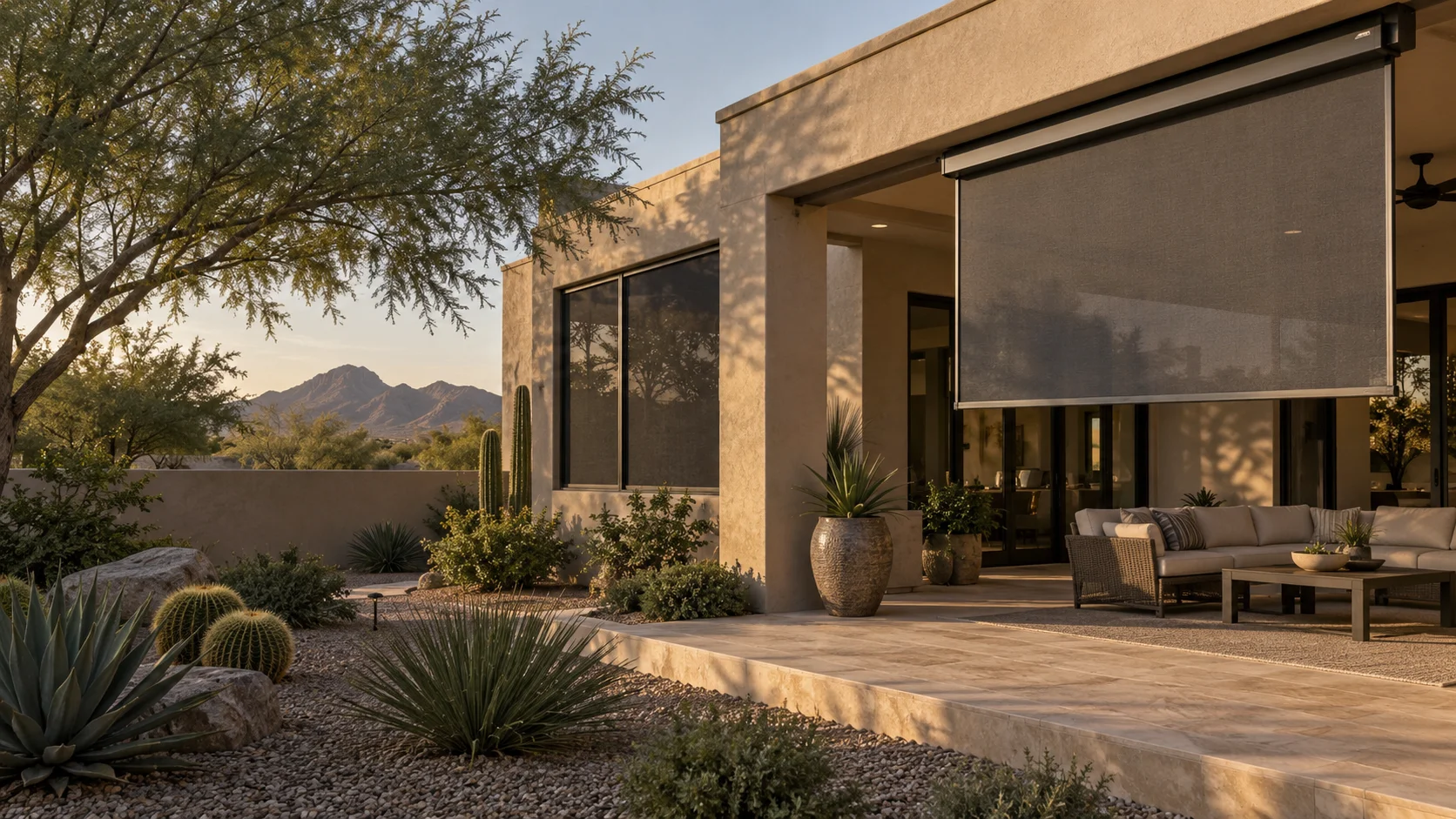
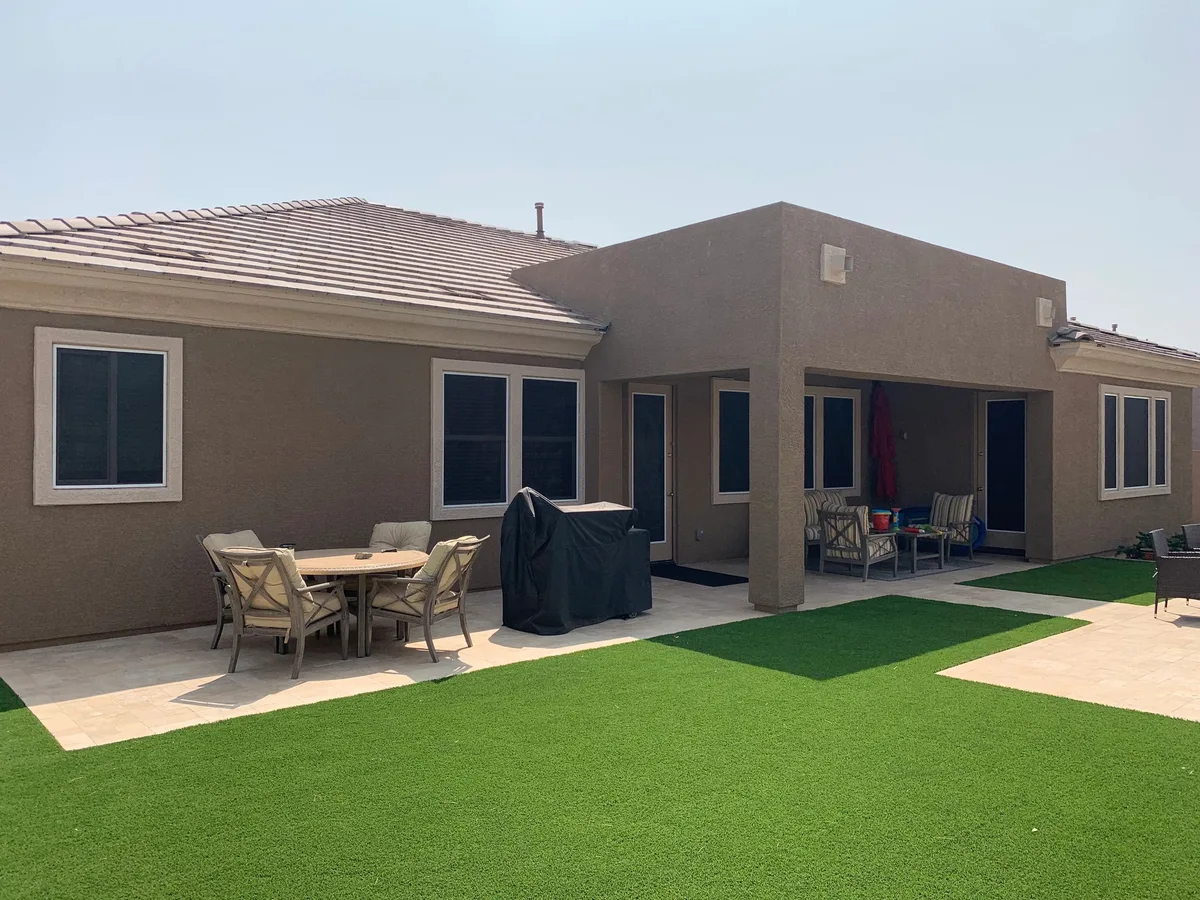
Define the problem in the outdoor space
Describe where the sun or glare reaches the patio and when it affects the way the space is used. A low afternoon angle and a shaded breakfast area may need different shade layouts.
Consider the sitting areas, doors, walkways, and the view you want to retain. The shade should help the routine without interfering with movement through the opening.
An approximate size starts the conversation. Final dimensions depend on the actual system, mounting, clearance, and guides.
Check the mounting surface
The beam, header, wall, surrounding trim, and clearance need assessment before an assembly is selected. Do not assume a photograph of another patio proves the same fixing method will work here.
Access also matters after installation. Confirm how the fabric, controls, and any motor can be reached for adjustment or service.
The written scope should identify the mounting and any separate work required. A shade estimate does not automatically include structural or electrical alterations.
Compare fabric in the real light
Mesh affects shade, glare, daylight, outward visibility, and airflow. The right fabric follows the opening and preferences rather than a maximum-sounding density.
Compare an actual sample at the site. Existing light and nearby windows can change the impression. Daytime screening does not guarantee nighttime privacy.
Confirm the compatible fabric and current availability for the selected shade. Do not assume that every fabric named in a general online article is an offering or suits the same system.
| Choice | What to check |
|---|---|
| Fabric | Shade, daylight, outward view and compatibility |
| Mounting | Surface, clearance and fixing method |
| Manual control | Reach, effort and traffic |
| Motorized control | Power, included controls and service access |
| Automation | The actual motor/controller compatibility |
| Weather operation | Written system limits and retraction guidance |
Choose controls for everyday use
Manual operation can suit an easy-to-reach opening. Discuss the operating motion and whether furniture or landscaping blocks the control.
Motorization can be useful for frequent use or difficult reach. Confirm the actual power arrangement, included controls, placement, and behavior when power or a control is unavailable.
No named platform, motor brand, app, solar power, or sensor is assumed here. Optional functions need confirmation for the exact product and equipment.
Weather, maintenance, and coverage
Retractable fabric shades are not storm barriers. Follow the selected system’s operating and retraction guidance rather than copying the way a neighbor uses another installation.
Ask how the fabric and moving parts are cared for, where the assembly is serviced, and what the written warranty covers. Fabric, motor, control, and installation terms may differ.
Use the patio-shade and motorized-shade product guides to compare the complete project. A clear scope is more useful than a generic best-system label.
Apply it to your opening.
Plan a manual or motorized patio shade for the product choices, fit, materials, and assessment relevant to this topic.
Installation and service are provided by Arizona Screen Techs. The written project scope confirms the exact product, access, and any applicable warranty.
Questions before you decide.
Will it integrate with my smart home?
Confirm the actual motor, controller, and supported integration. Do not assume a platform from the word motorized.
Can it remain down in strong wind?
Use the written guidance for the selected system and retract it when required.
Is power work included?
The estimate must define the power arrangement and any separate appropriately qualified work.
Can I compare a manual shade?
Yes. Compare reach, effort, frequency of use, and the opening before deciding.