If you live in Phoenix, you know the sound of summer isn’t just cicadas. It’s a chorus of buzzing, fluttering, and the occasional scorpion doing a surprise walkabout. You want fresh air without uninvited guests, and you want it now—especially on those rare desert evenings when the breeze actually cools. Here’s the thing: the right screens make that easy. With smart choices and a few local tricks, you can keep your home breezy, cool, and bite-free all season. And yes, it can look great too.
Why Phoenix Summers Send Bugs Into Overdrive
Mosquitoes are sneaky here. They arrive after monsoon rains fill planters, gutters, and those little puddles that somehow hang on. Gnats show up at sunset like they got the memo. Houseflies love kitchens. And Arizona bark scorpions? They’ll try anywhere they can slip in—door thresholds, gaps, vents. Not to scare you; just keeping it real.
Screens are your silent bouncers. Well-made ones block tiny pests, hold up to heat, and breathe better than you might think. Pair that with better seals and door hardware, and you’ll cut down the nightly “mosquito hunt” to zero. It’s peace of mind. It’s fewer itchy bites. It’s a cooler home that still feels open to the evening air.
Meet Your Screen Crew: Materials That Actually Work Here
Let me explain something simple that gets overlooked: not all **window screens** are the same. The mesh, the frame, even the corners matter in our desert sun. Here’s a quick, real-world rundown of what works in Phoenix.
Fiberglass Insect Screen
Affordable, flexible, and forgiving if kids or dogs bump into it. Standard mesh count is 18×16, which keeps most bugs out and lets air flow. The downside? UV can age it sooner, though modern fiberglass holds up far better than it used to.
Aluminum Insect Screen
Tougher against sun and pets’ paws. It’s crisper looking but can crease if dented. Great airflow and long life under high heat. If you’re picky about a clean, flat look, you’ll appreciate it.
No-See-Um (20×20) Screen
Tighter weave for tiny gnats and midges. We use this near washes, greenbelts, or any yard with lots of plants and evening watering. It blocks smaller pests; airflow is a little lower, but the trade-off is worth it in those buggy zones.
Pet-Resistant Screen
Think heavier vinyl-coated polyester—brands like Phifer PetScreen are common. Dogs can jump, lean, paw, and it just shrugs. Airflow is reduced compared to standard mesh, yet it’s a life saver for sliding doors.
Solar Screens (Sun-Shading Mesh)
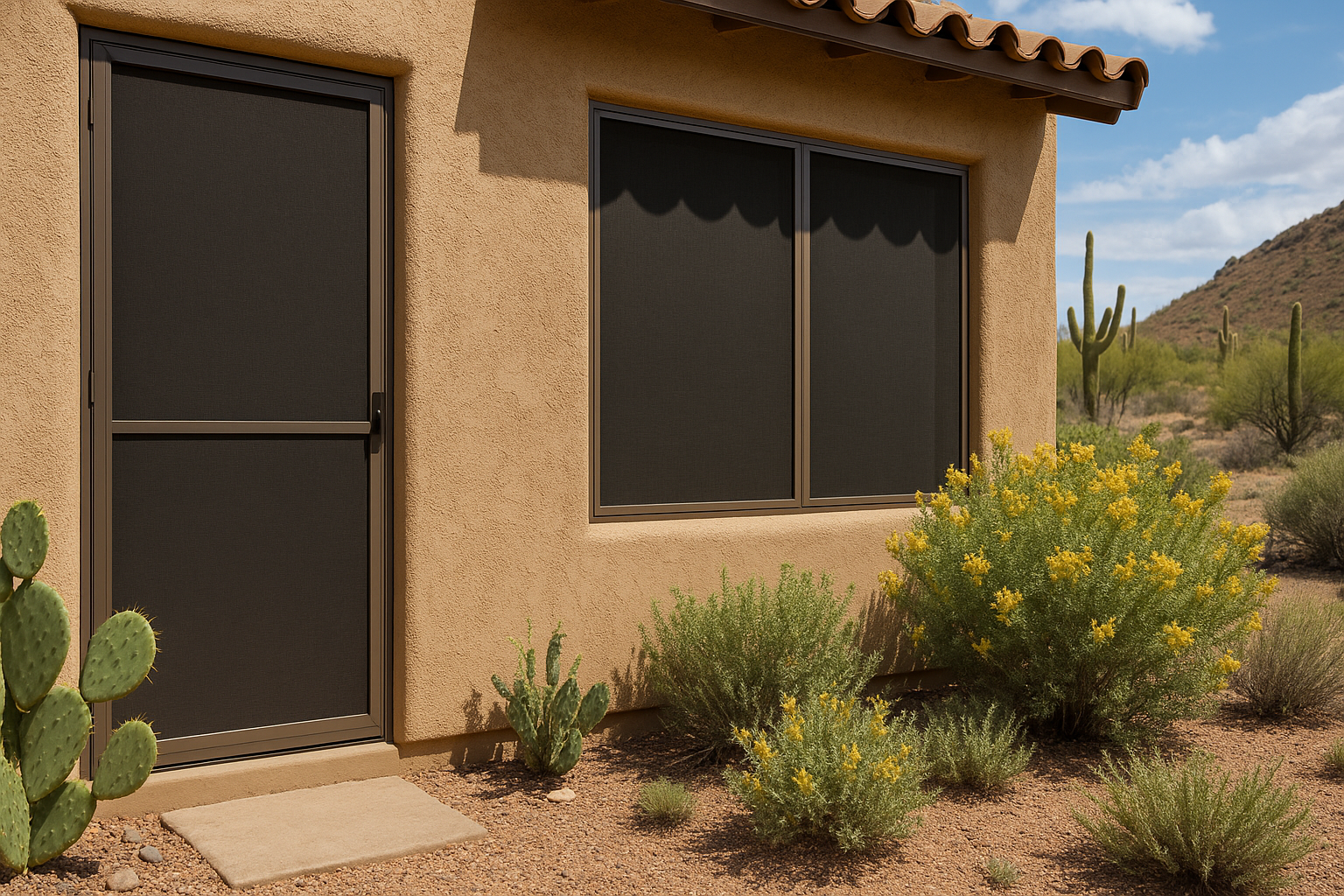
This is a Phoenix favorite. Products like Phifer SunTex 80 or 90 cut heat and glare while blocking insects. They reduce interior temps, protect furniture, and help AC breathe easier. You do lose a bit of view clarity, but the comfort gain is huge.
Retractable Screens
Perfect for front entries, French doors, or patios where you want a clean look. They roll out when needed and hide away when not. The right cassette and track keep them smooth, even after a dusty haboob.
Security Screens
High-tensile stainless mesh in a robust frame—stops bugs and deters break-ins. You still get airflow without bars. Pricier, yes, but ideal for exposed entries or vacation homes.
| Screen Type | Best For | Bonus Phoenix Perk |
|---|---|---|
| Standard Fiberglass | Everyday windows | Good airflow; budget-friendly |
| No-See-Um Mesh | Gnats and tiny pests | Great near monsoon-prone yards |
| Solar Screens | Heat + bug control | Lowers glare and AC strain |
Mesh Count, Airflow, and Visibility: The Real Trade-Off
You know what? There’s a small contradiction here. Tighter mesh blocks more bugs, but it can reduce airflow. Looser mesh breathes better, but tiny pests might squeeze through. The sweet spot for most Phoenix homes is a standard 18×16 mesh for bedrooms and living areas, then **20×20 “no-see-um”** mesh for the worst buggy windows. That combo works. It really does.
Visibility matters too. “Screen door effect” is less obvious with darker mesh—odd but true. Dark charcoal tends to disappear from your view better than light gray during daytime. And for desert sunsets? Solar screens mellow glare so you actually see color instead of squinting.
Solar Screens vs. Insect Screens: Which One Pays Off?
Short answer: both. Slightly longer answer: Phoenix heat makes **solar screens** a smart investment. They can reduce solar heat gain on west- and south-facing windows, cutting the edge off 4 p.m. rooms without turning them into caves. Many homeowners pair solar mesh on hot exposures with standard insect mesh on shaded sides. That hybrid plan saves energy and keeps airflow high where you want it.
A quick note on performance: Sun-shading fabrics like SunTex 80/90 can reduce glare and protect floors and furniture from UV fade. They still block bugs. And if you’re HOA-bound, we’ll help match frame and fabric colors so the look stays consistent. Bronze, tan, adobe, black—there’s a finish that plays nice with stucco and tile roofs.
Doors, Patios, and The Real-Life Stuff You Deal With
Sliding patio doors take a beating—kids run through, pets paw the corner, and monsoon winds tug on the frame. An extruded aluminum frame with steel rollers makes a huge difference. Pet-resistant mesh in the bottom half is smart if your dog likes to patrol the yard.
French doors call for retractable screens that meet in the middle and latch clean. They disappear when you don’t need them. For covered patios, consider larger-format panels or custom enclosures that keep bugs out during dinner, then glide open when you want the big airy feel.
And garages? A temporary garage screen lets you work out, tinker, or host a quick birthday setup without flies joining the party. It’s a small quality-of-life upgrade that people end up loving.
DIY Or Call The Pros? A Friendly Reality Check
If you’ve got one torn screen and a free Saturday, a DIY rescreen is doable. You’ll need new mesh, spline, a spline roller, and a sharp blade. That said, fitting tall patio sliders, **retractable screens**, or solar screens is another story. Corners must be square. Spline tension should be even. Roll-formed frames can warp; extruded frames hold shape better. Little details, big results.
Arizona Screen Company does on-site measurement and installation across the Valley, including Phoenix, Scottsdale, Chandler, Tempe, Mesa, and beyond. We build to fit your openings, match your colors, and account for quirks like rounded stucco returns or out-of-plumb tracks. If you need window screen replacement Phoenix, or a stubborn slider rebuilt, we’ll get it done right the first time.
Monsoon-Smart Maintenance: Quick Wins You Can Do
Screens last longer with light care. Phoenix dust is relentless, but the routine is simple.
- Rinse gently. Use a garden hose and mild dish soap with a soft brush. No pressure washers.
- Check spline and corners. If the rubber spline is brittle or corners feel loose, it’s time to refresh.
- Tighten door rollers. Sliders glide better and don’t “jump” tracks during wind gusts.
- Seal the small stuff. Add a door sweep and brush seals; screen your weep holes if they’re bug highways.
- Mind the plants. Keep shrubs from rubbing screens; friction wears mesh fast.
You don’t need a full overhaul every year. But a quick pre-monsoon check and a fall rinse pay off. It’s like changing AC filters—easy routine, happier home.
Looks Matter: Color, Curb Appeal, and HOA Harmony
Screens can look sharp. Frame finishes in bronze, white, adobe, and black blend with desert palettes. Darker mesh tends to “disappear,” keeping your view clearer. Solar fabrics can match or complement trim, so the house reads clean from the street. And if your HOA has guidelines, we’ll help you stay compliant without giving up comfort.
A small digression, because it’s real: solar shading saves couches. That favorite leather sofa by the window? UV is not its friend. A solar screen or two will save you the heartbreak of cracked cushions and bleached rugs. Little fix, big smile.
Common Questions, Answered Fast
Will screens block my AC vents’ return air?
Nope—different system. But screens can help reduce indoor heat, so your AC runs less.
Do solar screens make rooms dark?
They reduce brightness and glare. Rooms still get daylight, just smoother and cooler. You’ll notice more comfort than darkness.
What about scorpions—can they get through?
Screens stop them at windows and doors. The key is sealing thresholds and gaps too. We’ll show you a simple perimeter plan that helps.
How long do screens last in Phoenix?
Quality mesh can go 5–10 years or more, depending on exposure and care. Frames can last far longer, especially extruded aluminum.
Is it worth doing just the west side?
Often, yes. Many homeowners start with the hottest exposures, then finish the rest later. It’s a smart, budget-friendly approach.
Why Arizona Screen Company?
We’re local. We know Phoenix sun, monsoon dust, and the exact bugs you’re battling. Our team builds custom frames, fits **insect screens Phoenix** wide and tall, and installs **retractable screens** that glide like they should. We match colors, respect HOAs, and clean up our work like we were never there. Need a quick **window screen replacement Phoenix** or a full-home **solar screens** package? We’ve got you.
One more thing—no pressure. We’re happy to check your current setup, offer straight answers, and recommend only what makes sense for your home. Simple as that.
Ready To Shut The Door On Bugs, For Real?
Let’s make your summer easier. Fresh air, fewer pests, cooler rooms—done. Call Arizona Screen Company at 480-771-2543 or Request a Free Quote. We’ll measure, build, and install screens that work hard in Phoenix heat and look good doing it.