
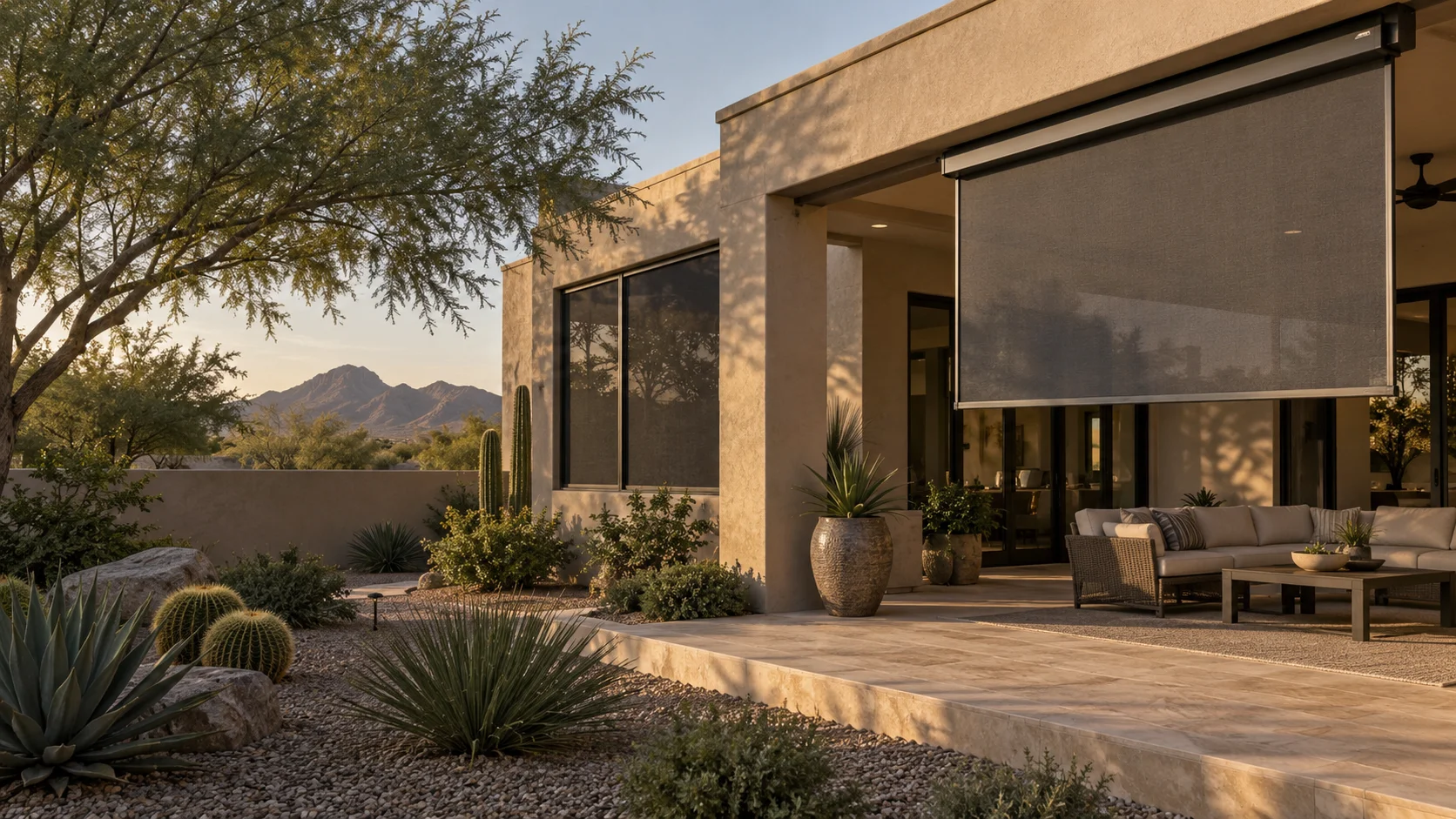
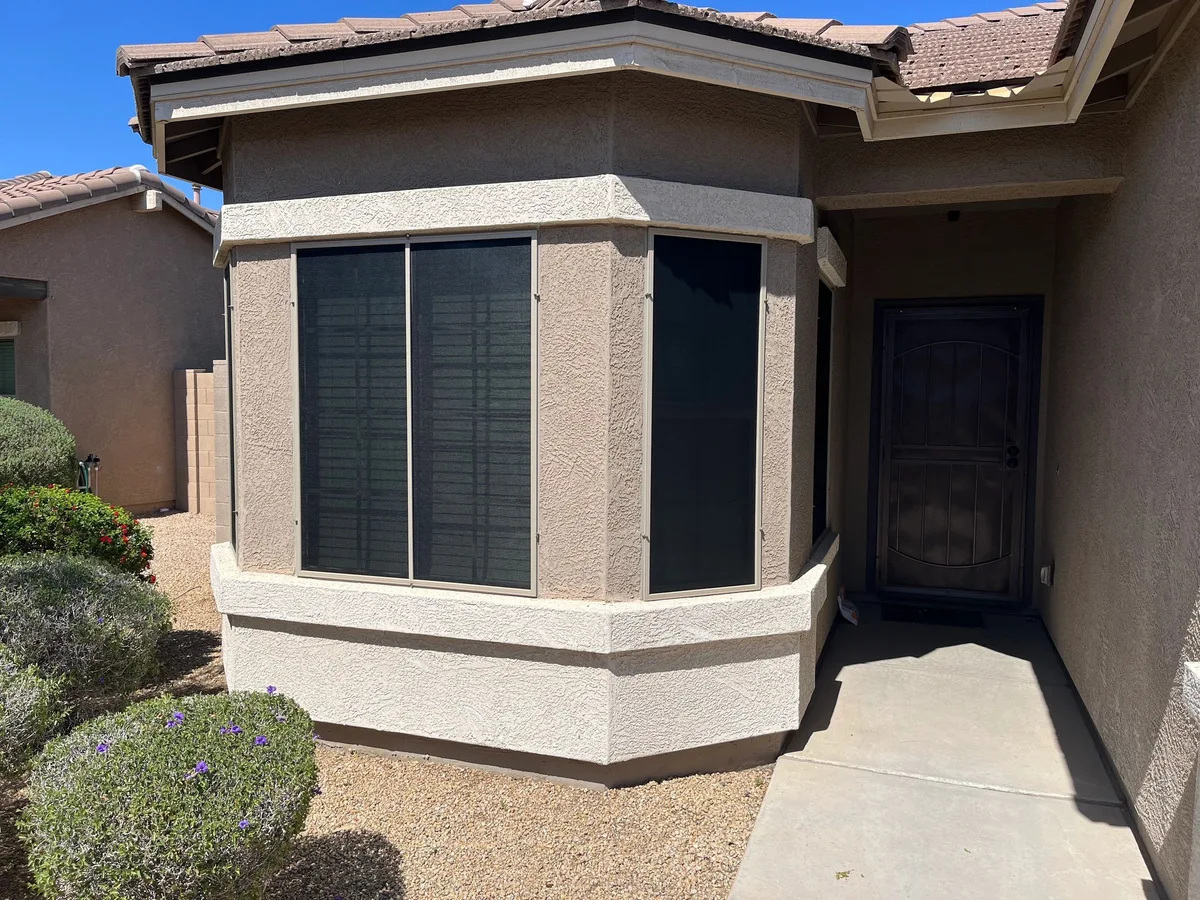
Separate mesh from the frame
The mesh fills the opening; the surrounding frame outlines it and attaches to the window. Matching one does not automatically establish the right finish for the other.
Compare the trim, exterior wall, nearby doors, and the size of the panel. A small swatch can look different across a broad window.
The sample names refer to the existing fabric library. Do not assume that every named mesh color is a current frame finish or available in every fabric and size.
Look from inside as well as outside
A screen is part of the view through the glass, not only the exterior appearance. Review how the sample changes outward visibility, incoming light, and glare.
Existing glazing and reflections influence what you see. A loose sample in a brightly lit room cannot completely show how the finished panel will behave at the window.
Consider the time when the room is used. A home office with glare and a lightly used shaded room may need different compromises.
| Where to look | What to compare |
|---|---|
| From the street or yard | Frame outline, trim and exterior palette |
| From inside the room | Outward view and incoming daylight |
| At the sun-exposed hour | Glare and the fabric density |
| After dark if privacy matters | Interior lighting versus outdoor lighting |
| At the complete opening | Panel size, shape and fixing details |
Color and density are separate decisions
SunTex 80 and SunTex 90 have different weave characteristics. The technical sheet distinguishes openness and light-related performance from the product names.
Do not assume that a particular color alone provides a guaranteed energy result or privacy level. Lighting, mesh density, glazing, and the view also matter.
If you need more shade, compare the density with the color rather than using the darkest-looking phone photograph as the entire decision.
Use samples and the property requirements
Phone displays, brightness settings, and photographs can shift color. Ask for an actual sample where available and inspect it alongside the intended frame and trim.
If an HOA or property manager approves exterior changes, confirm the requirement before fabrication. The installer’s color discussion does not replace that approval.
For a replacement panel beside existing screens, describe what you want matched. Age, weathering, prior products, and current availability can affect a perfect-looking match.
- Actual mesh and frame samples
- The property’s trim and surrounding exterior
- How the room is used
- The daylight and view to retain
- Any approval needed before fabrication
Keep the final choice in the scope
The estimate should identify the selected material, color, frame finish, dimensions, and mounting. A vague instruction to match the house can leave too much unresolved.
For shaped or elevated windows, add access and the removal procedure to the discussion. Appearance is one part of a usable assembly.
The solar-screen product guide includes the current sample imagery and the main fabric comparisons. Use it to make a clearer choice before the final measurement.
Apply it to your opening.
View the SunTex mesh samples and frame-planning guide for the product choices, fit, materials, and assessment relevant to this topic.
Installation and service are provided by Arizona Screen Techs. The written project scope confirms the exact product, access, and any applicable warranty.
Questions before you decide.
Can I order from a photo of the color?
Use it to start the discussion, not as an exact match. Compare the actual sample and frame finish before fabrication.
Does black always provide better privacy?
Do not use color alone as a guarantee. Mesh, light, glass, and the viewing conditions matter.
Are mesh and frame colors identical?
They are separate choices and availability is confirmed for the proposed assembly.
What if I need to match existing panels?
Share that requirement and assess the actual existing material, age, finish, and available replacement options.