
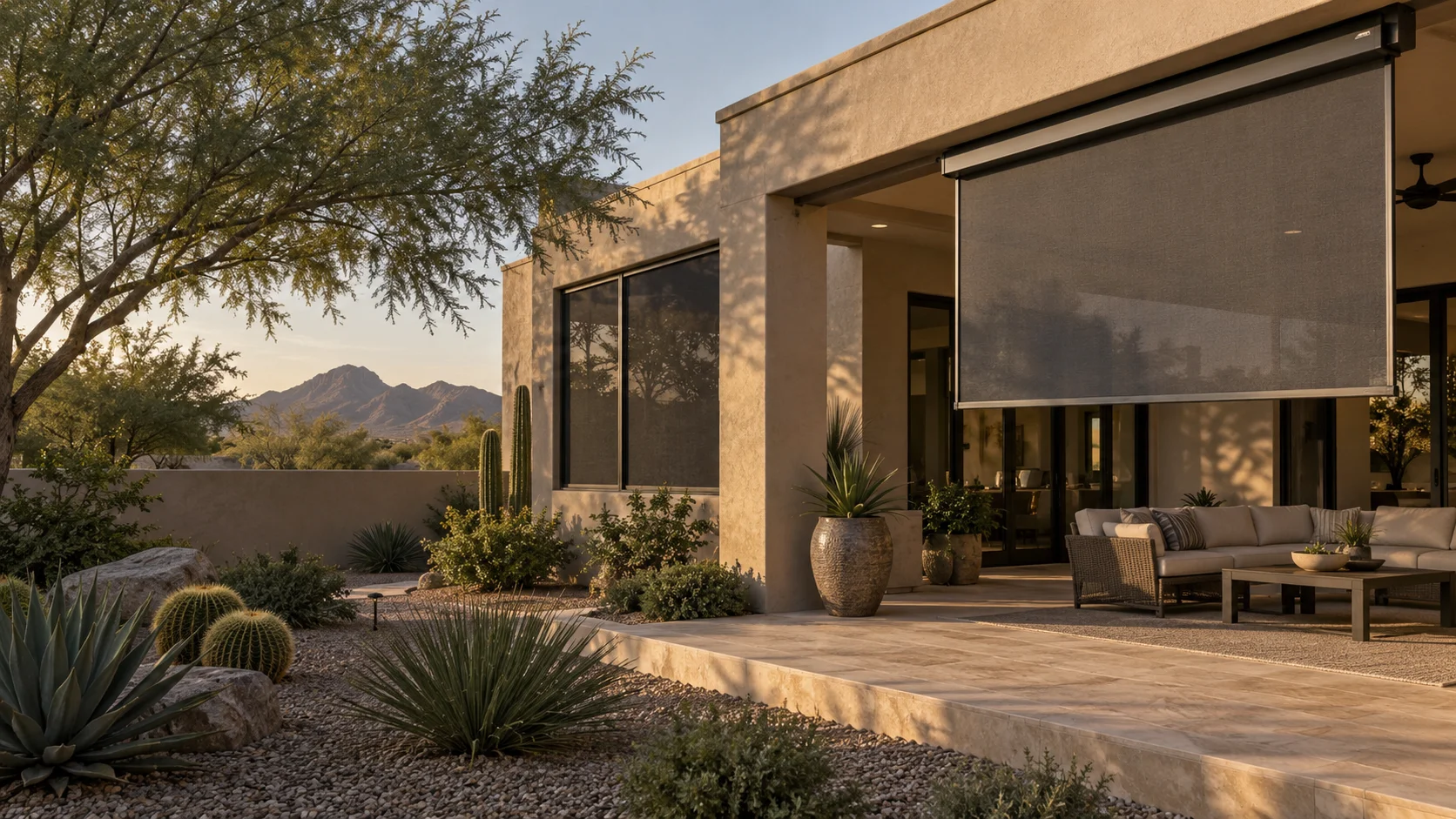
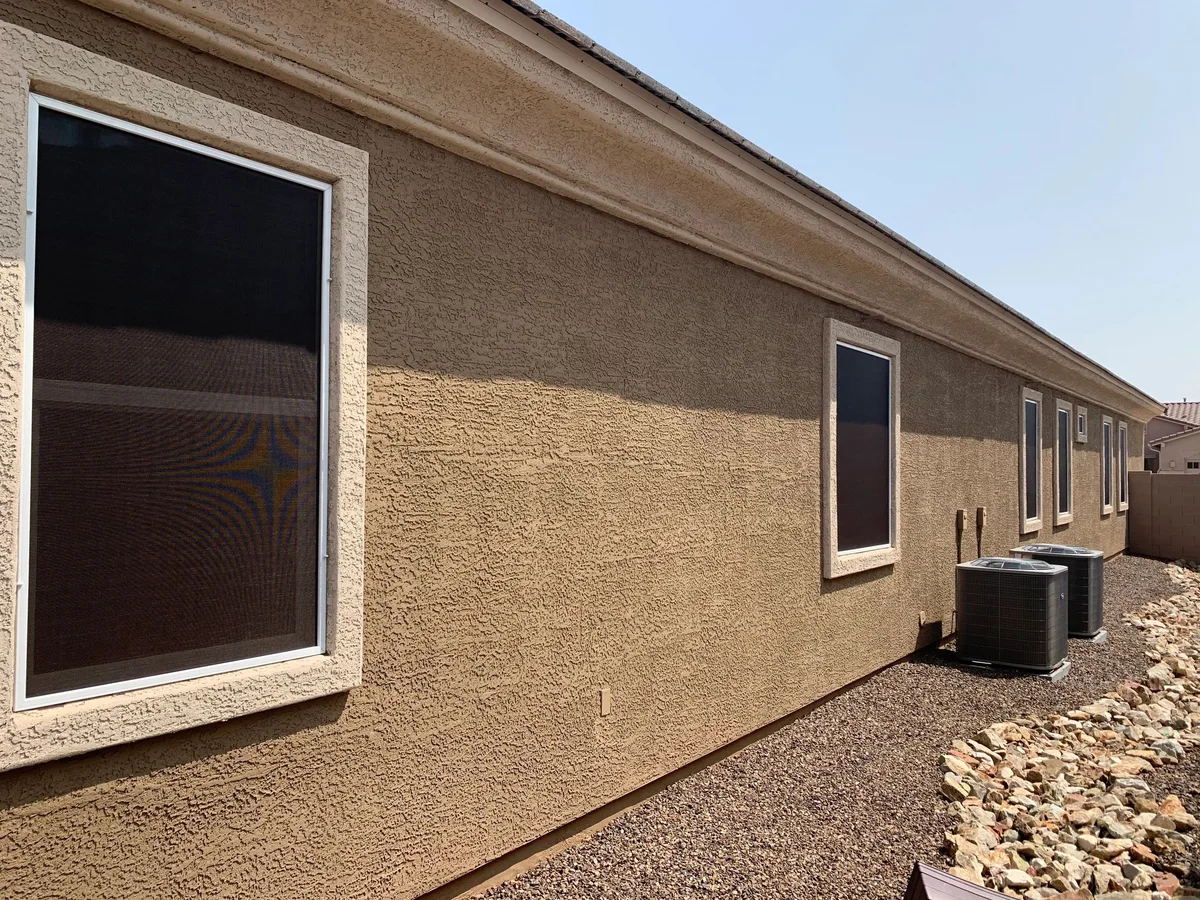
Describe the view you want to keep
An outward view is part of how a room feels. Tell the installer whether you value a garden, patio, distant landscape, daylight, or simply less glare at a work area.
A fabric that shades the room more strongly can also change the amount of light and visibility. There is no universal balance for every window or household.
Review the sample from your normal position in the room. A loose card seen under bright showroom lighting may not show the same impression as the finished panel at the glass.
Read openness separately from product names
The published SunTex sheet lists approximate openness of 25% for SunTex 80 and 10% for SunTex 90. It reports UV, light and solar properties separately.
Those values do not establish a percentage improvement in the view, privacy, or cooling bill. They describe a fabric property that helps with comparison.
If shading is also a goal, look at the actual time and angle of sunlight. Compare the fabric in the room rather than choosing only by the stronger-sounding name.
The frame is part of the visible result
Frame depth, outline, attachment points and fit influence how the screen looks around the window. Confirm the proposed assembly rather than selecting fabric alone.
The existing sample palette includes beige, black, brown, dark bronze, grey and stucco mesh. Frame finish is a different choice, with current availability confirmed for the product.
When matching adjacent screens, inspect the existing material and weathering. Do not assume a new sample or old photograph guarantees an exact match across different products and ages.
Privacy changes with the lighting
A screened window can be less clear from outside in daylight, but that relationship can change when interior lights are brighter after dark.
If privacy is important at night, keep a separate interior covering plan. Outward visibility and inward privacy should be assessed at the times the room is actually used.
Reflective glass, surrounding light and viewing angle also influence the scene. A color or density label alone is not a complete privacy assessment.
Keep the view usable after installation
Confirm how the panel can be removed for cleaning and refitted securely. A good-looking assembly should not make routine glass access unnecessarily awkward.
Check the corners and attachments, especially for shaped or high openings. An accurate fit and appropriate access remain necessary even when appearance is the main goal.
Use the solar-screen product guide for samples and fitting details. Define the material, frame, finish, mounting and included openings in the estimate before fabrication.
Use the viewing position as a decision input
Review the sample where you normally look through the finished screen. A patio viewed across a room and a small window beside a desk present different scenes and angles. Compare the fabric with the actual glass and normal indoor lighting rather than only a bright exterior photograph.
Rank the desired outcomes before ordering: retain daylight, reduce distracting glare, preserve a garden view or improve durability under contact. The final sample and compatible frame should respond to that preference. No percentage improvement in visibility or privacy is assumed, and a separate household safety concern still requires an appropriate product rather than an inference from screen appearance.
- Normal viewing position
- Scene to retain
- Priority among desired outcomes
- Actual fabric and glazing
- Separate protective requirements
Apply it to your opening.
Compare the fabric and outward view for the product choices, fit, materials, and assessment relevant to this topic.
Installation and service are provided by Arizona Screen Techs. The written project scope confirms the exact product, access, and any applicable warranty.
Questions before you decide.
Does SunTex 90 mean 90% visibility or privacy?
No. A product name, openness and the actual viewing conditions are different measures.
Can I choose only from a phone photo?
Use it to start the discussion, then compare a physical sample at the actual window.
Will a darker screen hide the room at night?
No blanket nighttime privacy guarantee is made.