Thinking about adding Window Sun Screens to beat the Phoenix heat? Good move. The right screens can cool rooms, protect flooring, and give your AC a break—without making your windows look like they’re wearing sunglasses at night. This guide walks you through a friendly, real-world process for DIY sun screen installation, with tips that actually hold up in summer, monsoon season, and those weird windy days that kick dust into everything. You don’t need to be a contractor; you just need the right tools, a little patience, and a few tricks the pros use. And if you get halfway and think, “You know what, I’d rather not wrestle with spline in July,” Arizona Screen Company is here in Phoenix and happy to help.
Contents
- 1 Why sun screens make sense in Phoenix (and feel really good in July)
- 2 What you’ll need (without overloading your toolbox)
- 3 Measure like a pro (so your frame fits the first time)
- 4 Frame building 101: clean cuts, square corners, no warping
- 5 Which mesh should you choose? 80%, 90%, or more
- 6 Mounting methods that actually hold up in monsoon winds
- 7 Step-by-step: putting your sun screen up
- 8 Avoid these common mistakes (we see them all the time)
- 9 Care, cleaning, and staying ready for monsoon season
- 10 DIY or call a pro? A quick gut check
- 11 Quick FAQ: little details people ask us all the time
- 12 Ready to cool your home with better shade? Let’s talk.
Why sun screens make sense in Phoenix (and feel really good in July)
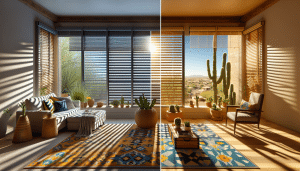
Here’s the thing: Phoenix sunlight is fierce. Sun screens block a big portion of solar heat and glare while still letting in air and light. That means cooler rooms and fewer hot spots. They also help protect your furniture, flooring, and artwork from harsh UV. Most homeowners see the difference fast—especially on west-facing windows that feel like a heat lamp at 4 p.m.
One more note: Some HOAs care about color and frame style. It’s not fun, but it’s real. Check your community rules before you start buying materials. Earth tones like bronze, desert sand, and stucco-matching beige usually fly under the radar.
What you’ll need (without overloading your toolbox)
Let me explain this part simply. You don’t need a shop full of gear. Just a few focused tools pull the whole job together.
- Measuring tape and pencil – Measure twice. Then measure again. Yes, really.
- Hacksaw or miter saw – For cutting screen frame stock clean and square.
- Corner connectors (inside corners) – The little plastic or metal keys that join the frame.
- Screen spline and a spline roller – That rubber cord holds the mesh in the frame; the roller presses it in.
- Screen frame material – Usually aluminum, sold in sticks at hardware stores or from us cut-to-size.
- Exterior-grade screws and clip hardware – For mounting the screen to the window frame or stucco.
- Utility knife and straightedge – Trim the mesh cleanly without frayed edges.
- Level and square – Straight edges matter, otherwise the screen can “smile” or bow.
- Safety glasses and gloves – Metal frame edges can be sharp; protect your hands and eyes.
Extra but handy: A rubber mallet for nudging corners snugly and painter’s tape to hold mesh in place as you work.
Measure like a pro (so your frame fits the first time)
Most Phoenix homes have stucco surrounds or metal window frames. Your mounting approach changes how you measure, so pause here and choose a style.
Inside mount vs. face mount
- Inside mount – The screen sits inside the window recess. Sleek look, less wind exposure. Measure the tight opening width and height in three places each; use the smallest numbers and subtract about 1/8 inch for wiggle room.
- Face mount – The screen covers the window trim or stucco face with clips. Easier access and often better shade coverage. Measure the exact coverage you want, and check for any uneven stucco that could tilt the frame.
Yes, it sounds fussy. But accuracy up front means the screen doesn’t rattle when monsoon gusts roll through.
Frame building 101: clean cuts, square corners, no warping
Cut your aluminum frame pieces to length, two rails for width and two rails for height. If your frame uses corner keys, factor in the key lengths so your finished size matches your opening.
- Dry fit first – Assemble the frame without mesh to confirm square and size. A carpenter’s square helps; a level does too.
- Roll the mesh – Lay the mesh over the frame with a bit of overhang. Start in the top channel and press in the spline with the roller. Work opposite sides next—top, then bottom; left, then right—to keep even tension.
- Keep it snug, not drum-tight – If you pull mesh too tight, the frame bows. If it’s too loose, it ripples. Aim for smooth and flat with minimal stretch.
- Trim cleanly – Use a sharp utility knife to cut excess mesh along the spline. Keep the blade angled slightly outward to avoid nicking the spline.
Small contradiction, big truth: Tight is good; too tight makes it worse. You’ll feel that sweet spot as you roll the spline.
Which mesh should you choose? 80%, 90%, or more
There’s no single “right” mesh. It’s about heat, view, and taste. In Phoenix, 80% and 90% sun screen mesh are the most common. 95% exists but can feel too dark for some homes. Here’s a quick at-a-glance guide.
| Mesh Type | Approx. Shade | Everyday Experience |
|---|---|---|
| 80% Mesh | High | Balanced: good heat reduction with clearer view; great for north or east windows. |
| 90% Mesh | Very High | Stronger heat and glare control; view is slightly darker but still comfortable. |
| 95% Mesh | Maximum | Best for harsh west sun; can feel darker inside. Many love the privacy. |
Color matters too. Darker colors absorb light and reduce glare better; lighter colors reflect heat but can increase visible brightness. In our climate, lots of folks pick bronze or black for a clean look and crisp view.
Mounting methods that actually hold up in monsoon winds
Install the frame so it sits secure, sheds water, and doesn’t buzz when the breeze kicks up. Three common ways:
- Spring clips or turn clips – Simple, budget-friendly, and common on metal window frames. Great for removable screens.
- Self-tapping screws with washers – Strong hold for stucco or wood trim. Pre-drill to avoid cracking stucco; use corrosion-resistant screws.
- Track systems – A small channel mounts to your home, and the screen slides in. Clean look and tight fit, but more parts and more measuring.
Pro note: Use a bead of clear exterior sealant sparingly behind clips on rough stucco. It cushions vibration and keeps dust from sneaking under.
Step-by-step: putting your sun screen up
We’ll assume you built your frame already. If not, jump back to Frame building 101.
- Test fit the frame – Hold it up to the opening and check the edges. Look for gaps or twist. If it’s out of square, gently massage the corners or re-seat a spline section.
- Mark hardware positions – Place two clips on top, two on bottom, and at least one on each side for larger screens. Mark holes with a pencil.
- Pre-drill – Use a masonry bit for stucco/block or a metal/wood bit for frames and trim. Light pressure, steady speed.
- Set clips or screws – Start with top clips so you can rest the screen as you align the sides. Keep hardware snug, not crushing.
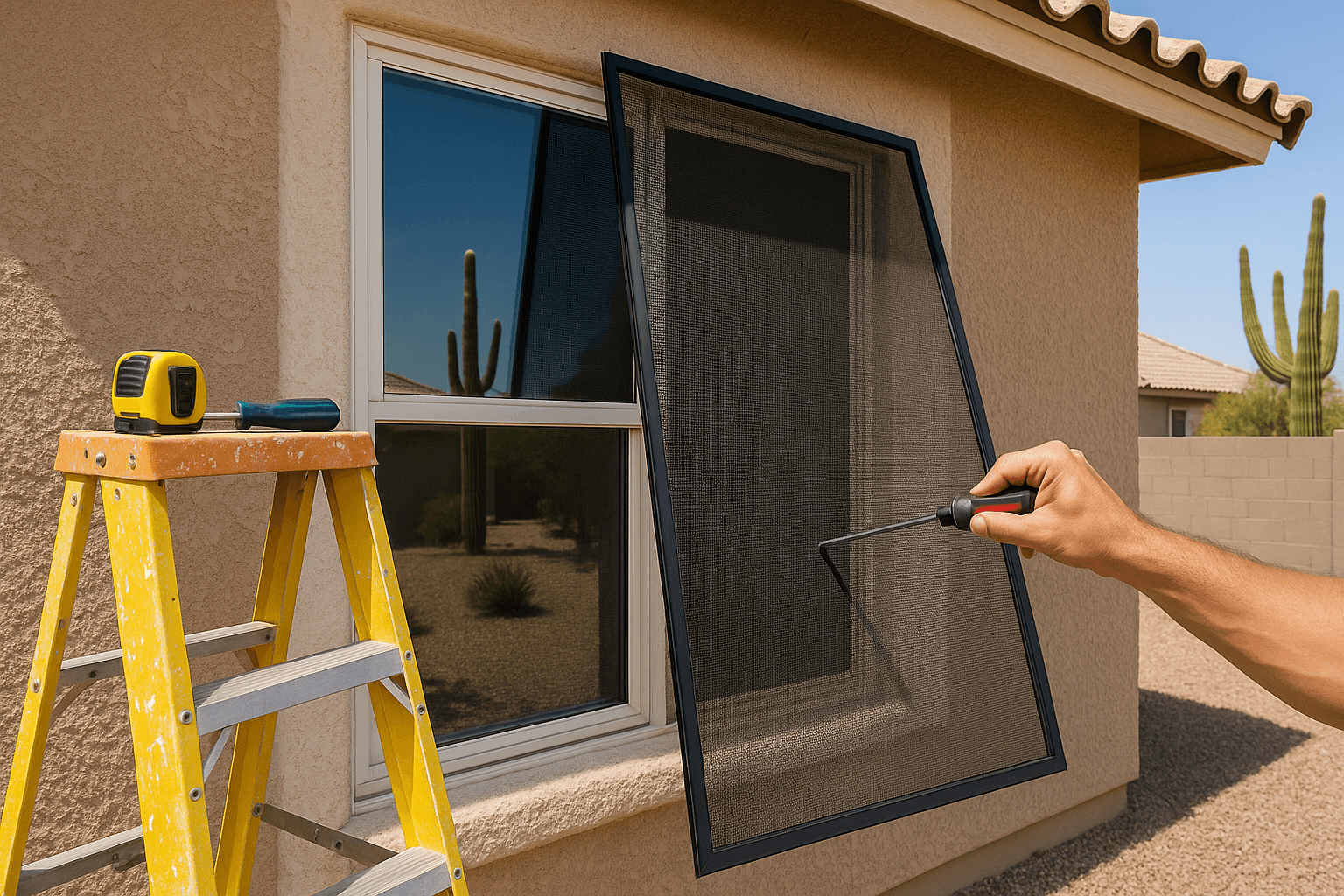
- Seat the screen – Hook or place the top edge first, then swing the bottom in. Secure side clips last, adjusting for even reveal around the frame.
- Final check – Close and open windows to verify no interference. Tap along the frame; if it rattles, add a clip or a tiny bit of backing tape.
If you’re pairing the screen with a window lock-out bar or security door, test both before calling it done. You don’t want hardware dueling in August heat.
Avoid these common mistakes (we see them all the time)
- Measuring the biggest number – Always use the smallest width and height when fitting inside a recess.
- Over-tensioning the mesh – It bows the frame. Aim for smooth, not taut.
- Skipping pre-drill on stucco – That’s a chipped mess waiting to happen.
- Ignoring HOA or color rules – Saves headaches to check first.
- Using indoor screws outdoors – Phoenix summer plus monsoon equals rust. Go stainless or coated.
And one tiny detail with big impact: keep the spline consistent. Mixing sizes can make sections loose over time.
Care, cleaning, and staying ready for monsoon season
Honestly, screens are low maintenance. Rinse them every so often. A soft brush with mild soap takes off dust and pollen. Avoid pressure washers; they can stretch mesh or bend frames.
- Seasonal check – Before monsoon, press around the edges. If a section flexes more than the rest, tighten a clip or replace a short spline run.
- Pet scratches – For lower windows, consider pet-resistant mesh or a protective grill if your dog likes to say hello to the mail carrier.
- Storm cleanup – After heavy wind, look for pebbles stuck in the mesh and brush them off before they work a hole.
Bonus tip for energy savings: Pair your screens with consistent shade on south and west exposures. Also check with SRP or APS for any current efficiency programs—rebates change, but it’s worth a quick look.
DIY or call a pro? A quick gut check
You can definitely handle straightforward windows with a weekend and the right gear. If your home has odd shapes, deep stucco returns, second-story installs, or security bars, that’s where Arizona Screen Company makes life easier. We measure, fabricate, and install Phoenix sun screens that fit tight and look sharp. And yes, we carry durable frames and meshes built for Arizona sun.
We get it—some folks love a project, others love a cool room. Either way, you deserve screens that work and last.
Quick FAQ: little details people ask us all the time
- Will sun screens make my rooms dark? With 80% mesh, most rooms feel cooler without feeling cave-like. 90% blocks more heat and glare; many homeowners like it on west-facing glass.
- Do they affect window warranties? Most window warranties are fine with removable exterior screens. When in doubt, check your paperwork or call the manufacturer.
- Can I put them up year-round? Yes. Many Phoenix homeowners leave them up all year. If you remove them in winter, label and store them flat to keep frames straight.
You know what? Small, consistent care goes a long way. A minute here saves an hour later.
Ready to cool your home with better shade? Let’s talk.
If you’re set on DIY, this guide should get you there without the typical headaches. If you’d rather skip the cutting, rolling, and drilling—Arizona Screen Company can measure, build, and install custom window sun screens that fit your home and your HOA’s look. We serve homeowners across Phoenix and the Valley with fast turnarounds and clean installs.
Call us at 480-771-2543, and a friendly pro will walk you through your options. Prefer to get numbers first? Request a Free Quote and we’ll get right back to you with clear pricing and timing. Cooler rooms are closer than you think.