Phoenix sunshine is a blessing—until it turns your living room into a fishbowl. Maybe the dog barks at everyone walking past the front window. Maybe the kids are doing homework, and you’d rather not feel like the neighborhood’s onstage audience. If you live anywhere from Arcadia to Ahwatukee, you know the dance: you want cool, bright rooms, but you also want to keep wandering eyes out. That’s where Window Solar Screens Phoenix quietly shine. They boost privacy, cut heat, and still let your home look like your home. Let me explain how they work—and why they fit Phoenix living so well.
Contents
- 1 Privacy under big blue skies: why Phoenix makes it tricky
- 2 What are window solar screens, really?
- 3 Day versus night: when privacy flips
- 4 Bonus perks you can feel (and measure)
- 5 Style matters: privacy without losing curb appeal
- 6 Solar screens versus tint versus blinds
- 7 Installation: what it looks like, how long it takes
- 8 Maintenance that won’t eat your weekend
- 9 Costs, savings, and possible rebates
- 10 Neighborhood snapshots: how Phoenix folks use them
- 11 How Arizona Screen Company makes it easy
- 12 Quick buying pointers
- 13 Ready to feel private and comfortable?
Privacy under big blue skies: why Phoenix makes it tricky
There’s a reason privacy feels slippery here. Phoenix homes soak in huge amounts of sun, especially on west-facing glass. Many lots sit close together, and single-story designs often bring large, street-facing windows. We also love natural light—understandably—so we leave blinds open. Then 4 p.m. rolls around, the sun angles low, and it feels like you’re on display.
Add in HOAs, stucco exteriors, desert landscaping, and that iconic Sonoran glare bouncing off light-colored walls—yeah, privacy needs a smarter tool than heavy curtains alone. Privacy window screens are designed for this balance. They tame heat and views without turning your home into a cave.
What are window solar screens, really?
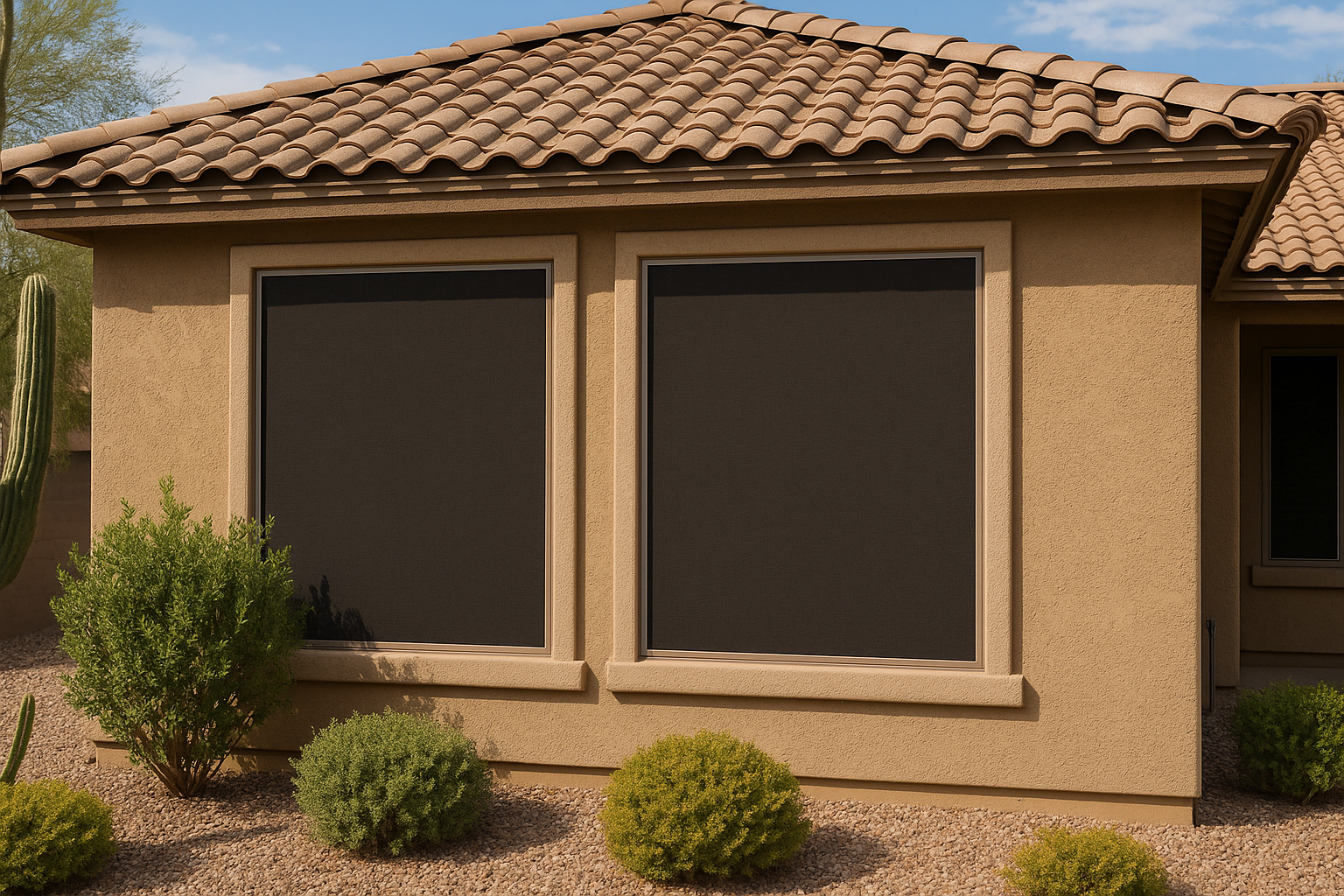
In simple terms, solar screens are a high-density mesh mounted over your existing windows. Most high-quality options use PVC-coated polyester or fiberglass threads. The mesh is measured by openness or “shade percentage.” You’ll see 80%, 90%, and sometimes 95% fabric—tighter weaves mean more shade and more daytime privacy.
Here’s the thing: sunlight travels one way more strongly during the day, so the outside looks darker and the screen surface reflects a touch of light. That gives you a daytime “one-way” effect. People outside see a dark surface. You inside still see out—muted, yes, but clear enough to enjoy the yard. And since the mesh blocks a big chunk of solar heat, your rooms feel calmer and cooler.
If you’re comparing Products, ask about:
- Mesh type and color. Darker mesh gives the best clarity from inside. Lighter mesh can soften the look on stucco.
- Frame quality. Powder-coated aluminum frames stand up to sun and monsoon winds.
- Hardware. Stainless screws and sturdy clips matter in August gusts.
You know what? The right setup disappears into your home’s style. The wrong one looks like an afterthought. We take that seriously.
Shade percentages and the privacy sweet spot
A quick guide to what the numbers mean for Phoenix homes:
| Shade Level | Daytime Privacy | Inside View Out |
|---|---|---|
| 80% mesh | Good | Bright and open with mild tint |
| 90% mesh | Great | Balanced clarity; reduced glare |
| 95% mesh | Maximum | Dimmest interior view; excellent glare control |
For most Phoenix homeowners, 90% hits the sweet spot—strong privacy, strong heat reduction, without making rooms feel dim. If your west side roasts at 5 p.m., 95% can be a lifesaver.
Day versus night: when privacy flips
A quick truth we always share: at night, lights inside can reverse the privacy effect. With indoor lights on, people outside can sometimes see shapes through even the best **privacy window screens**. During the day? You’re golden. After dark, pair solar screens with light-filtering shades or a simple drape you can close. That’s the layered approach many Phoenix families use—solar screens for daytime privacy and heat control, soft window treatments for evening coziness.
It’s not a flaw; it’s physics. And once you plan for it, you’ll get the best of both worlds.
Bonus perks you can feel (and measure)
Privacy is the hook. Comfort is the keeper. Well-made **energy-efficient window screens** can block a large chunk of solar heat before it hits the glass, which means your AC breathes easier. In Phoenix, that’s no small thing.
- Lower cooling load. Shading exterior glass reduces heat gain so your HVAC runs shorter cycles—helpful during SRP and APS peak pricing hours.
- Softened glare. Watching a weekend D-backs game without squinting? Yes, please.
- UV protection. Screens block harmful rays that fade wood floors, art, and sofas. Consider them UV protection screens for your décor.
- Furniture comfort. Leather doesn’t superheat. Tile feels less like a skillet at 3 p.m.
- Pet-friendly living. Dogs love windows. Solar mesh keeps the view but reduces stress from constant sidewalk movement.
- Dust and monsoon sense. Screens catch some dust and debris during haboobs, and they’re easy to rinse.
Honestly, you’ll feel the difference the first weekend. Quieter rooms. Less glare. A calmer thermostat.
Style matters: privacy without losing curb appeal
Solar screens should look like they came with the house. We color-match frames to your stucco, fascia, or window trim—think bronze, tan, white, almond, even adobe tones that blend with a Santa Fe palette. Mesh colors, too, can lean charcoal for clarity or lighter for a softer facade.
Working with an HOA? We can provide swatches and photos that fit community guidelines. We also help you decide where screens matter most: front-facing windows for street privacy, west and south glass for heat, and any room where comfort is king—like that sunny dining nook that bakes by noon.
Prefer more security? We’ll talk about the difference between Arizona solar screens and heavy-duty security screens. Privacy and shade first? Solar’s your match. Want added intrusion resistance? That’s a different build. We’ll steer you right.
Solar screens versus tint versus blinds
Choosing between products? Here’s a plain-English snapshot.
| Solution | Privacy + Heat Control | Notes |
|---|---|---|
| Custom solar screens | High daytime privacy; strong heat reduction | Exterior shading; removable; great for west/south glass |
| Window tint/film | Moderate privacy; good heat reduction | Permanent on glass; night privacy still limited |
| Blinds/shades | Variable privacy; indoor glare control | Doesn’t stop heat before it hits glass |
A mild contradiction you’ll hear: “Tint is enough in Phoenix.” Sometimes it is. But in our climate, stopping heat outside the glass—where sun control screens live—usually wins for comfort and privacy.
Installation: what it looks like, how long it takes
We measure, build, and install. Most projects finish in a single day, with each screen custom-fit to your frame. Attachments can be fixed or removable; hardware is chosen for your window style and sun exposure. We plan for monsoon winds with sturdy clips and rust-resistant screws. If a window needs to function as an egress, we’ll discuss smart solutions that keep safety first.
Expect minimal disruption. We show up with the right profiles, the right mesh, and a game plan that respects your paint, stucco, and landscaping. When we’re done, you get a clean finish and a walkthrough of care basics.
Maintenance that won’t eat your weekend
Care is simple:
– Rinse seasonally. Hose the screens from the outside. A soft brush and mild soap help after a dusty storm.
– Check clips and corners. After monsoon season, a quick look keeps everything snug.
– Mind pet pressure. The mesh is tough, but curious paws can stretch it. We can talk about heavier fabrics for pet windows.
That’s really it. No special cleaners. No headaches.
Costs, savings, and possible rebates
We’ll shoot you straight: pricing depends on window size, mesh percentage, and number of openings. Still, most homeowners notice cooling savings—especially on west and south exposures. Some tell us their living room feels five to ten degrees calmer in late afternoon, which means the AC doesn’t sprint as hard.
Rebates from local utilities come and go. SRP and APS have both offered shade-screen programs in past seasons. If a program is active, we’ll guide you to the right webpage and help with the basics. Savings stack up fastest when you screen the hottest glass first.
Neighborhood snapshots: how Phoenix folks use them
– Arcadia: Big front windows face bike traffic and morning joggers. **Window screens for privacy** keep the view of citrus trees while calming the sidewalk show.
– North Peoria: West-facing great room roasts by dinner. 90–95% mesh turns that space back into family central—TV without glare, cooler leather, happier dog.
– Tempe near ASU: Student rentals want durable, easy-care screens. Exterior shading cuts heat load and protects flooring between tenant groups.
– Ahwatukee cul-de-sacs: Front bedrooms get afternoon sun. Solar screens add privacy for naps, home offices, and that corner reading chair.
– South Phoenix patios: Sliders face the pool. **Custom solar screens** reduce reflections so you can watch kids swim without squinting.
Different homes, same theme: privacy you can feel, comfort you can measure.
How Arizona Screen Company makes it easy
We’re local, which means we build for the valley’s sun, not some milder climate. Our process is straightforward:
– In-home visit with samples so you can see 80, 90, and 95% mesh right on your glass.
– Clear recommendations that match your privacy goals and HOA style.
– Quality fabrication with powder-coated frames and durable mesh.
– Thoughtful installs—fast, clean, and built to handle monsoon moods.
We stand behind our work. If something feels off, we make it right. That’s not marketing; that’s how we keep neighbors happy.
Quick buying pointers
– Pick your priority first. Privacy, heat control, or both? That sets your mesh percentage.
– Match the frame. Color-coordinated frames keep curb appeal high.
– Start with hot glass. West and south windows usually pay you back first.
– Plan for night. Keep simple shades for evening privacy. Daytime is the screen’s arena.
– Ask about hardware. In Phoenix, sturdy clips and rust-resistant screws matter.
These small choices add up to big comfort.
Ready to feel private and comfortable?
If you’ve been pulling blinds all day just to feel hidden, there’s a better way. **Solar screens in Phoenix** give you privacy, calmer rooms, and a house that still feels bright and welcoming. Let’s make your windows work harder—so your AC doesn’t have to.
Call Arizona Screen Company at 480-771-2543 or Request a Free Quote. We’ll bring samples, measure carefully, and help you choose energy-efficient screens that fit your home and your routine.