
Compare actual functions before trends
A fixed window screen, sliding panel, hinged doorway, retractable screen and roll-down patio shade have different applications. Their useful distinction is how they fit the opening and are used.
A new technology label does not establish that a system suits every entry, window or patio. Review the geometry, traffic, control access and maintenance at the property.
This guide does not invent electronic fabric, automatic air purification, smart intrusion detection or future stock that the operator has not confirmed.
Understand material choices in the published range
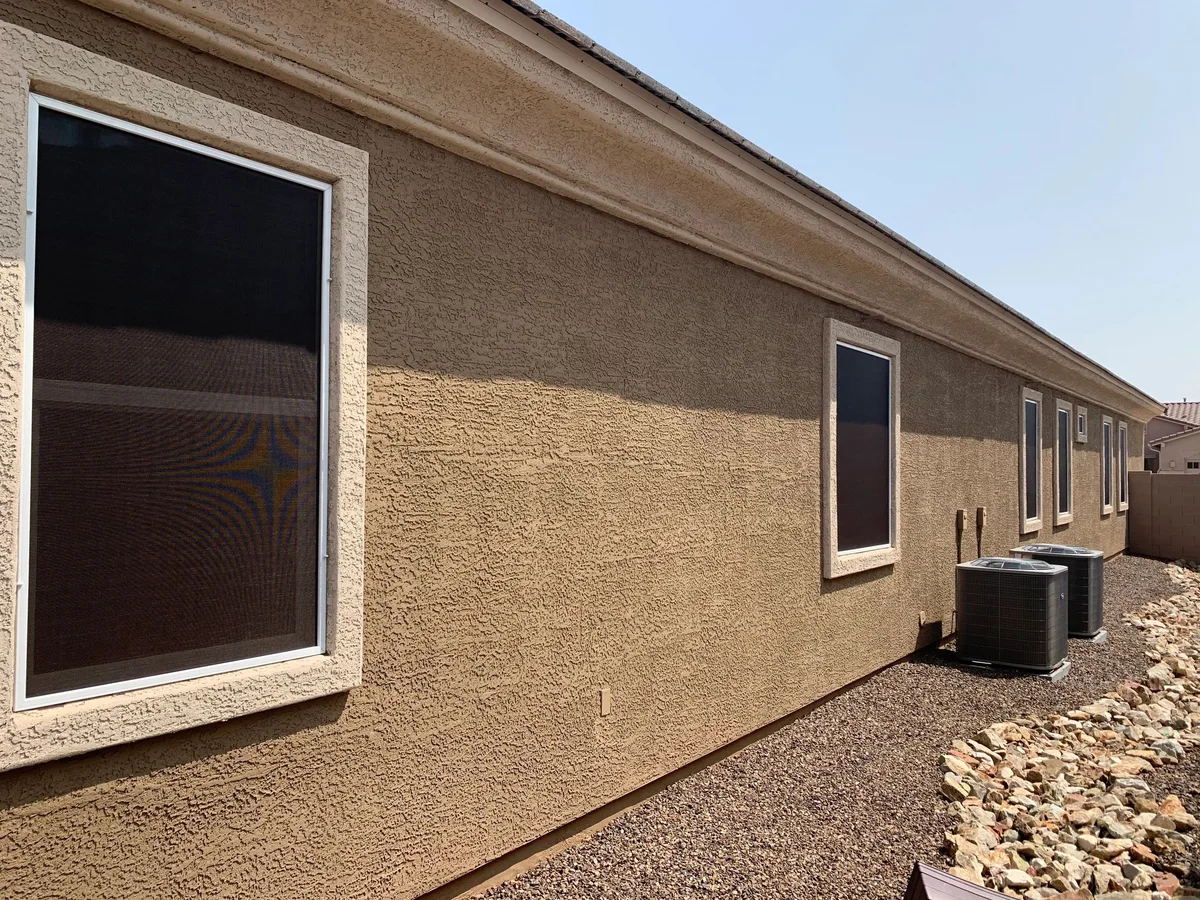
The operator lists bug screening, TuffScreen, PetScreen and SunTex 80/90. Durability, insect control, shade, light and view are different priorities.
A compatible heavier fabric may suit repeated contact, but it is not pet-proof containment or a child-fall barrier. The frame and attachments still need to be sound.
SunTex data separates openness, light, UV and solar properties. The product name is not a universal household energy result or an all-purpose quality score.
Door layouts create useful operating differences
Sliding screens use an appropriate track and operating assembly. Hinged doors need mounting and swing clearance. Retractable systems need their storage, threshold and guides considered.
The right layout follows the actual entry and household routine. A photograph of another doorway does not establish compatibility for yours.
Confirm how the screen moves, latches, is cleaned and can be repaired. Mesh selection alone does not settle roller, hinge or track condition.
Motorization is a system-specific choice
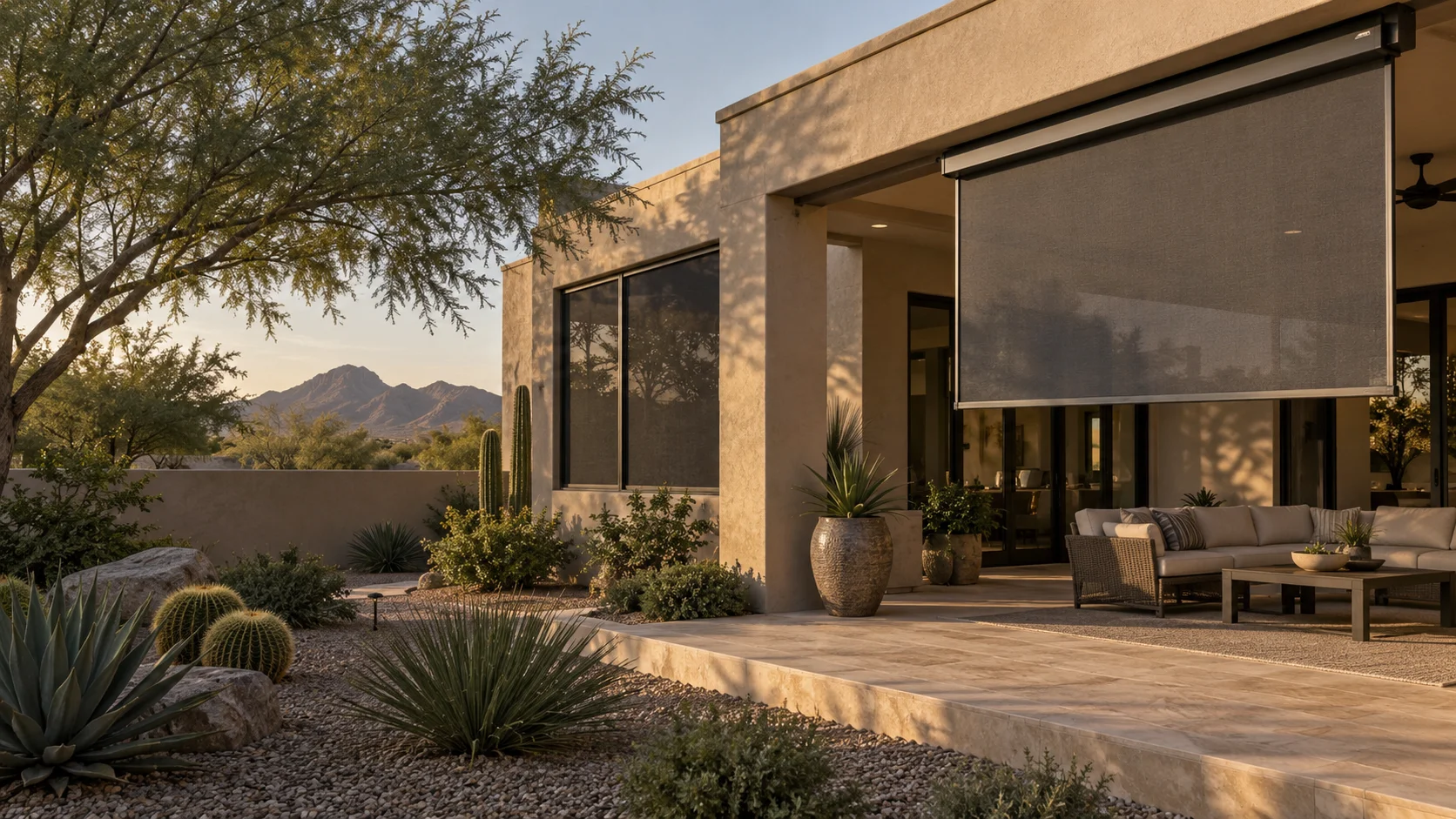
A motorized shade can make frequent or difficult-to-reach adjustments more convenient. It still needs suitable mounting, compatible fabric and a clear power/control plan.
No app, voice platform, battery, solar-power supply or automatic wind sensing is assumed from the word motorized. Ask what the actual selected motor and controller support.
Any separate appropriately qualified electrical work should be explicit. Motorization does not turn a fabric shade into storm protection or excuse the operating guidance.
Keep protective purposes documented
A custom security door or exposed-window frame application needs its complete design, fixing and limitations reviewed. Do not transfer that discussion to ordinary mesh.
CPSC advises never relying on window screens to prevent falls. No noise-control or pollutant-filtration performance is established for ordinary screening either.
Use the product directory to compare verified functions and the written quote to confirm the actual system. A clear specification is more useful than an untested trend claim.
Apply it to your opening.
Compare the verified screen, door and shade functions for the product choices, fit, materials, and assessment relevant to this topic.
Installation and service are provided by Arizona Screen Techs. The written project scope confirms the exact product, access, and any applicable warranty.
Questions before you decide.
Does motorized mean smart-home compatible?
No. Confirm the selected motor and control system and the actual supported integration.
Does new screening have an impact rating?
Only appropriate documentation for the complete selected assembly could establish that; no rating is inferred here.
Is pet-resistant fabric a safety barrier?
No. Material durability and protective purpose are separate.