
Start with the material’s purpose
Ordinary bug screening focuses on insects and air through an open window or door. Durability materials can be considered where pets or frequent contact cause wear.
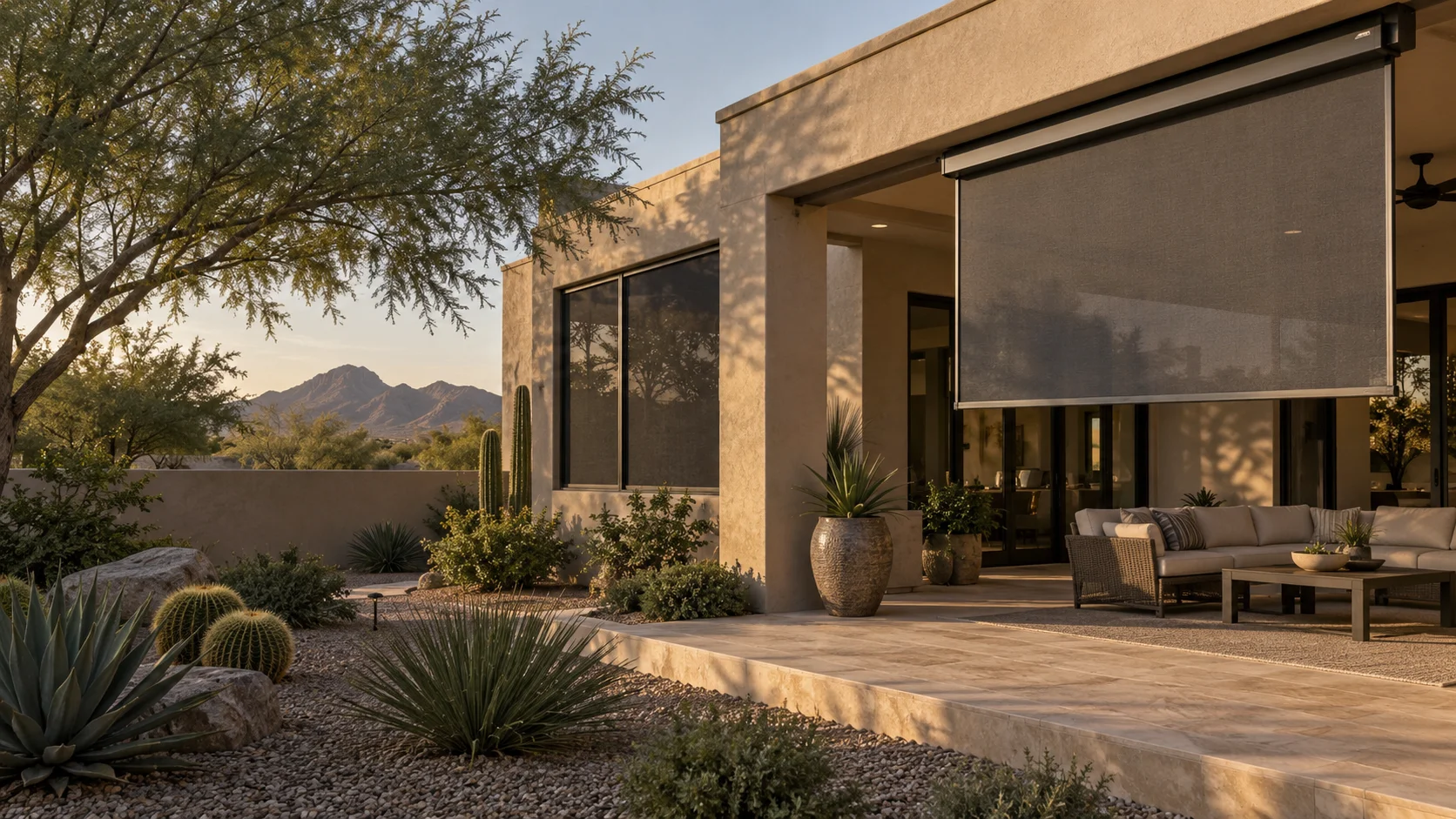
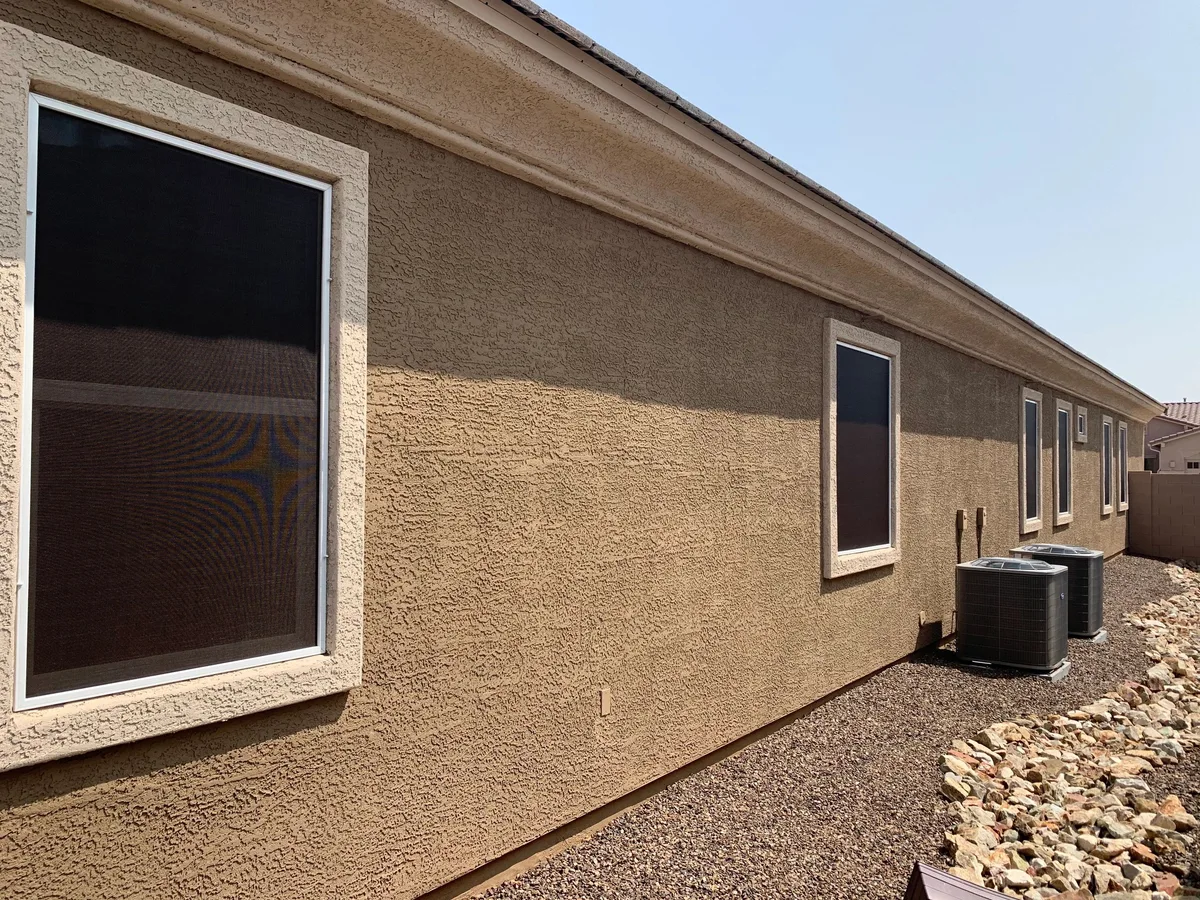
Exterior solar mesh adds a shading purpose and can change daylight and the outward view. A darker or denser appearance is not proof that it is the best insect fabric.
Describe the opening, particular pest concern and household use before choosing. A fixed panel and an operating door can have different compatibility requirements.
Use the actual published choices
Arizona Screen Techs lists bug screening, TuffScreen, PetScreen and SunTex options. Confirm the material proposed for the exact system and current availability.
Product labels do not mean every fabric excludes every small insect or can be installed in every retractable assembly. Ask about the concern you actually have.
If solar shading is also important, compare the technical data and a physical sample with the glass. Do not use a density name as a household energy-saving or privacy guarantee.
Balance durability, airflow and visibility
An often-used doorway may justify a different material discussion from a lightly used window. Tell the team about contact with the screen rather than naming a part without assessment.
Review the sample from the room and outdoors. Lighting, glazing and the surrounding view can change the impression of a fabric.
Pet-resistant screening is not pet-proof containment. A tougher sheet also cannot repair a bent frame or a loose corner. The whole assembly has to remain suitable.
The frame and hardware make the choice usable
Check that the frame seats properly and its attachments and edges are sound. Mesh replacement alone cannot correct every perimeter gap or wrong-sized panel.
For sliding, hinged or retractable doors, confirm operating parts, clearance and material compatibility. A door that will not close squarely can leave an opening even with good fabric.
The heavy glass patio door needs its separate operating assessment. Do not treat its handling or roller work as an ordinary mesh-panel task.
Agree on care and final scope
Ask how the chosen material is cleaned and how a removable panel or operating system is refitted or serviced. Avoid unapproved chemicals or excessive pressure.
Have the selected fabric, frame, finish, dimensions, hardware, access and installation work identified in the estimate. Current coverage applies to those actual parts and work.
The insect-screen product guide compares material purpose and fit. Use the separate gap-diagnosis and repair guidance when the existing assembly has damage rather than a new material preference.
Apply it to your opening.
Compare insect materials by their actual purpose for the product choices, fit, materials, and assessment relevant to this topic.
Installation and service are provided by Arizona Screen Techs. The written project scope confirms the exact product, access, and any applicable warranty.
Questions before you decide.
Do all listed fabrics suit every door?
No. Confirm compatibility with the actual frame and operating system.
Can solar mesh provide insect screening too?
Discuss the actual opening and goals; solar shading and insect-control decisions are different.
Is stronger fabric a protective barrier?
Ordinary durability mesh is not fall, security or containment equipment.