

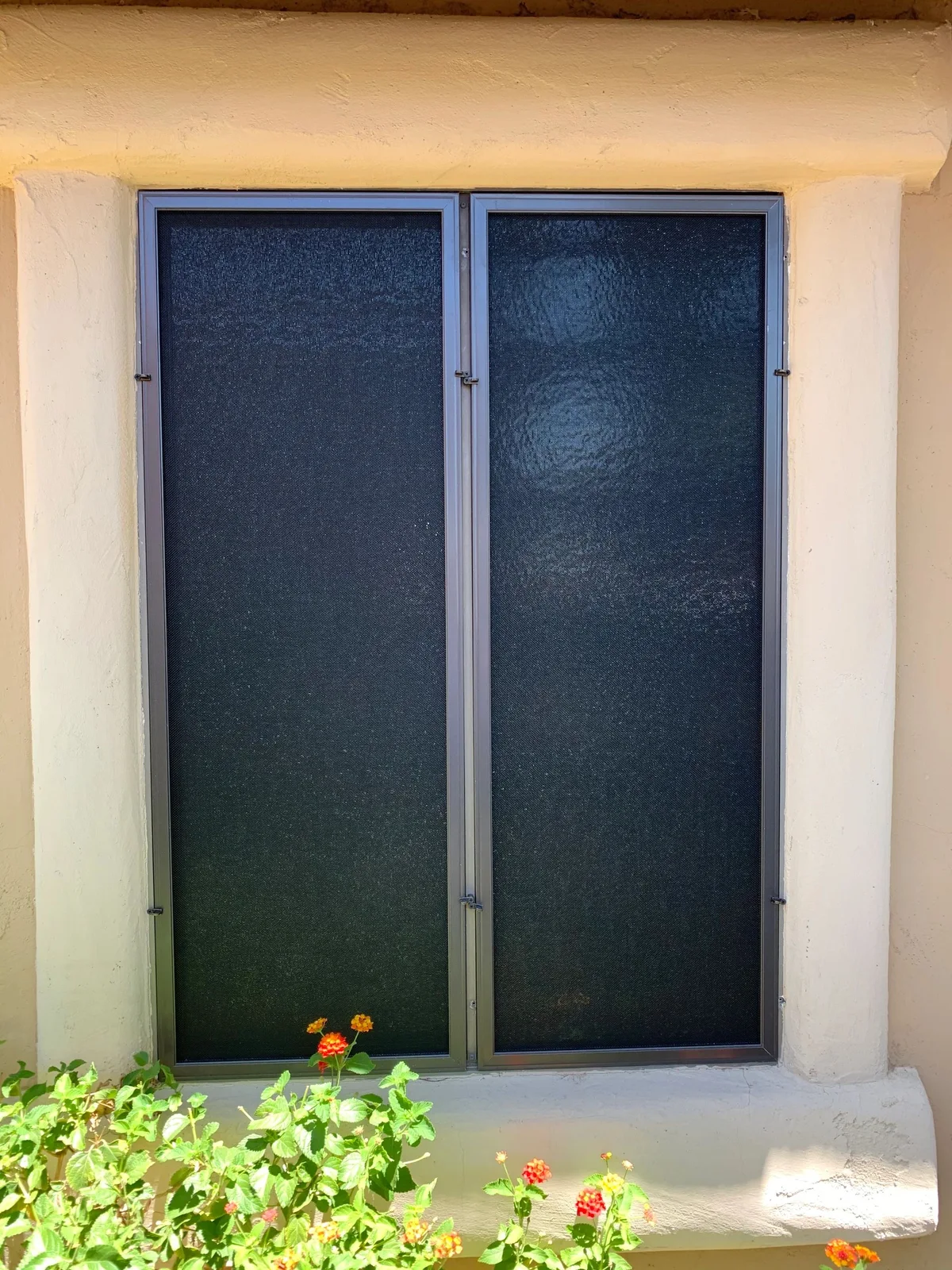
Find the gap rather than guessing the material
Inspect the middle of the mesh and then its edges, corners and the space around the fitted frame. A small opening at the perimeter can undermine otherwise intact screening.
Record whether the gap appears when the panel is handled, the window moves or the door closes. That can help distinguish a fit or hardware issue from a local fabric tear.
A pest concern outside this opening needs its own assessment. A new window panel is not a complete property treatment or a guaranteed pest-free environment.
Distinguish a tear from a fitting problem
A local patch treats one damaged area; rescreening replaces the fabric in a usable frame. Neither repair straightens a badly bent panel or corrects an unsuitable size.
Check corners, attachments and the way the assembly seats. A loose fixing can keep the gap present even after a premium mesh is installed.
For a door, consider track, rollers, hinges, latching and alignment. The moving assembly has requirements independent of fabric condition.
Choose mesh for the actual insect concern
Describe the pest and the opening instead of assuming every fabric excludes every insect. A particular small insect may need an appropriate different mesh discussion.
The published range includes bug screening, durability options and solar fabrics. Insect control, repeated contact and shading are different material priorities.
Confirm compatibility with the selected panel or door system. A heavier material name does not establish that it suits every frame, spline groove or retractable mechanism.
Check the other opening details
A screening gap may accompany damaged trim or another condition in the surrounding window. Identify that boundary in the estimate rather than hiding it behind new fabric.
Ordinary screening is not fall protection, pet restraint or intrusion resistance. Use an appropriate separate product where a protective purpose is needed.
If access is high or the mounting method is unfamiliar, request the suitable assessment rather than forcing the panel or turning a simple repair into an unsafe access task.
Verify a usable repair
The completed panel should seat correctly with sound edges, corners and attachments. Confirm how it is removed and refitted for cleaning.
Use material-appropriate care and inspect for new tears or gaps during normal maintenance. Do not assume dirt on mesh proves an air-filtration function.
The insect-screen and repair guides help define whether mesh, frame, mounting or hardware needs attention. Include the opening, symptom, project location and approximate size if known.
Describe an intermittent gap without dismantling it
Record whether the gap is always present or appears when the door or window moves. Identify the location at the frame edge, corner or fabric. These observations help distinguish a fitting or operating problem from a local tear without claiming to diagnose the component from a generic guide.
Do not force unfamiliar attachments to investigate. Provide the actual opening, location, movement pattern, visible damage and access restriction. The assessment can establish which frame, fixing or hardware work is required. A repair should address that defined opening rather than promise complete pest control across the property or assume every insect is excluded by the same material.
- Constant or movement-related gap
- Location of the opening
- Visible damage
- Operating symptoms
- Safe access and project address
Apply it to your opening.
Diagnose gaps before selecting new mesh for the product choices, fit, materials, and assessment relevant to this topic.
Installation and service are provided by Arizona Screen Techs. The written project scope confirms the exact product, access, and any applicable warranty.
Questions before you decide.
Will a denser fabric close a frame gap?
No. Sizing, corners and attachment need assessment separately.
Is rescreening the same as fitting a new frame?
No. It replaces material in an appropriate existing frame.
Does one new panel guarantee no pests in the house?
No. Other entry routes and concerns lie outside that opening’s screening scope.