
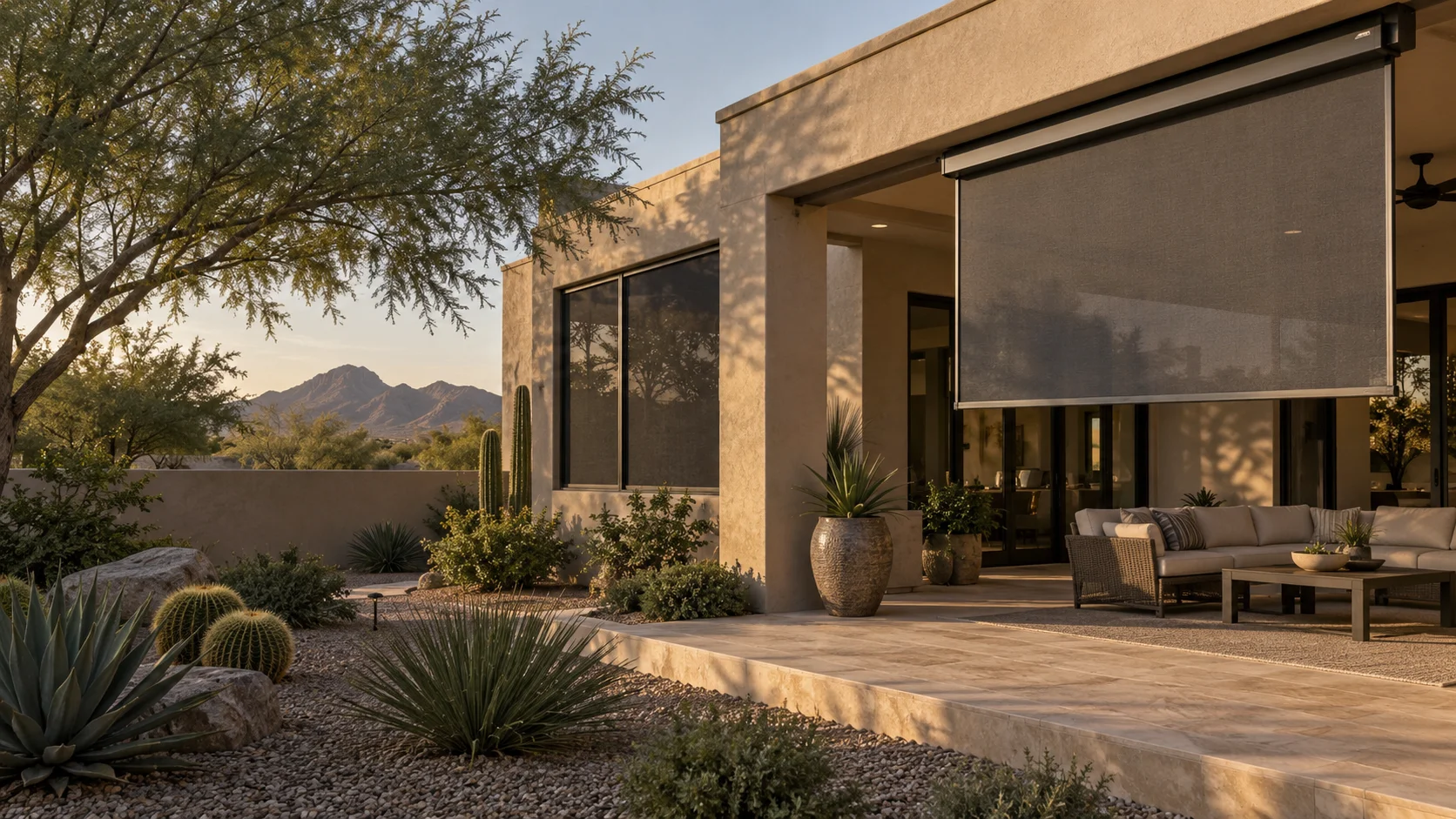
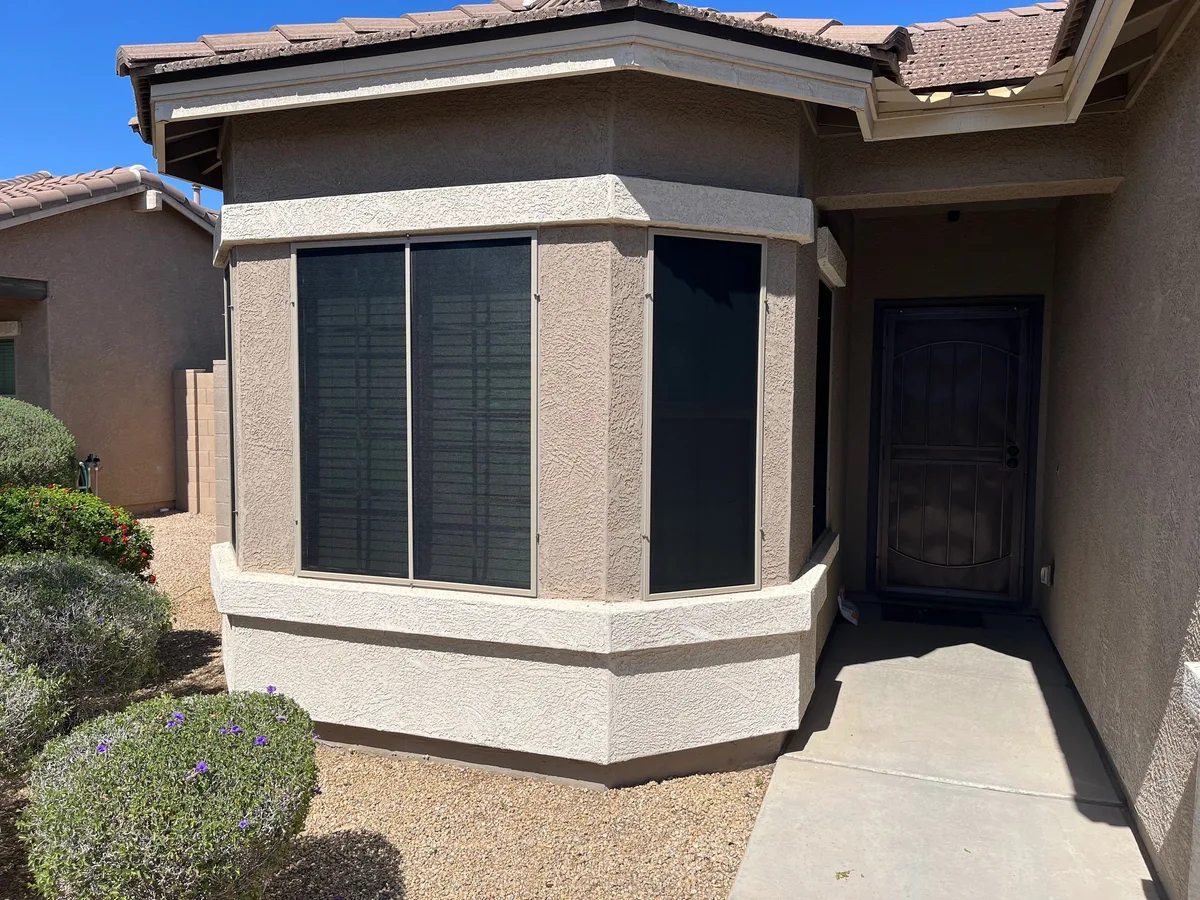
Why privacy changes with the light
A screened room can be harder to see into when the outdoors is brighter than the interior. That relationship can change after dark when lights inside the room are on.
Do not treat one daytime photograph as proof of privacy at every hour. Assess the window from both sides and consider when the room is used.
If the requirement is privacy while dressing, working, resting, or using a bathroom after dark, include those circumstances in the discussion instead of only asking for a denser fabric.
Density and openness are different measurements
SunTex 80 and SunTex 90 are product names in the published operator range. The technical sheet separately reports approximately 25% and 10% weave openness respectively.
Openness describes space in the weave. It is not a promise of privacy, a household bill-saving percentage, or the same measure as UV blockage. Light, viewing angle, glazing, and the actual scene also matter.
Use the numbers as information for comparison, then review a physical sample. A tighter weave may provide the shade you want while changing daylight or the outward view more than you prefer.
| Question | Check at the window |
|---|---|
| Can people see in by day? | Compare outside and inside brightness |
| Can people see in at night? | Check with interior lighting on |
| Will the room feel too dark? | Assess the sample from the room |
| How clear is the outward view? | Look through the sample and actual glass |
| What does a fabric number mean? | Read openness, UV and solar data separately |
Color, glazing, and the outward view
Mesh color and frame finish are different choices. The existing SunTex palette includes beige, black, brown, dark bronze, grey, and stucco, with current availability confirmed for the proposed product.
View the fabric with the window behind it, not only as a loose card in a bright space. Existing glazing, reflections, and the surroundings influence what you see.
Phone displays and photographs can shift color. If an exterior change needs HOA or property-manager approval, obtain it before the final panel or door is made.
Choose by the room, not the neighborhood name
A room’s direction, sunlight, lighting, and use are useful facts. The city or neighborhood alone does not prove its privacy needs or the correct fabric.
A street-facing room, a bright living room, and a covered patio may each need a different balance. Discuss the actual window and the time when privacy or glare is the problem.
If an unusual shape or second-story opening is involved, include mounting and maintenance access in the assessment. A material choice is only part of the assembly.
- When the room is used
- Which side is brighter at the important times
- How much daylight you want to keep
- The view from inside and outside
- Any separate nighttime privacy requirement
Screening, blinds, and interior coverings
Exterior screens and interior coverings can have different roles. The screen can address sunlight and glare outside the glass, while a covering can provide a separate privacy measure when needed.
Compare the total arrangement rather than assuming one product solves every condition. DOE’s window-attachment research separates different attachment types and their operating states; it does not assign one guaranteed result to every home.
This site’s confirmed offerings concern screens, shade, and door services. Do not read a discussion of interior coverings as a promise that every curtain, blind, or film product is supplied here.
Plan the estimate around the actual concern
Tell the team which window or doorway is involved and what you want to change: the view in, the glare, the heat from direct sun, or the amount of daylight.
A sample review can clarify the fabric decision. Final dimensions and mounting should be confirmed for the actual opening, and any written scope should identify the selected material.
For an installation discussion, use the solar-screen product page. For a household safety concern, keep the protective-purpose decision separate from ordinary screening.
Apply it to your opening.
Compare solar mesh, daylight, and visibility for the product choices, fit, materials, and assessment relevant to this topic.
Installation and service are provided by Arizona Screen Techs. The written project scope confirms the exact product, access, and any applicable warranty.
Questions before you decide.
Do solar screens guarantee privacy at night?
No. Lighting conditions can reverse the view after dark when interior lights are on.
Does SunTex 90 mean 90% privacy?
No. It is a product name. Privacy, openness, UV performance, and solar properties are separate considerations.
Can I choose from a photograph?
A photograph helps discuss appearance, but an actual sample at the window is a better basis for the final fabric choice.
Should I remove interior blinds?
Do not assume that exterior mesh replaces a separate privacy requirement. Evaluate the arrangement at the times the room is used.