

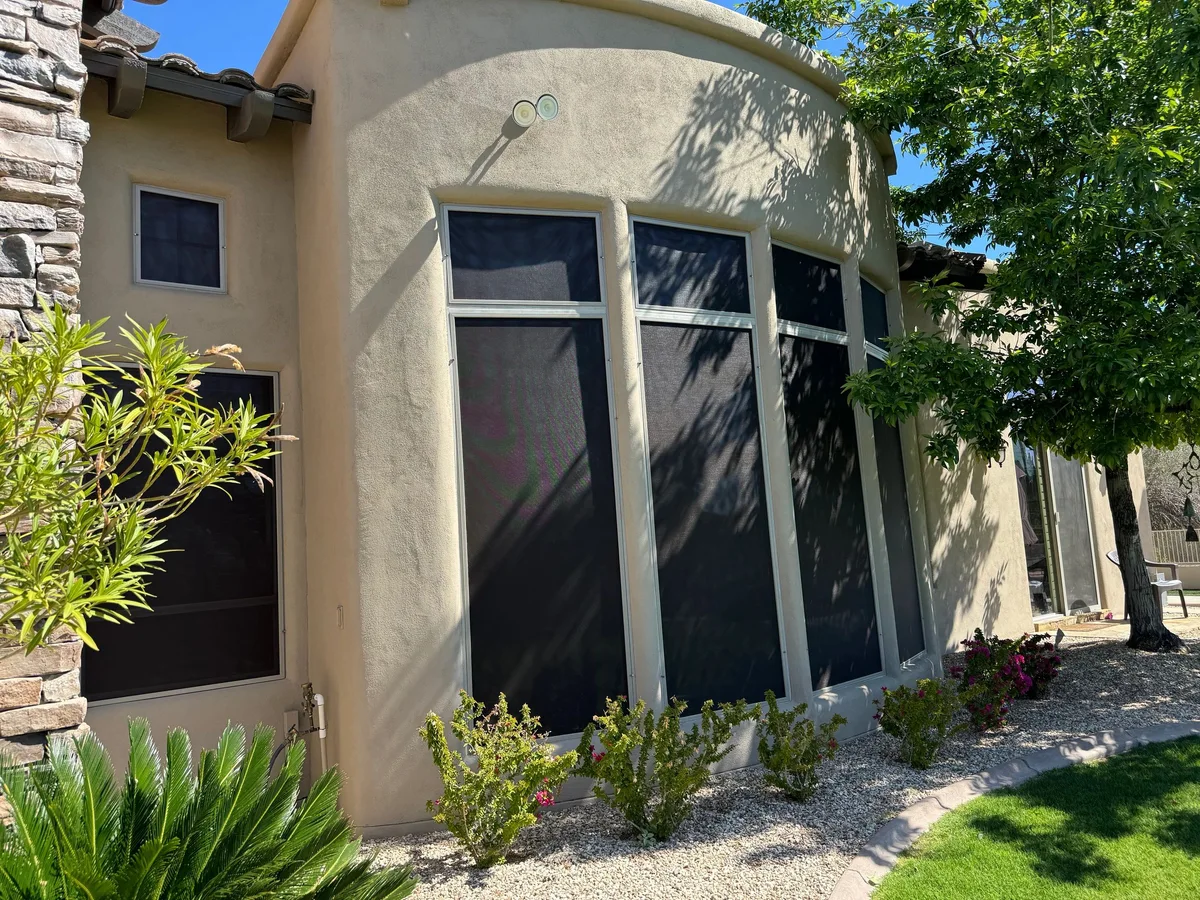
Use the season to review condition
Check the mesh, edges, corners and attachments when a panel is accessible for routine care. A new tear or loose fixing deserves attention regardless of the month.
No fixed calendar interval means every screen must be replaced. Material, installation, use and surrounding conditions vary.
For doors, inspect the operating issue separately. Cleaning fabric is not a correction to a damaged track, worn roller, hinge or alignment problem.
Assess changes in sunlight and room use
The time you use a room and its actual sunlight can influence whether the existing fabric remains useful. Different openings may need different balances of shade, light and view.
SunTex technical data describes openness, light, UV and solar properties separately. Compare a sample rather than choosing by the product number alone.
Exterior solar mesh shades sunlight at the glass; ordinary insect mesh is not an insulating window attachment. DOE/LBNL research treats climate, glazing, attachment and operation as separate variables.
Ask before removing a panel seasonally
Confirm how the exact assembly detaches and refits. Do not copy a removal method from an unrelated frame or force unfamiliar attachments.
If storage is planned, handle the frame appropriately and keep its shape and parts organized. Refitting must restore the intended seating and fixing.
High or restricted-access openings can require a different maintenance approach. A seasonal cleaning intention should not become an unplanned ladder or heavy-glass-door task.
Operating shades have their own limits
A retractable shade uses a particular fabric, guides, controls and mounting. Follow the instructions for that actual system and opening.
Fabric shades are not storm barriers. Motorization does not itself establish automatic wind retraction or any protective certification.
If power or controls are unavailable, use the supplier’s operating procedure. Identify service access rather than inventing a universal manual override.
Make the maintenance or replacement request specific
Describe what changed: a tear, gap, bend, difficult movement, sunlight or view preference. Give the location and assembly type.
The estimate should define material, frame work, hardware, mounting, access and labor. Current availability and written terms apply to that scope.
Choose repair or replacement by actual condition and use. Keep security, pet restraint, fall protection and other safety needs independent of an ordinary seasonal mesh upgrade.
Separate seasonal preference from damage
Changing room use or sunlight can prompt a different material preference even when the panel is sound. A tear, gap or loose attachment is a condition issue regardless of month. Keep those cases distinct when requesting help, rather than ordering a replacement because a seasonal checklist says it is time.
State whether you need cleaning, repair, removal or another fabric. Confirm the procedure for the actual mounting, and describe difficult access before work is arranged. For shades, controls and weather operation need the selected system’s guidance. A practical plan follows condition, use and maintenance access, not an unsupported winter-insulation claim or a universal replacement schedule.
- Preference versus defect
- Actual use and exposure
- Removal and storage procedure
- Material and operating access
- Written system guidance
Apply it to your opening.
Plan seasonal care around the actual assembly for the product choices, fit, materials, and assessment relevant to this topic.
Installation and service are provided by Arizona Screen Techs. The written project scope confirms the exact product, access, and any applicable warranty.
Questions before you decide.
Do insect screens insulate a room in winter?
Do not treat ordinary mesh as an insulating window attachment.
Must screens be replaced every season?
No universal interval is stated; inspect condition and suitability.
Can every panel be removed the same way?
No. Confirm the exact mounting and refitting procedure.