
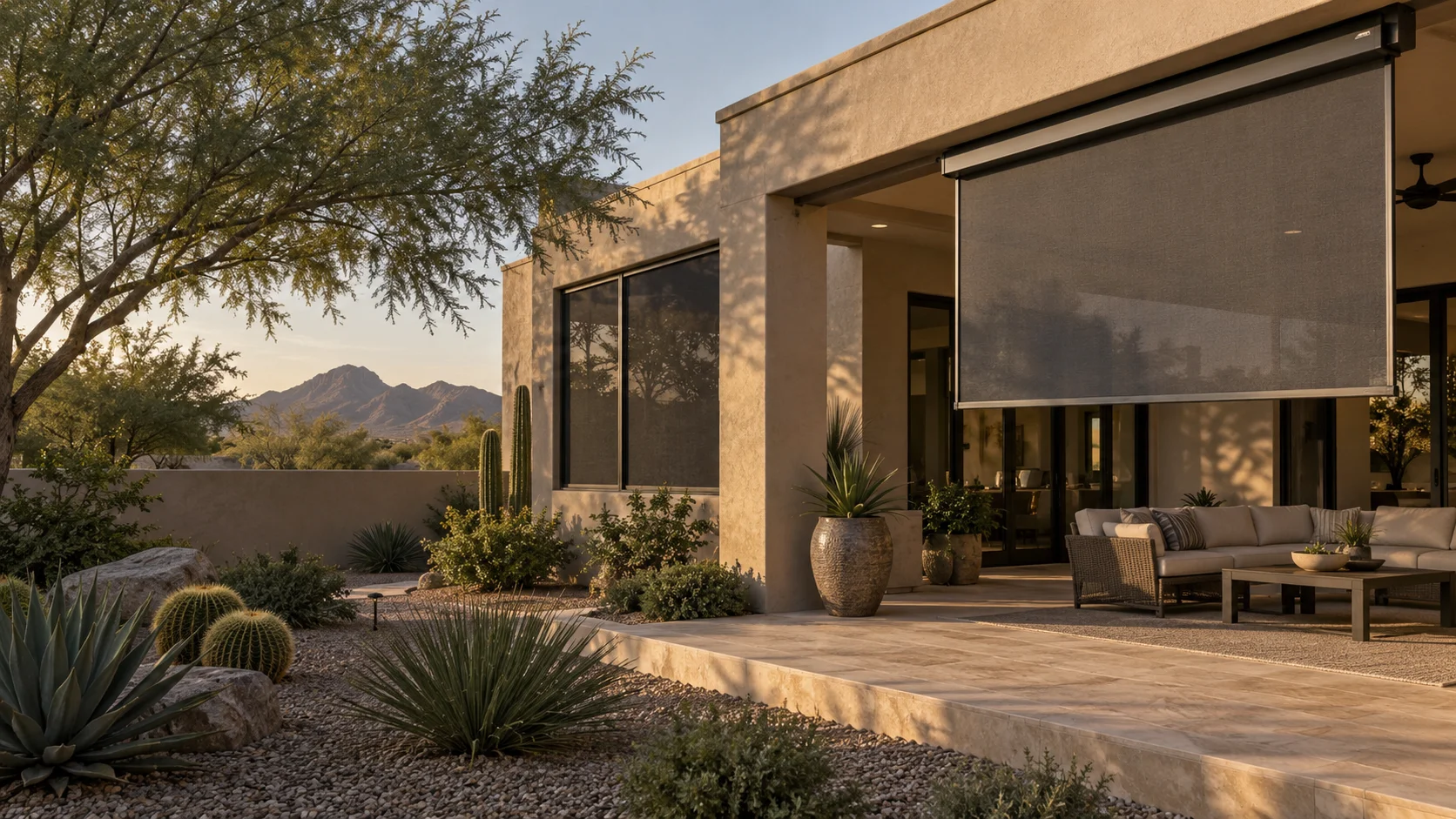
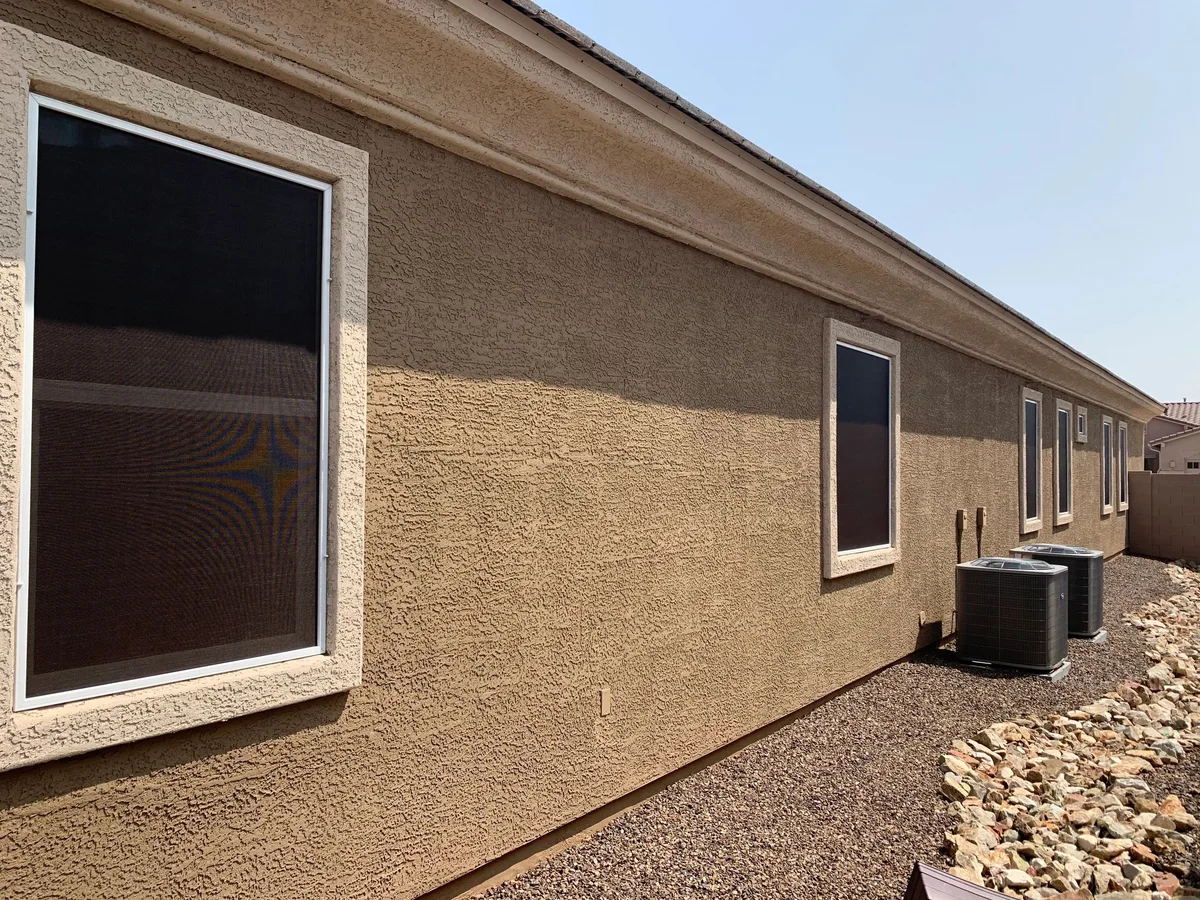
Understand the job at the window
If the problem is harsh sunlight or glare, exterior solar fabric is a useful category to consider. If the main need is insects while the window is open, ordinary insect mesh has a different purpose.
A damaged window seal, failed glass, or an opening that does not work properly is another scope. A new solar panel does not automatically correct those conditions.
Describe which room is uncomfortable and when. Sunlight in a work area, afternoon glare in a living room, and a covered opening can require different balances of shade and daylight.
Read the fabric data correctly
The confirmed range includes Phifer SunTex 80 and SunTex 90. The published technical sheet separately reports weave openness, visible-light transmission, UV performance, and solar properties.
The approximate openness values listed are 25% for SunTex 80 and 10% for SunTex 90. That is space in the weave, not a promise of the same percentage energy saving or privacy.
Compare the fabric physically. The tighter weave can provide more shading while changing the light and outward view. The choice should suit the actual room rather than only a stronger-sounding name.
| Fabric question | Useful comparison |
|---|---|
| How open is the weave? | Read the openness figure separately |
| How much daylight remains? | Compare a sample with the actual glass |
| What view do I keep? | Look from inside at normal room lighting |
| What happens after dark? | Assess privacy with interior lights on |
| What energy result should I expect? | Consider the home, exposure and operation, not one fabric number |
Color and the surrounding frame
The existing SunTex samples show beige, black, brown, dark bronze, grey, and stucco. Mesh color and frame finish are different choices, with current availability confirmed for the selected product.
Look at a sample from inside and outside. Phone screens and photographs can alter the appearance. If exterior modifications need property approval, obtain that before fabrication.
A color decision should include the trim and the way the frame sits at the opening. Avoid selecting fabric independently of the final assembly.
Fit, mounting, and maintenance
Frame condition, corners, shape, attachment points, and removal all affect a useful installation. A frame that is bent or does not fit is not rescued by a premium fabric.
An unusually shaped or elevated window needs its own assessment. Include access restrictions and how you expect the glass to be cleaned.
If the existing frame is sound and correctly fitted, rescreening may be an option. Otherwise a new panel or additional frame work can be more sensible.
- The number and approximate size of openings
- Room use and the time of harsh sunlight
- Desired view and daylight
- Frame condition and shape
- Mounting and cleaning access
Expectations and the estimate
DOE/LBNL’s window-attachment study shows why climate, glazing, orientation, attachment, and operation affect energy outcomes. It is not a universal saving promised for every Phoenix home.
Ask for the exact material, frame, fixing method, access, and installation boundary to be defined. A rough size can start the conversation, but final ordering dimensions require the actual assembly.
Ordinary solar screens are not security barriers, fall guards, or storm-protection products. Keep any protective requirement separate and ask for the relevant product documentation.
Apply it to your opening.
Compare custom solar-screen materials and installation for the product choices, fit, materials, and assessment relevant to this topic.
Installation and service are provided by Arizona Screen Techs. The written project scope confirms the exact product, access, and any applicable warranty.
Questions before you decide.
Are sun screens and solar screens different?
The terms are commonly used for exterior solar-screen fabrics in this context. Compare the exact fabric and assembly rather than relying on a label.
Does every window need the same density?
Not automatically. Room use, exposure, daylight, and view may differ.
Will I have complete nighttime privacy?
No such promise is made. Lighting conditions can change the view after dark.
Can I start with rough dimensions?
Yes, for the discussion. Final sizing and mounting are confirmed before ordering.