
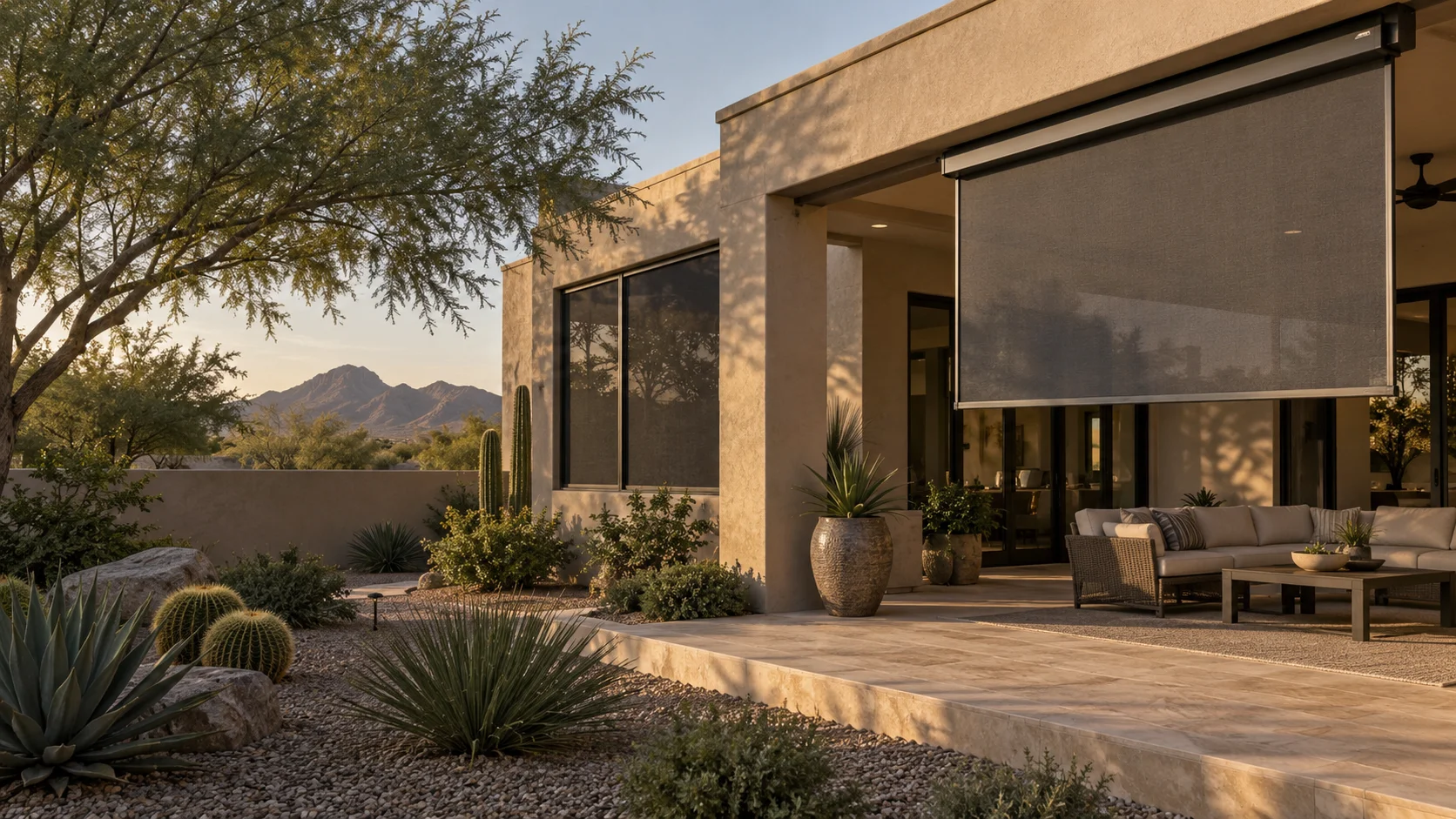
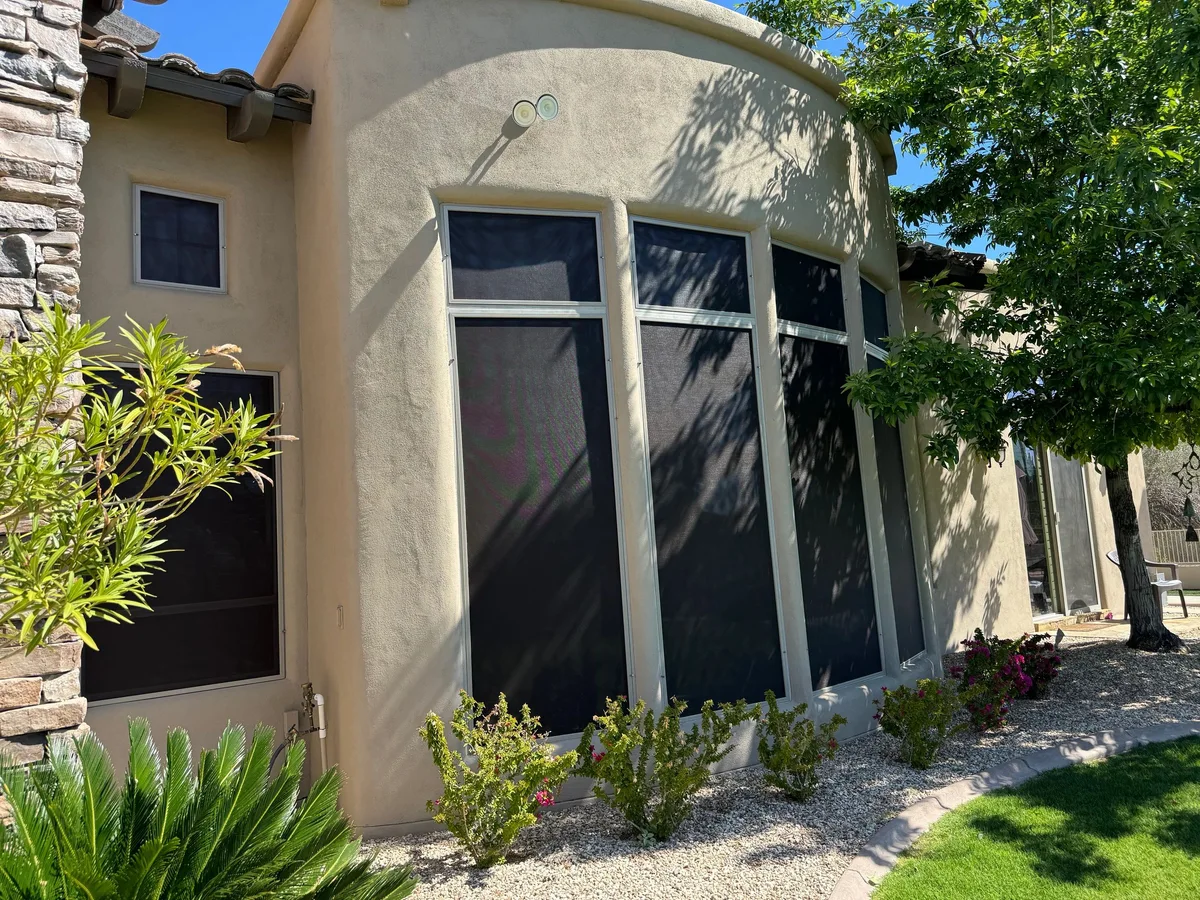
The components of an ordinary panel
Mesh forms the sheet across a frame. Corners, a compatible retention method, attachment points and sizing keep the assembly fitted to the opening.
A torn fabric and a bent or wrong-sized frame are different defects. Stronger material does not automatically correct fit or missing hardware.
An existing sound panel may be rescreened; damaged construction can favor a new complete assembly. The estimate should identify which components are retained or changed.
The main material purposes
Insect screening focuses on intact mesh and close fit at an open window or door. Solar fabric adds a sunlight-management purpose outside the glass.
Heavier-duty options may suit repeated contact or pets, subject to system compatibility. The published operator range lists bug screening, TuffScreen, PetScreen and SunTex 80/90.
None of those labels establishes pet containment, child-fall protection, air filtration or a security rating for an ordinary panel. A protective requirement needs its own suitable product.
Different doors need different layouts
A sliding screen uses an appropriate track and operating assembly. A hinged door needs suitable mounting and swing clearance. A retractable screen has its storage, guides and threshold to consider.
Door movement depends on hardware, condition and adjustment as well as mesh. Fabric replacement alone may not fix a dragging or badly aligned door.
The heavy glass patio door is separate from the screen door. Its components and handling need their own assessment rather than an ordinary lightweight panel procedure.
Samples and measurements inform the decision
Review a sample at the actual window for daylight, glare, appearance and outward view. A product number is not a household energy-saving or privacy percentage.
Mesh color and frame finish are separate choices. Photographs and screen brightness can shift them, so confirm the actual proposed combination and availability.
Approximate measurements start the estimate conversation. Final dimensions depend on the selected frame, mounting, shape and clearances, not only outside glass size.
Care and the final project scope
Ask how the panel is removed, cleaned and refitted. Use methods appropriate to the material and avoid unfamiliar attachments or unsafe access.
Record openings, fabric, frame, finish, hardware, fixing, labor and access in the estimate. Identify unrelated glazing, structural, electrical or other trade work separately.
Use the product directory for the relevant option and the repair guide when an existing assembly is damaged. A useful screen project starts with the real opening and intended job.
Build the request around five useful inputs
Name the window, door or patio opening and explain what is happening. Distinguish insects, torn fabric, glare, movement or a fitting gap. Describe the location and count, and give rough dimensions if known. Those details help the team start with the real problem rather than a guessed product grade.
Include any high, shaped or restricted opening and the practical result you want. Ask what the material, frame, hardware, fixing and included labor will address. Keep other building or protective requirements separate. This basic approach supports a usable scope of work without inventing a standard price, ordering size, tested rating or an assumption that every home needs one identical screen type.
- Opening type
- Observed condition or goal
- Location and approximate scale
- Access and surrounding requirements
- Actual assembly and work scope
Apply it to your opening.
Compare the screening category before choosing parts for the product choices, fit, materials, and assessment relevant to this topic.
Installation and service are provided by Arizona Screen Techs. The written project scope confirms the exact product, access, and any applicable warranty.
Questions before you decide.
Are all screens solar screens?
No. Insect, durability and shading materials have different purposes.
Does tougher mesh make a screen safe against falls?
No. CPSC specifically warns against relying on ordinary screens for fall protection.
Do I need exact sizes to ask for help?
Approximate sizes help if known; final measurements are confirmed for the actual system.