
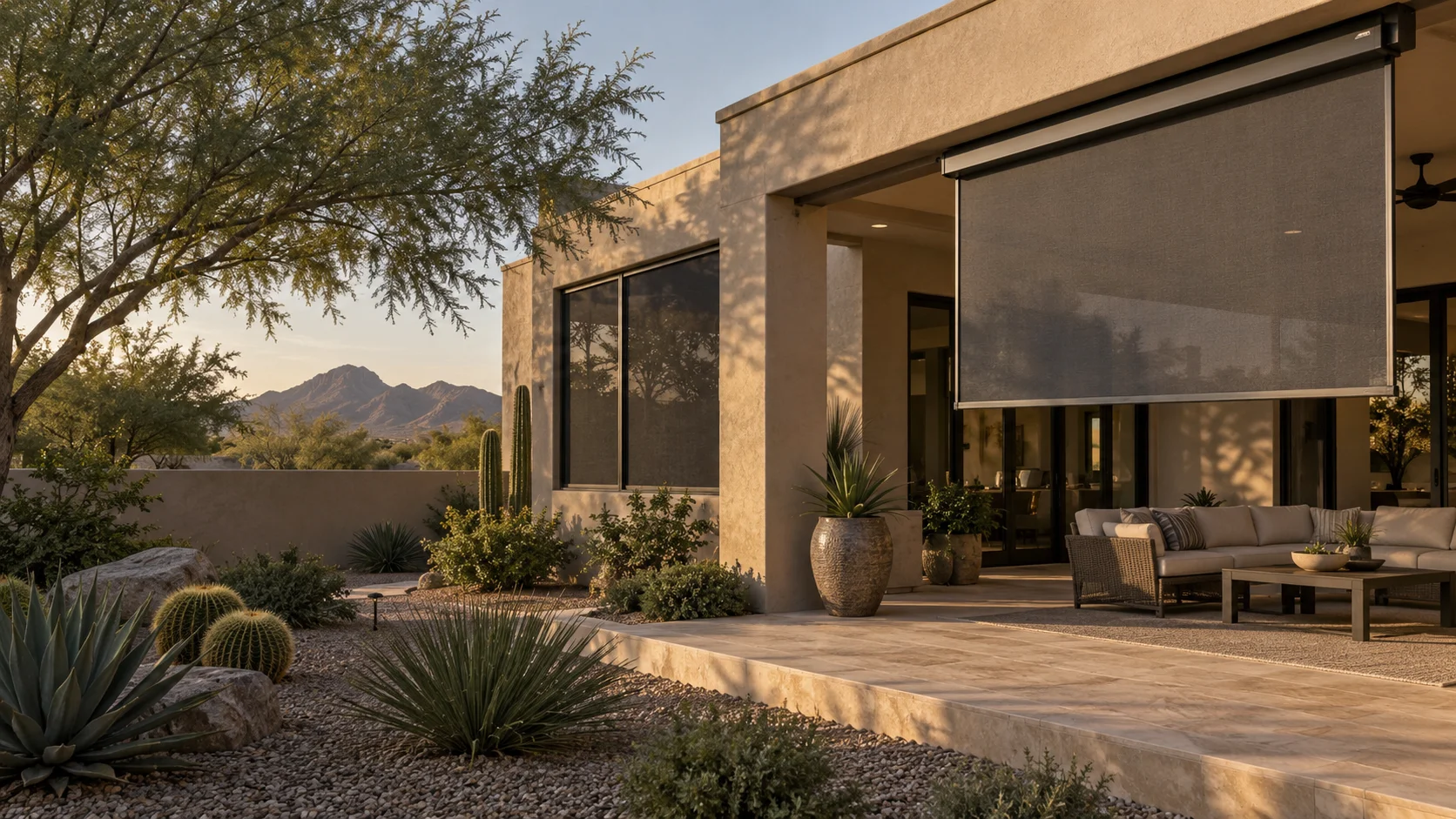
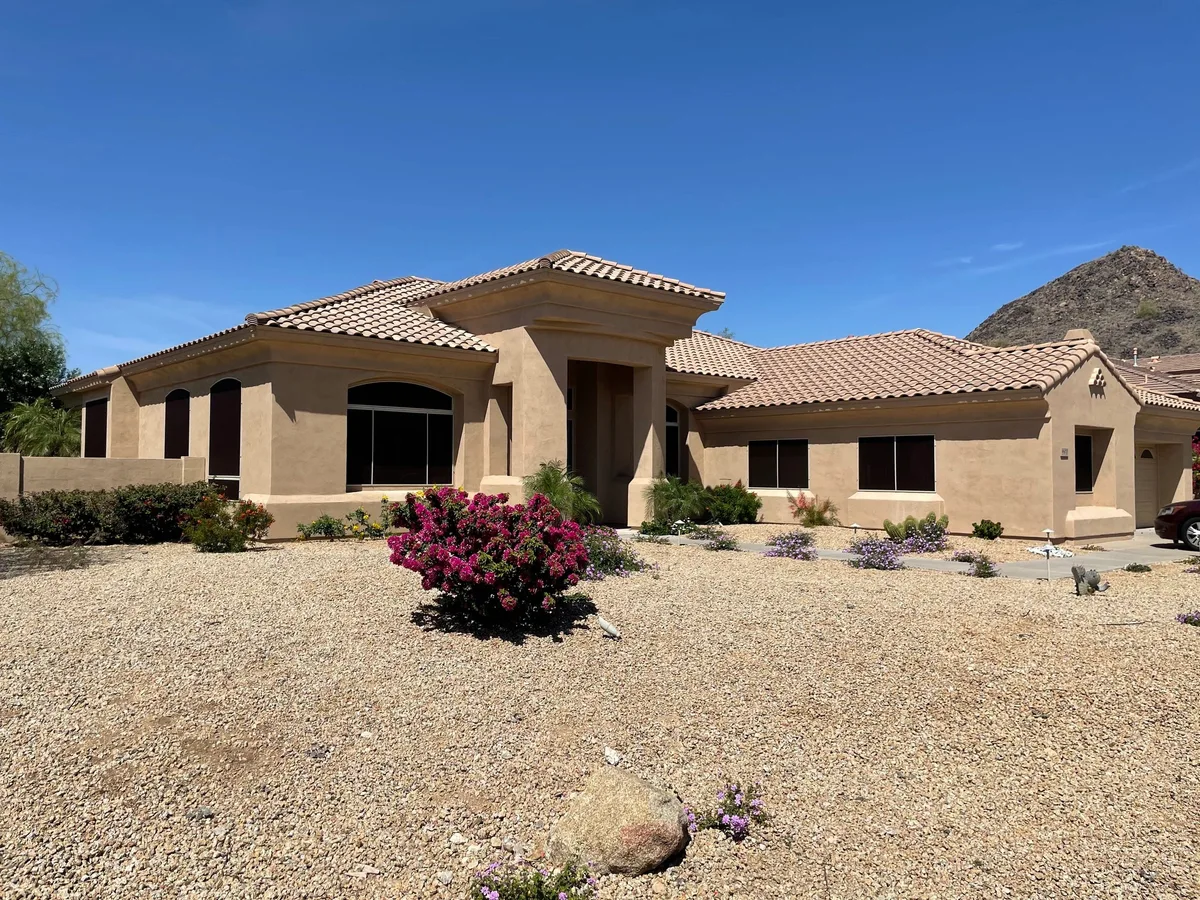
Living in Phoenix means two things for your windows: blinding sun and real heat. The kind that laughs at curtains and shows up on your energy bill. If you’re weighing Window Sun Screens vs. window tinting, you’re not alone. Homeowners ask us every week which one cools better, looks better, and lasts longer. Here’s the thing: both help in different ways. The right choice depends on your home, your views, and the kind of light you love.
So, what exactly are we comparing?
Sun screens, in plain English
Window sun screens are exterior screens made with dense, UV-resistant mesh. They mount to the outside of your window frame and block a big chunk of the sun before it ever touches the glass. That matters in Phoenix. Stopping heat outside is like parking in the shade instead of baking under the midday sun. You can still see out, you get airflow if the window opens, and you gain privacy when it’s bright outside.
Window tinting, the film on the glass
Window tinting is a thin film applied to the inside of your glass. High-quality films can reflect or absorb solar energy, cut glare, and block up to 99 percent of UV rays. You keep a clean, clear look, especially with modern spectrally selective films. And yes, it helps with heat too—especially on glass with huge sky exposure.
So both reduce heat, protect furnishings, and tame glare. But they do it differently, and that difference shows up in comfort, cost, and curb appeal.
Which one keeps more heat out in Phoenix?
You know what? For raw heat reduction on south- and west-facing windows, exterior sun screens usually take the crown. Because they stop sunlight before it hits the glass, less energy becomes indoor heat. Many solar meshes can block 80 to 90 percent of the sun’s rays, especially during the harshest afternoon hours. That translates to cooler rooms and a lighter load on your AC.
High-performance films still work well—some films can reject a very large share of total solar energy. If you want a clear view with better heat control, films can shine on north windows or shaded exposures, and on glass where you don’t want a screen frame. But in full Phoenix sun, the outside-first approach from screens is tough to beat.
Short version: for the brutal afternoon blast, sun screens in Phoenix often cool better. For a cleaner look and solid performance, window tinting is a contender—just expect a bit less cooling on the hardest-hit panes.
Glare, privacy, and that west-facing window at 5 p.m.
Glare is sneaky. It shows up when you’re answering one email and forces you to squint through the next ten. Both screens and film help, but the feel is different.
- Glare control: Sun screens reduce brightness and soften the light. A good solar mesh makes that TV watchable at sunset. Films cut glare too, sometimes dramatically, depending on the film shade and reflectivity.
- Daytime privacy: Sun screens offer strong daytime privacy because the outside is brighter than the inside. Tinting can help, but if you pick a very light film to keep views bright, privacy may be limited.
- Night privacy: Here’s the mild contradiction. At night, with your lights on, both solutions provide less privacy. The fix is simple: pair them with shades or drapes after dark.
West Valley folks know that sunset glare is real. If your living room faces west, a darker solar screen feels like sunglasses for your windows—without wearing them indoors.
Natural light and view quality
If you love a wide-open view, film keeps the glassy, crisp look. Spectrally selective films filter heat while maintaining plenty of visible light and more neutral color. That can be great for mountain or golf course views.
Sun screens do slightly dim and texturize the view because you’re looking through a mesh. Many homeowners get used to it fast and even prefer the softer light. If you’re sensitive to color shift or want the clearest look possible, a lighter screen fabric or a high-performance film may be the better fit.
Aesthetics, HOA rules, and curb appeal
Some Phoenix neighborhoods and HOAs have color rules. Exterior sun screens come in frame and mesh colors that blend with stucco, trim, or darker bronze frames. When color-matched, they look finished—like they were built with the home. That said, if your HOA doesn’t allow exterior screens on street-facing windows, window film becomes your go-to.
Tinting is almost invisible with certain films, especially the high-end, low-reflective types. Other films have a slight mirror effect in daylight, which some folks love for privacy and a modern look. If you’re on the fence, ask for samples and step back from the curb. You’ll see it right away.
Durability, maintenance, and monsoon season
Let me explain how they live in the real world. Phoenix dust storms roll in, and everything needs a rinse. Sun screens can be hosed off and wiped with mild soap. Good-quality meshes and powder-coated frames handle the heat well. Expect a long service life when they’re built right and installed snug.
Films avoid dust buildup because they’re inside. You just clean your windows like normal. Quality matters a lot here. Top-tier films resist fading and bubbling for many years and carry strong warranties. Lower-grade films can discolor. If you choose film, stick with known brands and certified installers.
One more thing: screens add a little protection to the glass from errant baseballs or pebbles during a storm—nothing like a security screen, but a layer is a layer. Films can help hold glass together if it breaks, which is a quiet bonus for safety.
Costs and rebates: what should you budget?
Pricing varies by window size, product quality, and installation details, but this quick guide helps. Numbers below are typical in the Phoenix market and may change with materials and promotions.
| Category | Sun Screens | Window Tinting |
|---|---|---|
| Installed cost per sq. ft. | About $7–$12+ | About $6–$15+ |
| Typical lifespan | 10–15+ years | 10–20+ years (quality-dependent) |
| Rebates | Screen rebates sometimes available from local utilities | Occasional incentives on specific films |
Check with SRP or APS for current energy efficiency rebates. Programs shift, but Phoenix homeowners often save on energy-efficient window screens, especially on south and west elevations.
Safety, fading, and UV protection
Both solutions go big on UV control. That’s key for floors, art, and sofas that sit in direct light. Most quality films block 99 percent of UV. Dense solar meshes also cut UV significantly because they cut the light hitting the glass. If fading is your top concern and you want clear views, film gets a slight nod. If reducing heat and glare is larger on your list, screens lead.
Want a little extra peace of mind? Many films offer added shatter resistance. Meanwhile, screens keep bugs out when you open the window and shield the glass from daily bumps. Different perks, both useful.
When screens win, and when tint makes sense
- If cooling is king: Choose solar sun screens on south and west windows, especially large sliders and big picture windows.
- If you want the clearest view: A low-reflective, spectrally selective window film on prized view windows is hard to beat.
- If your HOA says no to exterior screens: Film delivers relief without changing the exterior profile.
- If you love daytime privacy: Sun screens provide strong privacy and cut glare in one shot.
- If you want a hybrid approach: Many Phoenix homeowners pair screens on the hot sides with film on shaded or view-facing windows. It’s a smart, balanced setup.
Honestly, there isn’t one “right” answer for every home. Heat exposure, view priorities, and style all play a part.
Why Arizona Screen Company? Local know-how that pays off
We’re Arizona Screen Company, and we live the same heat you do. Our team designs and installs Phoenix window sun screens that look clean, fit tight, and stand up to the desert. We color-match frames, recommend the right mesh density for each side of your home, and keep the install neat and quick. If we walk your home and see a spot where film makes more sense, we’ll say so—and we can point you to trusted local film pros.
Here’s the real benefit: thoughtful placement. Put the right shading in the right places, and rooms feel calmer. AC cycles less. That west-facing glare softens. Your home just feels better.
Ready to keep the heat out and the comfort in?
If you’re comparing window sun screens vs. window tinting for a Phoenix home, let’s look at your windows together. We’ll map sun angles, talk style, and give you clear pricing.
Call Arizona Screen Company at 480-771-2543 or Request a Free Quote. A cooler home is closer than you think.

