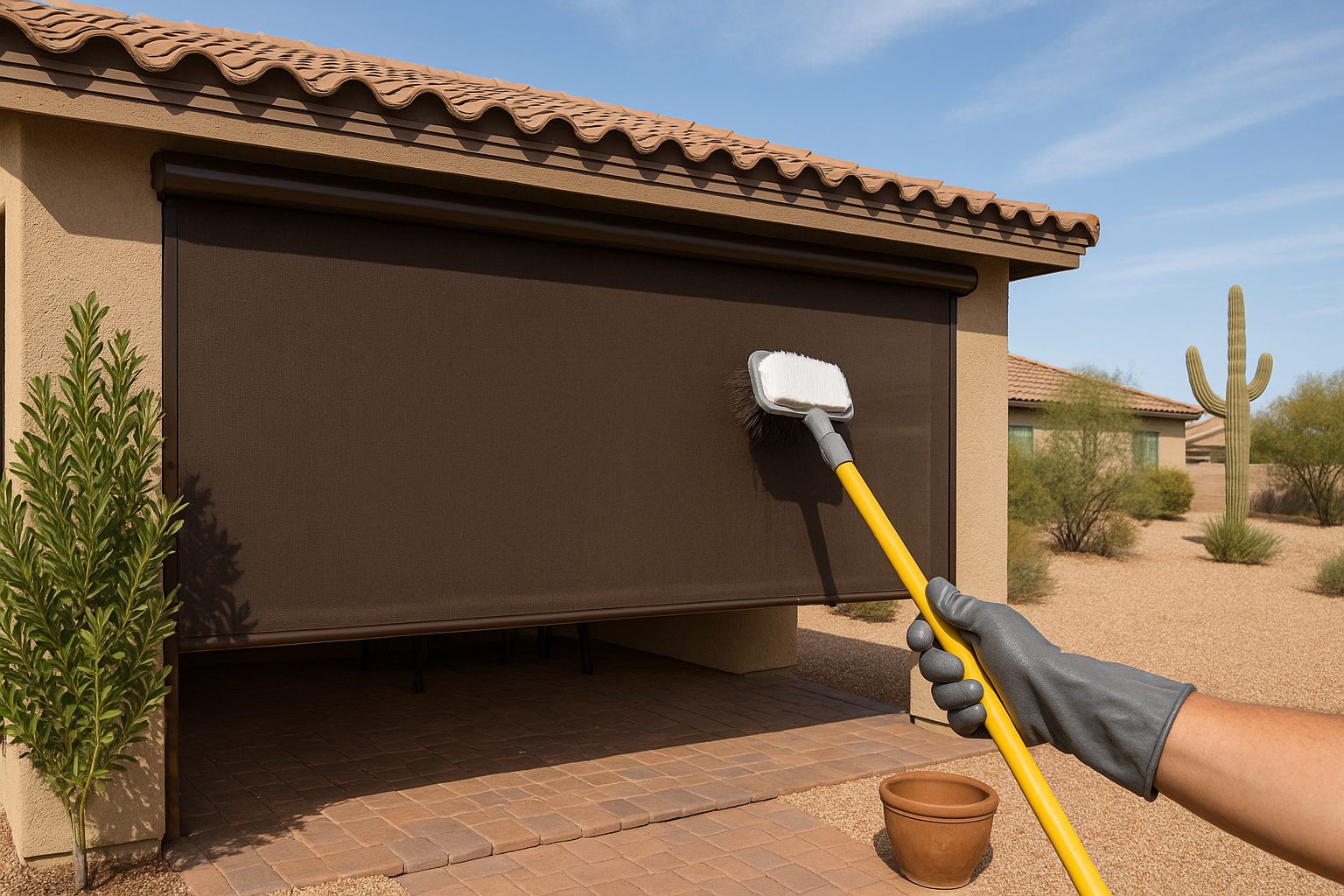
Phoenix dust storms roll in fast, and so does the sun. If you’ve got patio shade you love, you’ve probably felt that tug-of-war between enjoying the cool and wondering how to keep everything clean. Good news: with a few easy habits, your Roll Up Shade Screens can look sharp, run smoothly, and last longer—without a fussy routine or harsh cleaners. Let me explain how simple it can be, especially here in the Valley where sand, sun, and monsoon grit try their best to wear us down. You know what? They don’t have to win.
Who this guide helps (and why Phoenix folks should care)
If you’re a homeowner in Phoenix, Scottsdale, Chandler, Gilbert, Tempe, or anywhere in the Valley, this is for you—especially if your patio or pergola has **patio shades**, **solar screens**, or motorized **roll up shade screens**. Our climate is beautiful but brutal: UV beats down, dust gets everywhere, and monsoon winds kick debris into tracks and cassettes. A quick routine makes a big difference.
The perks are real. Clean fabric blocks heat better, runs quieter, and looks crisp. Cleaner tracks mean fewer snags. A little time here saves money on repairs later. And yes—less glare during the game and no gritty rails when you’re rolling the shade for sunset. Small things, big comfort.
The 10-minute weekly dust-off
Here’s the thing: a tiny weekly habit keeps deep cleans easy.
- Lower halfway first. This exposes top and bottom sections for quick cleaning without stressing the roll.
- Use a soft brush or vacuum with a brush tool. Gently sweep both sides of the fabric. A handheld Shop-Vac works great. So does a clean Swiffer duster in a pinch.
- Blow out the tracks. A small cordless blower or canned air clears grit from side rails and bottom bar caps.
- Wipe the cassette and housing. A dry microfiber lifts dust without scratching the finish.
Short, simple, oddly satisfying. And when the next haboob rolls through? You’re ready.
The gentle wash: a step-by-step deep clean
Plan this for early morning or late afternoon so soap doesn’t dry too fast on hot fabric.
What you’ll need
- Garden hose with a gentle spray (no pressure washer)
- Bucket with mild soap like a few drops of Dawn, Woolite, or Simple Green diluted 1:30
- Soft sponge or microfiber plus a soft-bristle brush for stubborn spots
- Clean towels for drips at motor ends and controls
- Dry silicone spray for rails and guides, if needed
Fabric wash, made easy
1) Rinse the fabric lightly. Lower the shade fully. Rinse top to bottom to float off loose dust. Use plenty of water—yet avoid soaking the motor end. Sounds contradictory, right? It is a bit. Rinse the fabric generously, but toss a towel over the motor side or control box if you’re unsure about seals.
2) Soap and swish. Dip your sponge in the soapy water. Wipe in gentle, overlapping passes. Focus on bird spots, sunscreen smears, and monsoon splatter. For tough bits, a soft brush works—light pressure only. Most Arizona shades use Phifer SunTex or Textilene mesh; they’re tough but don’t love aggressive scrubbing.
3) Rinse well. Again, top to bottom. Leftover soap attracts dust, so don’t rush this part.
4) Let it dry while extended. Shade should be vertical to dry evenly. Avoid rolling it up when damp, especially in humid monsoon weeks. If you must, allow extra time unrolled later.
5) Wipe the bottom bar and cassette. Use the same mild solution for the housing and bar ends. Rinse with a lightly damp cloth.
A tidy extra: if your shade uses zipper side channels, run a damp cloth down the webbing to keep travel smooth.
What not to use (and why it matters)
The fastest way to age a shade is with harsh cleaners or too much force. Skip these:
- Pressure washers. They drive grit into weave and can stretch the mesh.
- Bleach, solvents, or strong degreasers. They fade color, damage stitching, and dry out plastics.
- Abrasive pads. Scratches weaken the mesh coating and invite grime.
- Oily lubricants like WD-40 on tracks. Dust sticks to oil. Use dry silicone spray instead.
If you like a protectant, keep it simple. Some homeowners use 303 Aerospace Protectant on plastic end caps and exposed vinyl—not on the fabric mesh itself. When in doubt, call us.
Care for the hardware: tracks, cassettes, and cranks
Your shade’s fabric gets the spotlight, but hardware does the heavy lifting.
Tracks and side rails
– Brush out grit. A nylon detail brush works well.
– Wipe with a damp cloth.
– If travel feels sticky, spritz a very light coat of dry silicone in the rail channel. Wipe away excess. Run the shade up and down to spread it.
Cassette and hem bar
– Check screws and brackets. A 1/4-inch nut driver is your friend. Tighten gently; don’t overtighten into stucco anchors.
– Look for wasp nests or spider webs inside the housing. Remove with a soft brush—no sprays near motors.
– Inspect end caps on the bottom bar. If one’s loose or missing, the shade may scrape. Replace before it chews the rail.
Manual crank and motor tips
– For manual systems, make sure the crank handle engages smoothly. A tiny drop of dry lube at the hook helps.
– For motorized shades (Somfy and similar), test the up and down limits twice a year. If the shade stops short or won’t seal at the bottom, limits may need a reset. Don’t force it. Call if you’re unsure.
One more note: shades should travel straight with no rubbing. If you notice the fabric favoring one side, pause. Roll up a bit, then back down. That often corrects the track. If not, there’s likely debris or a tension issue we can fix.
Phoenix seasons: a simple care calendar
A little timing goes a long way. Here’s a quick Valley-friendly schedule you can stick on the fridge.
| Season | Do This | Why It Helps |
|---|---|---|
| Spring | Deep clean fabric and rails; check brackets | Preps for long sunny days and pollen |
| Monsoon (June–Sept) | Weekly dust-off; rinse after big dust storms | Prevents grit build-up and travel issues |
| Fall | Light wash; inspect bottom bar caps | Keeps motion smooth for patio season |
| Winter | Quick check on motors and remotes | Cold mornings can stiffen older plastics |
If you’re a snowbird, do a deep clean before leaving and again when you return. Desert dust waits for no one.
Spot fixes and easy wins
Sometimes you don’t need a full clean—just a fast rescue.
- Bird droppings: Soften with warm, soapy water for a few minutes. Wipe gently. Rinse.
- Sunscreen smudges: Mild soap works. Avoid alcohol-based cleaners.
- Water spots: A second rinse plus a soft, damp cloth usually clears mineral rings. If your hose water’s hard, towel the bottom edge so drips don’t leave trails.
And for the question we get weekly: can you use a magic eraser? Maybe on the metal cassette or bottom bar—never on the mesh.
Troubleshooting: quick answers when things get weird
| Issue | Likely Cause | Try This |
|---|---|---|
| Shade rolls unevenly | Debris in one rail or loose bottom-bar cap | Clean rails, inspect caps, run shade up/down slowly |
| Grindy or squeaky sound | Grit in tracks | Brush out rails, use dry silicone sparingly |
| Stops short or won’t seal | Motor limits off or obstruction | Clear tracks, test again; call for limit reset |
| Fabric waves or ripples | Heat expansion or uneven tension | Usually cosmetic; clean, then observe over a week |
| Remote unresponsive | Dead battery or sun-sapped receiver | Replace battery; cycle power; if still out, call us |
If your shade binds hard, stop immediately. Forcing it can crease the mesh or stress the motor.
How long should a shade last in Phoenix?
With regular care, quality **roll up shade screens** can run strong for many years. Mesh longevity depends on brand and sun exposure. Phifer SunTex and similar performance fabrics hold up well, especially in darker colors that resist UV better. Lighter colors reflect heat but can show dirt sooner—nothing a rinse can’t handle.
Hardware typically outlives the fabric when kept clean. Motors are tough, but they’re not fans of constant moisture, so keep sprinklers away from the cassette.
When it’s time to call Arizona Screen Company
You can handle most cleaning. When you see these signs, bring in a pro:
- Fabric rubs one side rail even after cleaning
- Bottom bar is bent or missing a cap
- Motor runs but shade won’t move
- Tracks are damaged or out of square after wind events
- You want a seasonal tune-up before hosting
We service and install patio shades in Phoenix that stand up to real desert life. From gentle cleanings to part replacements, our techs know the brands, the builds, and the quirks that show up after a summer of 110-plus.
A few local tips from our crews
– Morning washes beat sun spots. The fabric stays cool and you won’t chase streaks.
– Keep a small brush in your grill drawer. Every Saturday steak night, give the rails a 30-second sweep. Habit formed.
– After a dust storm, run the shade halfway down, brush rails, then wash. Don’t trap grit by rolling it all the way up first.
– If you use a patio mister, aim lines away from the cassette. Repeated soakings shorten motor life.
Honestly, keeping shades clean is less about scrubbing and more about kindness—gentle water, mild soap, and quick checks.
Ready to make shade easy?
If you want a friendly hand with cleaning, a quick tune-up, or you’re thinking about upgrading your **solar screens** for stronger heat control, Arizona Screen Company is here for you. We’re local, we stand behind our work, and we know exactly how Phoenix weather plays the game.
Call us at 480-771-2543 or Request a Free Quote. We’ll help your shades run smoother, look fresher, and keep your patio comfortable—season after season.