

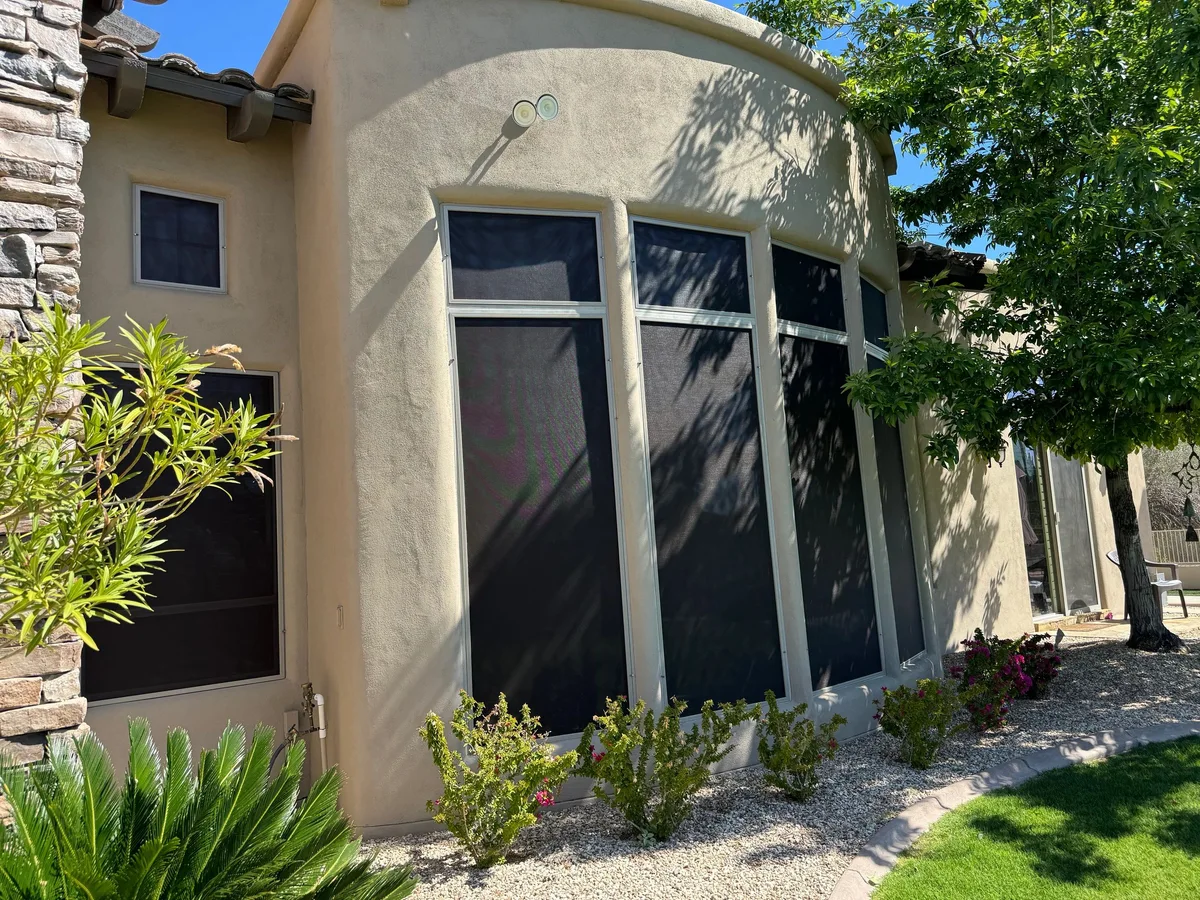
Separate the possible repair paths
A patch treats a local mesh tear. Rescreening replaces the fabric in a usable frame. Frame work or a complete fitted panel changes another part of the assembly.
A door can also need operating repair. Describe whether it drags, binds, leaves a gap or fails to latch, instead of assuming new fabric solves every symptom.
The heavy glass patio door is separate from the lighter screen door. Handling, actual components and access should be assessed appropriately.
When the current frame is worth keeping
Straight sides, sound corners, appropriate size and secure attachments support a mesh-only discussion. Material condition is not the only check.
If the panel is significantly distorted or wrongly sized, a new fabric can leave the same original problem. Ask whether repair remains sensible or replacement provides a clearer result.
Do not order expensive mesh into an unsuitable assembly merely because the material sounds stronger. Compatibility and fit remain necessary.
Choose the repair material around the use
Everyday insect mesh, durability options and solar fabric have different purposes. Describe sunlight, pets, contact and the view you want to retain.
Review actual samples and confirm compatibility with the selected frame or door system. A retractable mechanism may have different material requirements from a fixed panel.
A tougher fabric is not pet restraint, security or child-fall protection. Any protective need should be discussed as its own requirement.
Compare what the proposals include
Check the number of openings, mesh, corners, attachments, new frame, operating components, access and labor. Ask what known condition remains after the proposed work.
A lower total can simply omit a frame or hardware item included in another quote. No universal price range or standard replacement fee is supplied by this article.
For an elevated or restricted opening, access can change the scope. Identify it before arranging the work rather than treating every panel as an easy ground-floor removal.
Confirm maintenance and the next step
Ask how the completed panel is cleaned, removed, refitted or adjusted. Follow the care guidance for the actual fabric and hardware.
Written coverage applies to the chosen parts and work; no blanket lifetime or damage-proof promise is assumed. State any other-trade work separately.
The repair service guide is the starting point for an assessment. Include the project location, assembly, symptom, approximate size if known and relevant access restriction.
Make the scope comparison explicit
Prepare the list of openings and symptoms before comparing proposals. Record the fabric selected, whether the frame is retained, which operating parts change and how access is handled. Missing items can explain different totals without making either description equivalent to the other job.
Ask what the completed work is intended to resolve and what stays outside it. Include cleaning, adjustment and the actual written terms. This comparison does not need a guessed universal repair price or a claim that every old panel should be replaced. It needs the components and labor clearly described enough for a sensible repair-versus-replacement decision at the actual property.
- Openings and observed conditions
- Material and frame work
- Hardware and fixing
- Access and included labor
- Remaining condition and written terms
Apply it to your opening.
Compare repair, rescreening and complete replacement for the product choices, fit, materials, and assessment relevant to this topic.
Installation and service are provided by Arizona Screen Techs. The written project scope confirms the exact product, access, and any applicable warranty.
Questions before you decide.
Is rescreening the same as replacing the frame?
No. It changes the fabric while retaining an appropriate frame.
Can new mesh fix a track?
Not automatically. Track, rollers and alignment are a separate assessment.
How should I compare quotes?
Compare equivalent included components, materials, access and labor before totals.