When you live in Phoenix, the sun doesn’t just tap on the window—it camps out on the glass and turns your living room into a slow-cooker. You feel it by noon. Your AC hears it by 2 p.m. And your energy bill? It speaks for itself. That’s why so many Valley homeowners look to Window Solar Screens. They cool rooms, protect furniture, and—quietly but powerfully—lower your home’s environmental footprint. If you care about comfort, costs, and the climate (yes, all three), this is for you.
So, what exactly are window solar screens?
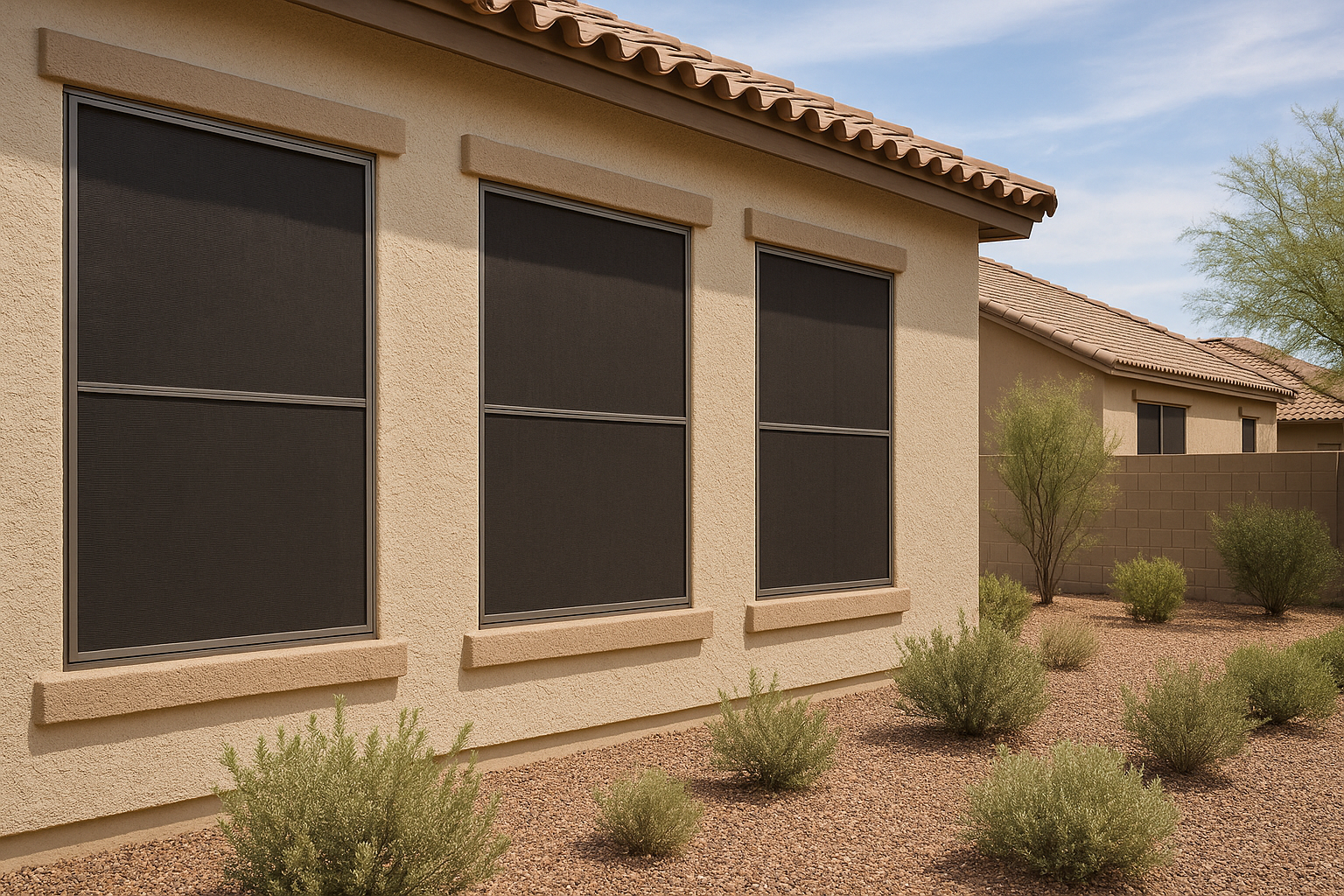
Solar screens are tightly woven, UV-blocking fabrics stretched over metal frames that mount on the outside of your windows. They’re different from standard Insect Screens. Solar screens are built to cut heat and glare before sunlight hits the glass. That front-line defense matters; once the sun warms the pane, your home starts absorbing that heat like a dark dashboard in July.
In plain terms, the fabric weave does the heavy lifting. Common options like SunTex 80 or 90 block about 80–90 percent of solar radiation. Pair that with a good fit around the frame and you can reduce a window’s effective Solar Heat Gain Coefficient (SHGC)—which is a nerdy way to say “less heat gets inside.” The magic shows up as cooler rooms, calmer AC cycles, and lower kWh use.
And yes, you can still see out. Darker fabrics usually provide better glare control and a crisper view. Lighter fabrics soften light a bit more and run slightly warmer. We’ll help you choose a balance that suits your style and your street-facing windows.
Why Phoenix homes feel the difference
Phoenix tallies 300-plus sunny days each year, with the most intense heat stacked right when the grid is straining. SRP and APS hit their peaks on hot afternoons because air conditioners citywide run nonstop. If you can cut heat gain before it starts, you’re not just helping your home—you’re easing pressure on the grid during crunch time.
Solar screens do their best work on east and west windows, where morning and late-afternoon sun punches low across the horizon and straight through glass. South-facing windows benefit too, especially in summer when the sun arcs high but still brings crazy heat. In a place with urban heat island effects and warm nights, every degree you keep out matters. It’s the difference between an AC humming and an AC heaving.
You know what? It’s also a comfort thing. Rooms feel quieter, calmer. Glare disappears, so you’re not squinting at a laptop or pulling heavy curtains at 2 p.m. Small change, big mood shift.
Carbon math, made simple (and fair)
Let me explain it the quick way. Each kilowatt-hour of electricity in Arizona comes with some emissions attached. The exact number varies by the utility’s mix, but a broad, reasonable range runs about 0.7–0.9 pounds of CO₂ per kWh. When solar screens reduce cooling demand, they trim those emissions right along with your bill.
What might that look like for a Phoenix home?
Take a typical 1,800–2,200 sq ft house with decent insulation and standard double-pane windows. In peak summer months, AC can chew through 800–1,200 kWh. Well-fitted window solar screens in Phoenix often shave 15–25 percent off cooling energy on the sunniest windows; we see more in glare-heavy rooms with lots of glass.
- Say you save 150 kWh in a hot month. That’s roughly 105–135 pounds of CO₂ avoided.
- Stretch that over five summer months. You’re looking at around 525–675 kWh saved, or about 370–600 pounds of CO₂. That’s like not driving your car for a few weeks, depending on your mileage.
Sounds small? It adds up, especially neighborhood by neighborhood. When more homes cut peak load, the grid breathes. Fewer peaker plants need to fire up. And your HVAC equipment cycles less, which means a longer life for your compressor. Less manufacturing and shipping of new units means less embodied carbon out in the world. That’s the quiet ecological win.
Energy is the headline, but the side stories matter:
- UV protection: Solar screens knock down up to 98 percent of harmful UV rays. Floors, rugs, artwork, and sofas fade slower, so you replace less often. That preserves the embodied energy locked into those materials.
- Better daylight, fewer lamps: You can keep blinds open without the eye-searing glare. Natural light replaces artificial light part of the day, trimming watts across the board.
- Less thermal swing: Fewer “hot zones” means your thermostat doesn’t chase wild temperature swings, which keeps your system from short cycling.
And a local note: during monsoon season, screens catch a surprising amount of dust before it cakes your glass. That’s not a climate metric, but it is less cleaning with harsh chemicals. A hose rinse usually does the trick.
Materials, lifespan, and what happens later
Most quality solar screen systems pair powder-coated aluminum frames with PVC-coated polyester fabric. Why that mix? It’s tough, color-stable, and built for scorching summers. Expect 10–15 years of life with basic care. Aluminum frames are recyclable. Fabrics can vary, but choosing a reputable brand helps keep micro-tears and brittleness at bay.
We prefer low-VOC coatings and sealants during fabrication. It’s better for the shop crew, the homeowner, and the air inside your home. Since screens mount outside, you also avoid the off-gassing you might get with some interior Products. And if a panel gets damaged, we can re-screen it without tossing the whole frame. Less waste. Less fuss.
Screens vs. films vs. new windows: what’s greener for you?
Here’s the thing. You have options. Each has pros and quirks. We install screens daily, but we’ll never say they’re the only tool. Think of this as a quick neighborhood chat, not a lecture.
| Feature | Solar Screens | Window Film / Low-E Windows |
|---|---|---|
| Heat + Glare Cut | High (80–90% solar block) | High (varies by spec) |
| Exterior Appeal | Visible upgrade; color-match frames | Invisible or subtle tint |
| Install Complexity | Fast, non-invasive | Film: quick interior; New windows: major project |
| Removability | Yes, seasonally if desired | Film: semi-permanent; New windows: permanent |
| Recycling/Waste | Aluminum frames recyclable; fabric replaceable | Film is landfill; New windows have higher embodied energy |
| Cost Range | Low to moderate per window | Film: low to moderate; New windows: high |
If your glass is failing or leaky, new windows may be the right long-term fix. But if your glass is sound and your main gripe is heat, solar screens in Phoenix bring big returns with a lighter environmental footprint.
Care, maintenance, and greener habits that stick
Good care stretches the life of your screens, which shrinks their total footprint over time. Luckily, it’s simple. Rinse with a garden hose two or three times a year. Use mild soap and a soft brush for stubborn dust after a monsoon. Avoid pressure washers. Check corners and mounting clips once a season; snug them if needed.
One more eco-friendly habit: match your thermostat settings to your new comfort level. If rooms feel cooler with screens, bump the temp a degree or two. That tiny change compounds your savings without you even noticing.
HOA, color choices, and curb appeal
Most Phoenix-area HOAs allow shade screens as long as the frames match trim colors and the fabric harmonizes with the façade. We carry neutral tones that look sharp against stucco, stone, and brick. If you’re in a stricter neighborhood, we’ll help you provide the right spec sheet and samples so approvals move fast.
From the street, well-made screens look intentional—like sunglasses for your home. They sharpen lines, quiet reflections, and keep glass from reading as a big hot mirror. Function meets style without trying too hard.
Why Arizona Screen Company cares about the details
We’re local. We know the sun angles on 7th Street feel different than Peoria Avenue, and that west-facing golf-course lots take a beating. Our team measures, fabricates, and installs custom window solar screens built for our desert climate. We use quality fabrics like SunTex 80/90, sturdy powder-coated frames, and hardware that handles heat. It’s not flashy—it’s dependable.
We also care about the little stuff: tight corner joins, clean miters, tidy fasteners, and tidy site work. Fewer callbacks mean fewer truck rolls, which weirdly enough helps the environment too. And we stand behind our work with solid warranties and friendly service that answers the phone. Honestly, that matters when it’s 113 outside and you want shade now.
Ready to cool your home and cut emissions?
If you’ve been thinking about energy-efficient solar screens, this is your sign. Let Arizona Screen Company size up your windows, recommend the right fabric, and give you a clear estimate. Call us at 480-771-2543 or Request a Free Quote. We’ll make your rooms cooler, your bills lighter, and the planet a tiny bit happier—starting with your windows.