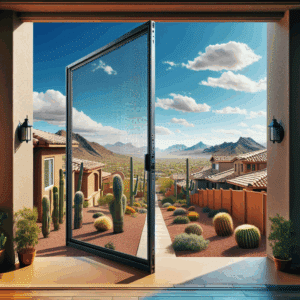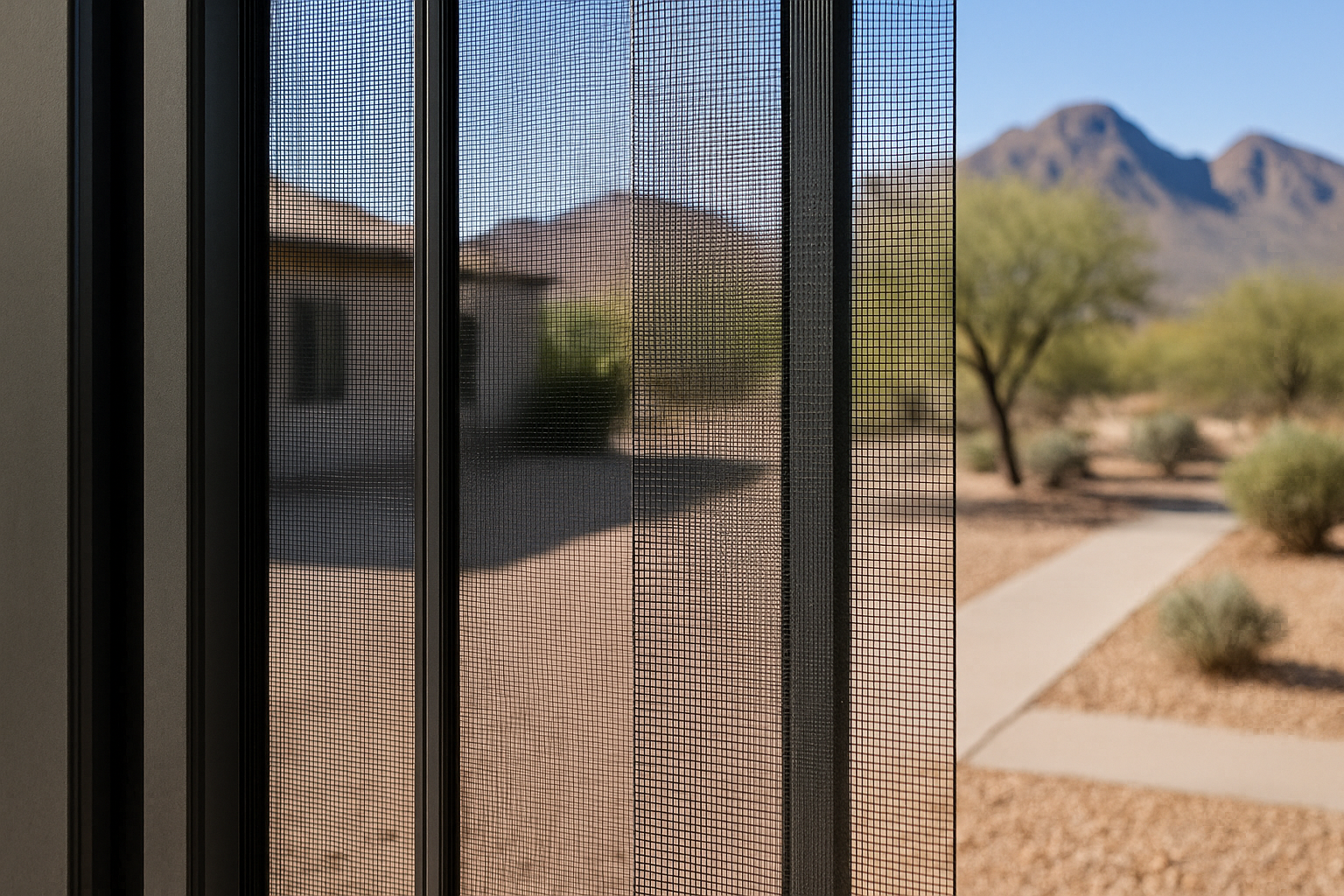
Picture a warm Phoenix evening. The house is quiet, the backyard’s glowing, and you slide the patio door open to catch that rare, perfect breeze—only to have dust, gnats, or a very curious lizard try to join the party. The right sliding screen door mesh changes that small moment. It keeps what you want in (air, views, family time) and what you don’t want out (bugs, debris, claws). Simple idea, sure—but in the Valley, mesh choice really matters. Let me explain.
Why mesh choice matters more in Phoenix
Phoenix has a few quirks. The sun isn’t just bright—it’s relentless. Monsoon season brings dust storms that sneak into every crack. And those springtime “no-see-ums”? They’re tiny and annoying, especially near the irrigation or after a big rain. That’s why **mesh type, color, and weave** affect actual daily comfort here, not just how your door looks.
You know what? People often want two things at once: more breeze and fewer bugs. Sounds like a contradiction. It isn’t—if you match the weave density and material to how you live, the side of the house you use most, and the Arizona sun that blasts it at 3 p.m.
Mesh materials 101: fiberglass, aluminum, polyester, and stainless
Most sliding screens in Phoenix start with these choices. Quick, plain-English rundown:
- Standard fiberglass (18×16): The classic. Good airflow, decent visibility, doesn’t crease like metal. If your door faces north or is shaded, this is a solid, budget-friendly pick.
- Aluminum mesh: Stiffer and more puncture-resistant than fiberglass, but it can crease if hit. Reflects a bit more glare. Great where you want a tough feel but still good airflow.
- Vinyl-coated polyester (Pet-resistant): Think Phifer PetScreen or equivalent. Strong threads, excellent against claws and rambunctious kids. Airflow’s a touch lower than standard, but durability is fantastic.
- Stainless steel (security-grade): Ultra-tough, excellent for impact and resisted cutting. Usually needs a reinforced frame; it’s not your typical slider screen material, but for serious security needs it’s an option. Visibility can be good, yet airflow varies by brand and weave.
For most Phoenix homes, pet-resistant screen or upgraded fiberglass serves day-to-day life well. If sun or tiny bugs are the main pain point, go denser in weave or consider solar mesh.
Weave density, airflow, and visibility: the balancing act
Here’s the thing: tighter weave = fewer tiny bugs and more privacy, but also less airflow. Looser weave = more breeze and clearer views, but less defense against gnats. Smart matchups:
- 18×16 (standard): Good everyday mesh. Keeps out most bugs. Best airflow of the common choices.
- 20×20 “no-see-um”: Smaller openings, better at blocking gnats and tiny pests. Slight airflow drop; still comfortable for most patios.
- High-visibility meshes (like Phifer UltraVue): Thinner strands for clearer view—great if your slider frames Camelback or a gorgeous pool area. Airflow is excellent; bug protection is standard-size.
If you’re near a wash or have a yard with lots of greenery and moisture, no-see-um screen is a local favorite after monsoon storms. On the flip side, if your issue is more glare than bugs, read on.
Sun control: solar screen mesh for sliding doors
Phoenix sunlight isn’t shy. A **solar screen mesh** like SunTex 80 or SunTex 90 (brands homeowners ask for by name) cuts heat and glare while adding daytime privacy. Here’s how it plays:
- SunTex 80: Nice middle ground—noticeable heat reduction, decent airflow.
- SunTex 90: Big glare and heat cut, better privacy, lower airflow.
A simple tip many homeowners love: use solar mesh on the sunny panel and keep the other panel standard or high-visibility. You get glare control where you need it and extra breeze where you want it. Not textbook, but practical—and it works.
Pets, kids, and the myth of “indestructible” mesh
If you’ve got a Lab with an Olympic-level tail, or toddlers who treat the door like a goal post, **pet-resistant screen** earns its keep. It’s a vinyl-coated polyester that shrugs off claws far better than fiberglass. Is it indestructible? No. But it’s the closest thing that still looks like a proper residential screen.
One more tip from the field: a low-profile kick plate or upgraded bottom track can help protect the mesh where it takes the most abuse. It’s a small detail that saves a lot of re-screening.
What about the pests we actually see here?
– Mosquitoes: Usually handled by standard 18×16. If you’re near standing water, consider 20×20.
– No-see-ums/gnats: Go 20×20 or a specialty micro-mesh.
– Scorpions: They’re bigger. Screen mesh holes are smaller. Your slider mesh won’t be their highway—door sweeps and thresholds matter more for them.
– Desert moths and beetles: Any intact screen works, so focus on frame fit and a good spline job.
Honestly, more screens fail from old spline or pulled corners than from the pests themselves. A tight, well-fitted screen makes a quiet difference every single night.
Color and clarity: charcoal vs gray
You’ll see two common colors: charcoal (dark) and silver-gray. The surprise? **Darker mesh is usually easier to see through** because it reduces glare, acting almost like sunglasses. If you want your view to pop—sunsets over South Mountain, twinkle lights around the pool—charcoal is a crowd-pleaser. Silver-gray can look brighter from inside but tends to reflect more, which softens the view slightly.
Maintenance in the land of haboobs
Dust happens. Keep your screen breathing:
- Rinse with a garden hose, low pressure.
- Use a soft brush with mild soap for stubborn grime.
- Skip pressure washers—they can stretch or tear fibers.
- Vacuum the tracks; grit shortens the life of rollers and frames.
- Check the spline every couple years. If it’s brittle, it’s time to refresh.
A clean screen moves easier, looks better, and catches way less dust the next storm. It’s simple, but it’s big for daily use.
HOA rules, curb appeal, and matching the house
Many Phoenix HOAs prefer charcoal mesh and frame colors that match your existing patio door. We carry frames in common finishes and can suggest **low-profile frames** that keep focus on the view, not the grid. If you’re planning to sell soon, a crisp, new screen door—straight tracks, smooth roll, tight corners—quietly raises curb appeal. Buyers notice easy. They remember “smooth.”
Quick mesh comparison at a glance
| Mesh Type | What It Does | Best For Phoenix Homes |
|---|---|---|
| Standard Fiberglass 18×16 | Good airflow and bug control; budget friendly | Everyday sliders, shaded patios |
| No-See-Um 20×20 | Blocks tiny gnats; slight airflow trade | Near washes, water features, post-monsoon |
| Pet-Resistant Polyester | Claw and kid tough; long-lasting | Homes with pets and active families |
| Solar Mesh (SunTex 80/90) | Cuts heat/glare; adds daytime privacy | West/south exposures, afternoon shade seekers |
| Aluminum | Stiffer feel; better puncture resistance | High-traffic doors where rigidity helps |
How to choose in three quick questions
– What bugs you most? If it’s glare and heat, go **solar mesh**. If it’s tiny gnats, choose **no-see-um**. If it’s pets, use **pet-resistant**.
– Which way does the door face? West or south exposure? Solar mesh or a mixed-panel setup works wonders.
– How do you live? Love big airflow and evening hangouts? High-visibility or standard fiberglass will feel breezier and look crisp.
If two answers compete—say you want max breeze and max privacy—we’ll help you split panels or pair mesh types so you don’t feel like you’re giving something up.
Repair or replace? Small signs that matter
– Frayed edges or shiny threads: UV wear is advancing; replacement is near.
– Sagging mesh: Often a worn spline or stretched fabric; re-screening tightens it up.
– Creases and dents (especially aluminum): Visible forever; new mesh looks clean again.
– Tracks full of grit: Repair the rollers and clean the channel so the new screen slides like new.
A quick re-screen can make an old frame feel brand new—especially with fresh rollers and a snug spline.
Why homeowners call Arizona Screen Company
We build and re-screen for the Valley’s real conditions—sun, dust, pets, and people who actually use their patios. We stock the meshes Phoenix asks for by name: **Phifer PetScreen**, **SunTex 80/90**, standard and **no-see-um mesh**, plus high-visibility options that make sunsets look like HDTV. Our techs measure on-site, fit the frame, and tension the mesh so it’s tight but not overly stretched. And yes, we’re mobile—no juggling door panels in your SUV.
We’ll walk you through the trade-offs without jargon overload. Want one panel solar and one panel high-vis? No problem. Need a pet upgrade without making the door feel heavy? We’ve got a few tricks. The goal is simple: you slide it open, it glides; you look out, it disappears; bugs stay out, breeze rolls in.
Ready to enjoy that evening breeze?
Choosing the right **sliding screen door mesh in Phoenix, AZ** shouldn’t feel like homework. Tell us how you live, what side of the house gets baked, and who tries to lean on the screen—kids, pets, or both. We’ll match a mesh that fits your home, your HOA, and your everyday rhythm.
Call Arizona Screen Company at 480-771-2543, or Request a Free Quote. Let’s get that breeze back—minus the bugs, dust, and drama.