Picture this: It’s 4:30 p.m. in Phoenix, the patio looks gorgeous, and the sun looks… brutal. You love the light, not the heat. That’s where a Retractable Sun Shade shines. It cools things down without boxing you in, it protects furniture, and it turns “too hot” into “just right.” If you’re a Valley homeowner weighing your options, this guide will make the choice a whole lot easier—and a lot more practical for our desert climate.
Wait—what exactly is a retractable sun shade?
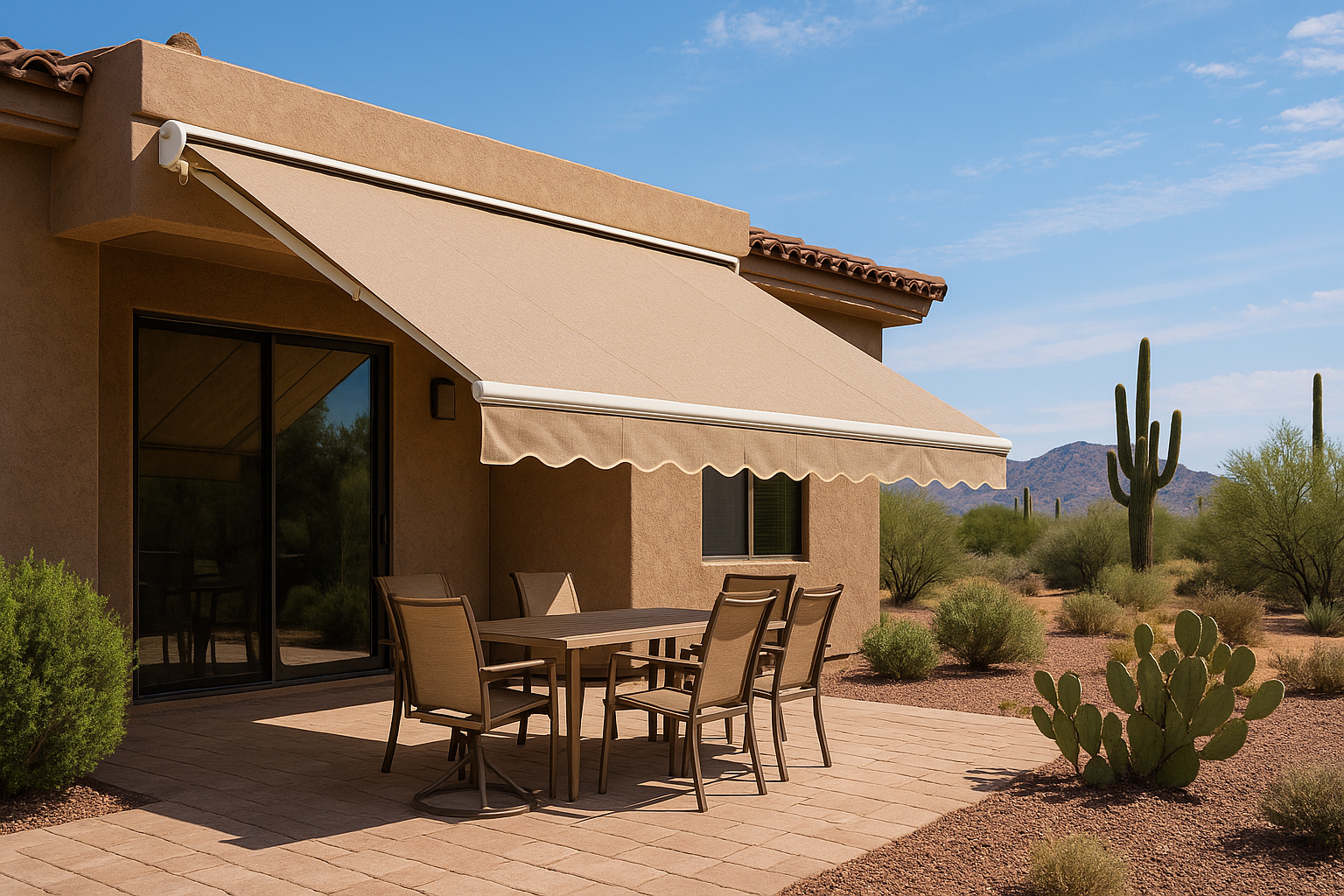
A **retractable sun shade** is a shade system that extends when you need cover and tucks away when you don’t. It can be a drop shade mounted to a patio beam, a cassette that hides the fabric, or a screen that glides in side tracks (often called a “zip” system). Some look almost invisible when retracted; others make a statement with a sleek cassette and color-matched frame.
It’s not an awning with arms (though some models are). It’s also not a fixed pergola panel. Think of it as the flexible layer—cover when the sun bites, open sky when it softens. Keep airflow, reduce glare, and cut that late-day heat that bounces off pavers and concrete. Simple idea, big impact.
The Phoenix factor: sun, heat, and monsoon winds
Here’s the thing: the shade that works in Seattle won’t always hold up in Phoenix. We deal with fierce UV, high radiant heat, and the occasional haboob that tries to test every fastener in your patio. So, materials matter. Build quality matters. And wind strategy definitely matters.
Look for **solution-dyed acrylic** or **solar screen fabrics** that handle triple-digit heat without fading or getting brittle. Names you’ll hear a lot: Sunbrella for acrylics, and Phifer SunTex, Twitchell Textilene, Mermet, or Serge Ferrari Soltis for screen fabrics. These are the workhorses that shrug off UV and clean up easily after dust storms.
Now, about wind: no retractable shade is wind-proof. They can be wind-rated, but in a monsoon, you retract it. That’s not a flaw—it’s the point. You get shade when you need it and tuck it away when Arizona throws a tantrum.
Fabric 101: color, openness, and how it really feels under the shade
Fabric picks aren’t just about “tan” versus “charcoal.” They decide how hot your patio feels and how clearly you can see the view. Screen fabrics have an “openness” number—like 1 percent, 5 percent, or 10 percent—which tells you how tight the weave is.
- Lighter colors: Reflect more heat, soften glare, and make the area feel cooler. Great for west-facing patios.
- Darker colors: Cut glare and sharpen the view outside. The space feels a bit warmer, but views pop.
- Lower openness (1–5 percent): More shade and privacy, less airflow and view clarity.
- Higher openness (8–10 percent): Better airflow and views, a bit more sun sneaks through.
Quick snapshot you can tuck in your back pocket:
| Fabric Type | UV/Heat Control | View/Privacy |
|---|---|---|
| Sunbrella Acrylic | High heat reflection; excellent fade resistance | Opaque; no outward view when deployed |
| Phifer SunTex 95 | Strong UV block; significant heat reduction | Moderate view; moderate privacy |
| Mermet 10% | Moderate heat control; more airflow | Clearer view; lighter privacy |
You know what? You don’t always need the tightest weave. But if your patio faces due west in July, you might appreciate it more than you think.
Manual, motorized, or smart—how do you like to live?
Manual shades work great and keep the budget tidy. A simple crank makes them reliable and quick. That said, **motorized retractable shades** are popular in Phoenix for one big reason: convenience. When it’s 110 degrees, pressing a button beats cranking—every time.
Look for motors from brands like Somfy. Options include quiet RTS radios, hardwired controls, or solar-powered motors when wiring is tricky. Add a wind sensor and your shade can retract itself if gusts spike—handy during monsoon season when the weather flips fast.
- Manual: Lower cost, fewer parts, dependable.
- Motorized: Easy, smooth, safer for tall or wide spans.
- Smart controls: Timers, sun sensors, app control, voice assistants.
One small twist: motorized systems cost more up front, but they often last longer because you’re not yanking, cranking, or leaving them half-open in the wind. Consistent use is gentle use.
Frames, mounts, and why your stucco matters
It’s not just the fabric. A strong frame makes or breaks the install. Look for **powder-coated aluminum** extrusions, UV-stable end caps, and **stainless-steel hardware**. Those details keep corrosion away in our dry-but-dusty climate.
Mounting is where Phoenix homes can be quirky. Many houses have foam over stucco (EIFS) or hollow sections that don’t love standard anchors. A proper install finds the studs or adds blocking so the load sits in solid structure. That’s what keeps the shade secure when the wind clocks it from the side.
Two configurations you’ll hear us discuss:
- Open roll or semi-cassette: Fabric is visible; more budget-friendly.
- Full cassette/zip system: Fabric protected inside a case; side tracks stabilize the fabric and block bugs.
HOA approval? Sometimes. Pulling a permit? Usually not for surface-mounted shades, but it depends on scope. We help homeowners sort those details, so your project moves without hiccups.
Size and sun angles: west-facing is a different animal
East-facing patios are friendly in the afternoon. South exposures are tricky in winter but manageable. **West-facing**? That’s where a retractable shade earns its keep. You want coverage low on the horizon when the sun’s slanting under the patio cover.
As a rule of thumb, think width, drop, and clearance. A wider shade reduces “sun leaks” at the edges. A longer drop catches that late light. But don’t block doors or sliders—measure twice and leave breathing room. It’s like a baseball cap for your house: the brim needs to meet the angle of the sun, or you’ll still squint.
Let me explain a small contradiction: a bigger shade covers better but can catch more wind. The fix is straightforward—go motorized with side tracks and a wind sensor. Better coverage, better control.
Wind reality checks and warranties you can trust
Manufacturers often publish wind ratings. They help, but they’re not a hall pass for storms. In our climate, we recommend retracting during sustained winds or when you’re away. Warranties usually require “reasonable care,” which means not leaving the shade out when the sky turns brown.
Here’s the upside: a smart wind sensor retracts automatically and protects your investment. You don’t need to babysit the weather app when you’re out grabbing tacos on Central.
Extras that make the shade feel custom
These are small upgrades that change daily life on the patio:
- Side tracks and bottom seals: Block bugs and dust; tighten the seal for better cooling.
- Sun/temperature sensors: Extend during peak sun; retract after sunset.
- Integration: Remotes, wall switches, or app control—set-and-forget schedules.
- Color-matched hardware: Clean look that blends with stucco and trim.
Honestly, bug control matters more than people expect. You think you won’t care—until your evening lemonade turns into a moth convention. A **zippered track system** keeps the vibe calm and the patio happier.
Maintenance made simple (and what lasts in the desert)
Good news: retractable shades are pretty low-maintenance. Rinse the fabric with a gentle spray after dust storms. Use mild soap like Dawn if there’s a stubborn spot. Avoid harsh chemicals and power washers. Wipe the cassette and tracks with a soft cloth. Check screws yearly, and if it’s motorized, run it through full cycles once a month to keep everything limber.
Typical warranties vary: fabrics often carry 5–10 years, motors 5 years, frames 10+ with reputable manufacturers. With care, your **patio shade** system should serve comfortably through many desert summers.
What shapes cost in Phoenix
We’ll keep it straight. Pricing changes with width, drop, fabric, motor choice, and mounting complexity. Manual systems start lower, **motorized patio shades** cost more, and fully enclosed zip systems with sensors sit at the top. Larger spans and custom colors nudge the number up. The flipside is value: better shade means more patio time, less sun fade on furniture, and a cooler interior on the rooms that share that exterior wall.
Curious about exact numbers for your home? A quick site visit nails it down—no guesswork, no surprises.
Why homeowners call Arizona Screen Company
We install shades all over the Valley, and we know the neighborhoods, the stucco quirks, and the HOA rhythms. At Arizona Screen Company, we help you pick the right fabric openness, color, and control style for your exact exposure. We bring samples to your patio, talk through wind behavior, and plan the mount so it looks clean and lasts long. We use trusted components—from **Somfy motors** to **SunTex** and **Sunbrella** fabrics—because the cheap stuff costs more in the long run.
And yes, we stand behind our work. That’s the point of using a local team. If something’s off, you won’t be chasing a call center three states away.
A quick homeowner checklist before you buy
- Exposure: West-facing? Lean toward lower openness and a deeper drop.
- Controls: Want one-tap shade? Go motorized, add a wind sensor.
- Fabric: Choose UV-stable brands that handle Phoenix heat.
- Mounting: Confirm solid structure, not just foam over stucco.
- Look: Pick frame colors that match trim or contrast on purpose.
- Use: Entertain evenings? Consider side tracks to block bugs.
- Care: Plan a quick rinse after dust storms; it makes a big difference.
- Warranty: Check coverage for fabric, frame, and motor—know the fine print.
Ready to get your patio back?
If you’re serious about cooler afternoons and longer evenings outside, we’re here to help. Talk with a local specialist, see fabric samples in your own light, and get a clear, friendly price.
Call Arizona Screen Company at 480-771-2543 or Request a Free Quote. We’ll measure, plan, and install a shade that works the way your life does—easy in the heat, smooth in the wind, and ready when you are.