
Start with the specific household requirement
Insect control, harsh sunlight, a damaged door, pet contact, window access and security are different concerns. Describe the actual situation before selecting a material.
A panel designed for ordinary screening is not represented here as an effective deterrent against burglars. Its presence does not certify the home or establish forced-entry performance.
The practical screening decision still matters: fit, intact fabric and sound attachment improve its actual job. Do not turn that benefit into a claim for another purpose.
Check screening condition independently
Inspect tears, edges, corners, straightness and perimeter gaps. A tougher fabric cannot correct an assembly that is wrong-sized or loosely mounted.
If the frame is sound, rescreening may be appropriate. Damage to corners or operating hardware can require a broader repair or replacement.
For doors, identify the track, rollers, hinges or latching issue separately. Heavy glass patio-door handling is not a casual lightweight screen task.
Use CPSC guidance for window-fall concerns
CPSC warns never to rely on screens to prevent children from falling out of windows. Suitable guards or stops and emergency-access considerations are separate from insect mesh.
Furniture placement and access to open windows also need attention. Selecting heavier material does not by itself create the required protective measure.
A pet-resistant fabric is not an animal restraint. Keep containment and household access decisions separate from the ordinary screening installation.
Compare the custom entry-door option correctly
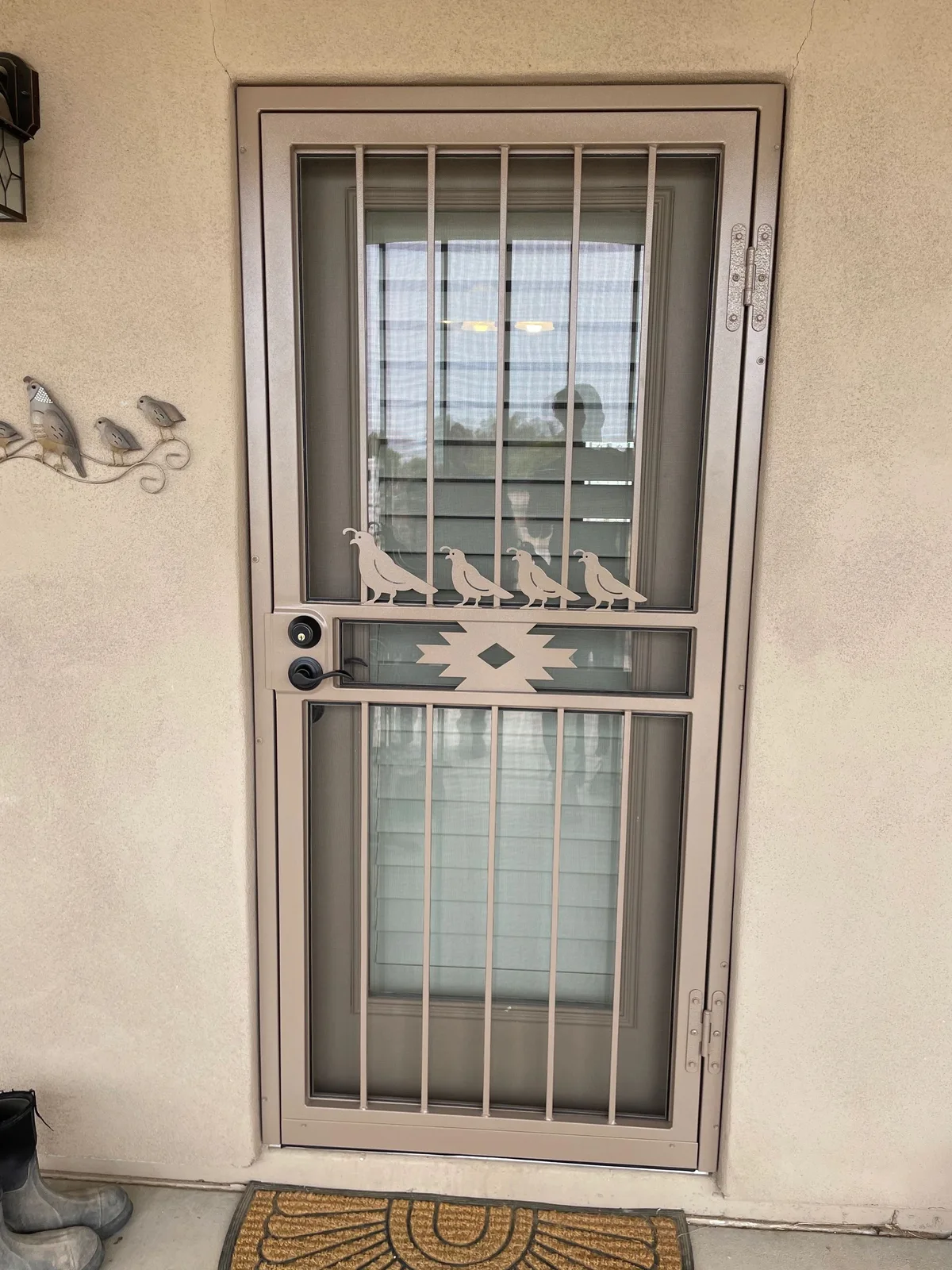
The operator publishes custom metal security screen doors. Review the entire assembly, including the opening, construction, hardware and fixing.
No burglary, weather, impact or safety rating is inferred from the name or project picture. Ask for the specification and evidence that applies to the proposed system.
Do not assign a doorway offering to all ordinary window panels. Product purpose and documentation should remain specific to the installation.
Agree on a clear assessment and quote
State the protective or practical goal, the project address, which openings are involved and any visible damage. Approximate dimensions may help the initial discussion.
The quote should distinguish screening work from glass, locks, structural repairs, electrical work or other requirements not included. Current model and written terms should be explicit.
Use the confirmed product guide for the chosen category and obtain suitable separate guidance where the need is outside ordinary screening. Clear decisions beat a vague promise of peace of mind.
Apply it to your opening.
Review the intended purpose of a custom metal entry door for the product choices, fit, materials, and assessment relevant to this topic.
Installation and service are provided by Arizona Screen Techs. The written project scope confirms the exact product, access, and any applicable warranty.
Questions before you decide.
Do ordinary screens deter burglars?
No protective performance is asserted for ordinary insect or solar mesh.
Can new pet mesh prevent window falls?
No. CPSC treats window-fall protection as a separate requirement.
What should I ask about a security door?
The complete construction, locking, fixing, intended purpose and relevant documentation.